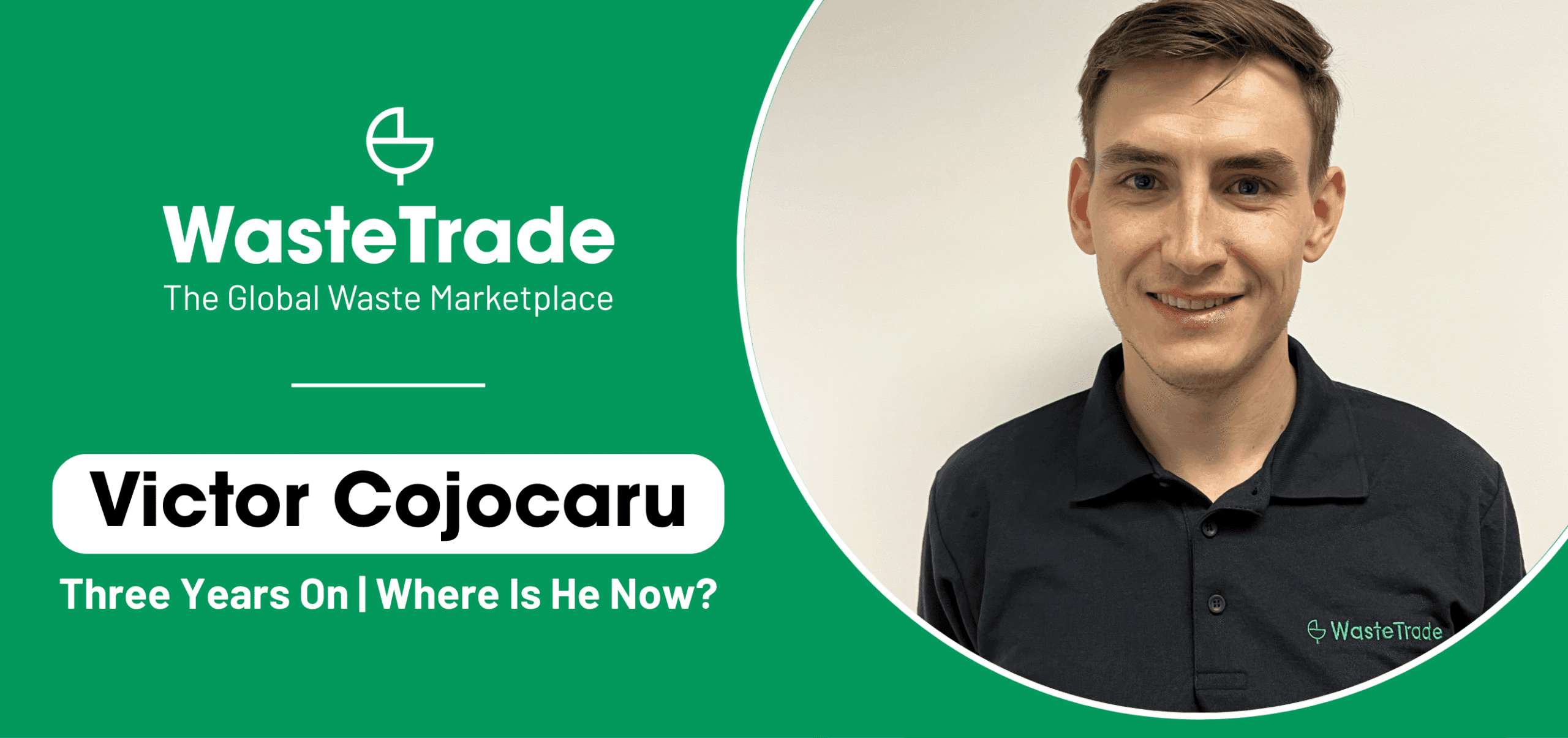
It has now been around three years since you joined WasteTrade. Thinking back to when you first started, what was the platform like at that stage?
Yes, it’s been three years already since I joined the WasteTrade team, it feels like it was yesterday; time flies when you do the right work in the right place. Thinking back, I remember that the platform was relatively at an early stage; it had a solid core concept, and the idea was great for an industry which just started to grow up. But, because it was at the beginning, a lot of functionality was manual and limited, and a lot of it was just in plan for the future scopes.
In those early days, what were your main priorities and areas of focus as a developer?
In these early days my main focus was in understanding the core features of the platform and improving my skills in the technologies that will help our platform to grow. Beside that I had to discover this industry from scratch, because was it was a totally new world for me. It’s not like I didn’t know anything about recycling, but building a platform in this industry requires an deep study of this area to understand how to build the future features.
Since then, the platform has developed significantly. From your perspective, what have been the biggest technical advancements over the past three years?
Over the past three years I think that the biggest challenges were around automation of the manual workflow and improving the performance of the platform. Because of the technologies chosen and a huge amount of data to manipulate, the performance was suffering and we had to find a solution for that. Also, I must mention, since AI came into our life, we had to bring these features into our platform to keep up with the new world, which of course was a big challenge.
WasteTrade has evolved from a relatively simple platform into a much more advanced system. How has that growth changed your day-to-day work?
As the platform has grown, my role has become more strategic. Early on, it was more about building and fixing individual features. Now, a lot of my work involves thinking about long-term architecture, scalability, and how different parts of the system interact. There’s also more collaboration across teams, and more responsibility in ensuring that what we build is maintainable and future-proof.
You are now closely involved in maintaining, improving, and scaling the platform. What does a typical day look like for you behind the scenes?
A typical day involves a mix of development, problem-solving, and collaboration. I might be working on new features, reviewing code, investigating issues, or improving performance. There’s also time spent planning, thinking through how to implement new functionality in a scalable way and working closely with team members from other departments to make sure we’re building the right things.
One of the major projects underway is the rebuild of the platform onto a new tech stack. What is driving that decision, and what improvements will it bring?
The main decision in moving the platform onto different tech stack was the performance and limitations. Because it was built on a content management system, we were very limited in the features we can bring on the platform and once we implemented new custom stuff, the performance was affected. From this we can understand what improvements will bring, a more scalable, flexible and faster platform which can interact with different environments.
You are also working on AI-driven material recognition. How does this work in practice, and how will it help reduce issues like mis-labelled materials?
Yes, this is one of the projects I love, because it may significantly reduce the human errors and improve the user experience. This feature works on image analysis to identify and classify waste materials automatically. In practice, when the user uploads an image, the system helps determine what the material is likely to be and populates the fields which normally the user has to do manually. More than that, it will help the logistics team as well in determining that the material at the loading time is the same as listed on the platform.
Another key development is digital product passports. For those unfamiliar, what are they, and why are they becoming increasingly important in the industry?
Digital product passports are structured records that store detailed information about a waste material, such as its origin, composition, lifecycle data, etc. They’re becoming increasingly important because of regulatory requirements and the push towards a circular economy. From a platform perspective, they help improve transparency, traceability, and compliance, which are all critical in the waste and recycling industry.
From a technical point of view, what are some of the biggest challenges in building and maintaining a platform that operates across multiple countries and material streams?
Being an international platform in the waste industry is a real challenge, but this is part of my journey as a developer, and I like to face them. The bigger challenges are in regulations, standards and languages. Each country has their own legislation, and we must make sure that the systems we are building are flexible enough to handle all these variations and are easy to use. From the language point of view, some countries are reading from right to left, in this case we must shift all page’s content from right to left which is very challenging.
Looking at the platform today compared to when you joined, what are you most proud of contributing to?
Thinking about my contribution to the platform, there is not a single project where I didn’t contribute at least with something, but my biggest impact was in evolving the platform from a simple system to a more advanced one by implementing payment systems, improving the user experience, building dashboards for other departments, and developing a resources side of the platform together with the marketing department which are bringing a huge amount of the traffic to the website.
Looking ahead, what is your vision for how the WasteTrade platform will continue to develop over the next few years?
I see a big future for the WasteTrade company. Looking ahead, I see the platform being much more intelligent and automated; a big part of the tasks will be driven by AI tools, which will considerably improve the user experience and will save valuable time for our support team in focusing on important tasks, rather than repetitive ones. In other words, WasteTrade will be the digital version of the waste industry.
For someone looking at WasteTrade from the outside, what do you think would surprise them most about the complexity of building and running a platform like this?
To be honest, looking from outside, the platform doesn’t look that complex, as it is in reality. We wanted to make sure that any user from any generation and any technical level can join our platform and use it without challenges, and I think that we succeeded in this. Looking from a technical point of view, people would be surprised how complex it is. The system handles with different user types like buyers, sellers and hauliers when their workflows must interact. Then, there are different material types, regulations, data validations and dashboards for each department of our team which make our platform like a big network in the waste industry.