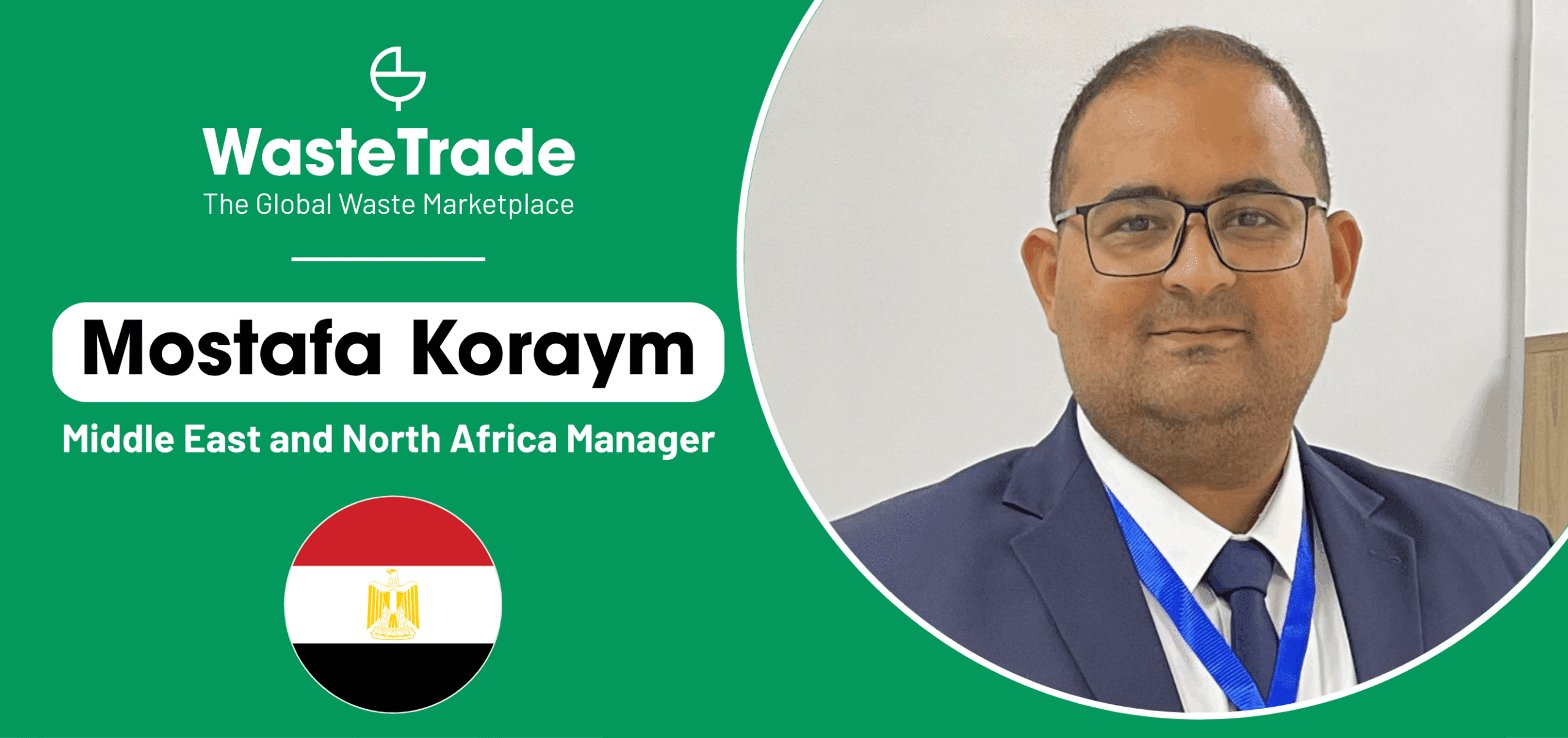
You are now leading WasteTrade’s operations across North Africa and the Middle East. Can you start by telling us about your background and what led you into the recycling and commodities space?
I come from a strong commercial and trading background, with a focus on commodities and international business development across emerging markets. Over the years, I have been actively involved in sourcing, logistics, and cross-border transactions, particularly within Africa and the Middle East.
My transition into the recycling sector was driven by both market opportunity and long-term sustainability trends. I recognised early on that recycled materials – especially plastics – would play a critical role in global supply chains. The inefficiencies in traditional scrap trading also stood out to me, and I saw an opportunity to bring more structure, transparency, and scalability into the industry.
You have worked across markets that are very different to Europe in terms of regulation, infrastructure, and scale. What have been some of the defining experiences or lessons from your career so far?
One of the most important lessons has been the value of adaptability. Each market operates differently in terms of regulation, infrastructure, and business culture. Success depends on understanding these nuances and adjusting strategies accordingly.
I have also learned that trust and long-term relationships are fundamental in these regions. Reliable execution, consistency, and credibility often matter more than price alone. Additionally, navigating logistical challenges has reinforced the importance of building flexible and resilient supply chains.
What was it about WasteTrade that stood out to you when you were considering joining the company?
WasteTrade stood out because of its clear vision to modernise the recycling industry through digitalisation. The platform addresses many of the inefficiencies I have experienced firsthand, particularly around transparency, compliance, and trade execution.
I was particularly drawn to the company’s ambition to scale globally while maintaining strong operational control, which is critical in complex markets like North Africa and the Middle East.
Since joining, what have been your first impressions of how WasteTrade operates, both commercially and from a platform perspective?
My first impressions have been very positive. Commercially, the team is highly focused, responsive, and execution-driven. There is a strong understanding of market dynamics and customer needs.
From a platform perspective, WasteTrade provides a solid foundation for scaling operations efficiently. It brings much-needed transparency and structure into transactions, which is essential for building trust across international markets.
Your region covers a huge and diverse territory, from North Africa through to the Gulf. How would you describe the key differences in how recycling and secondary materials are traded across these markets?
The region is extremely diverse. North Africa is generally more export-oriented, with strong trade links to Europe and Asia, while Gulf countries tend to be more import-driven with stricter regulatory frameworks and more advanced infrastructure.
In some markets, trading remains relationship-based and less formal, whereas others are moving toward more structured and compliant systems. These differences require tailored strategies and a deep understanding of each local market.
What are some of the biggest challenges when trading materials such as PET, HDPE, and LDPE in these regions, particularly when it comes to logistics and regulation?
The main challenges revolve around logistics, quality consistency, and regulatory compliance. Shipping delays, port inefficiencies, and infrastructure limitations can all impact timelines and costs.
Maintaining consistent material quality – especially for post-consumer plastics – is another key challenge. In addition, regulatory requirements are constantly evolving, particularly regarding contamination levels and import/export restrictions, which requires close monitoring and local expertise.
On the flip side, where do you see the biggest opportunities for WasteTrade in North Africa and the Middle East?
There is significant opportunity in formalising and scaling trade flows across the region. North Africa has strong supply potential, while demand continues to grow in Asia and the Middle East.
WasteTrade is well positioned to bridge these markets by introducing structured trading processes, improving quality standards, and providing greater transparency to both buyers and sellers.
The Middle East and North Africa often act as key links between Europe and the Far East. How important are these trade flows, and how can WasteTrade position itself within them?
These trade flows are extremely important, as the region serves as a strategic link between major global markets. Efficient movement of materials between Europe, Africa, and Asia depends heavily on these corridors.
WasteTrade can position itself at the centre of these flows by offering reliability, compliance, and visibility – helping to reduce risk and improve efficiency for all parties involved.
From your perspective, how well does WasteTrade’s model fit into these markets, especially where trust, compliance, and logistics can be more complex?
WasteTrade’s model is highly relevant to these markets. The platform introduces transparency and accountability, which are critical in regions where informal trading practices can create uncertainty.
By combining digital tools with strong on-the-ground operations, WasteTrade is able to reduce risk and build trust between counterparties.
As WasteTrade continues to expand internationally, what role do you see your region playing in the company’s wider growth strategy?
The region will play a key role in WasteTrade’s global expansion due to its strategic location and growing importance in recycling supply chains.
By establishing a strong presence here, we can support both sourcing and distribution while strengthening global trade routes and opening new market opportunities.
Looking ahead, what is your vision for building WasteTrade’s presence across North Africa and the Middle East over the next few years?
My vision is to establish WasteTrade as the leading digital platform for waste and recycled material trading in the region. This includes building strong local partnerships, developing reliable supply chains, and expanding into key markets such as Egypt, Turkey, and the Gulf.
The focus will be on scalability, operational excellence, and creating long-term value for both suppliers and buyers.
Finally, outside of work, how do you like to spend your time? Do you have any hobbies or interests that help you switch off from the day-to-day pressures of the job?
Outside of work, I’m a passionate motorcycle rider and have been for many years. Riding gives me a real sense of freedom – once I’m on my bike, I feel like an eagle and can completely switch off from daily stress.
I also value spending time with my family – not just my immediate family, but my extended one as well.
Get In Touch
You can get in touch with Mostafa at m.koraym@wastetrade.com