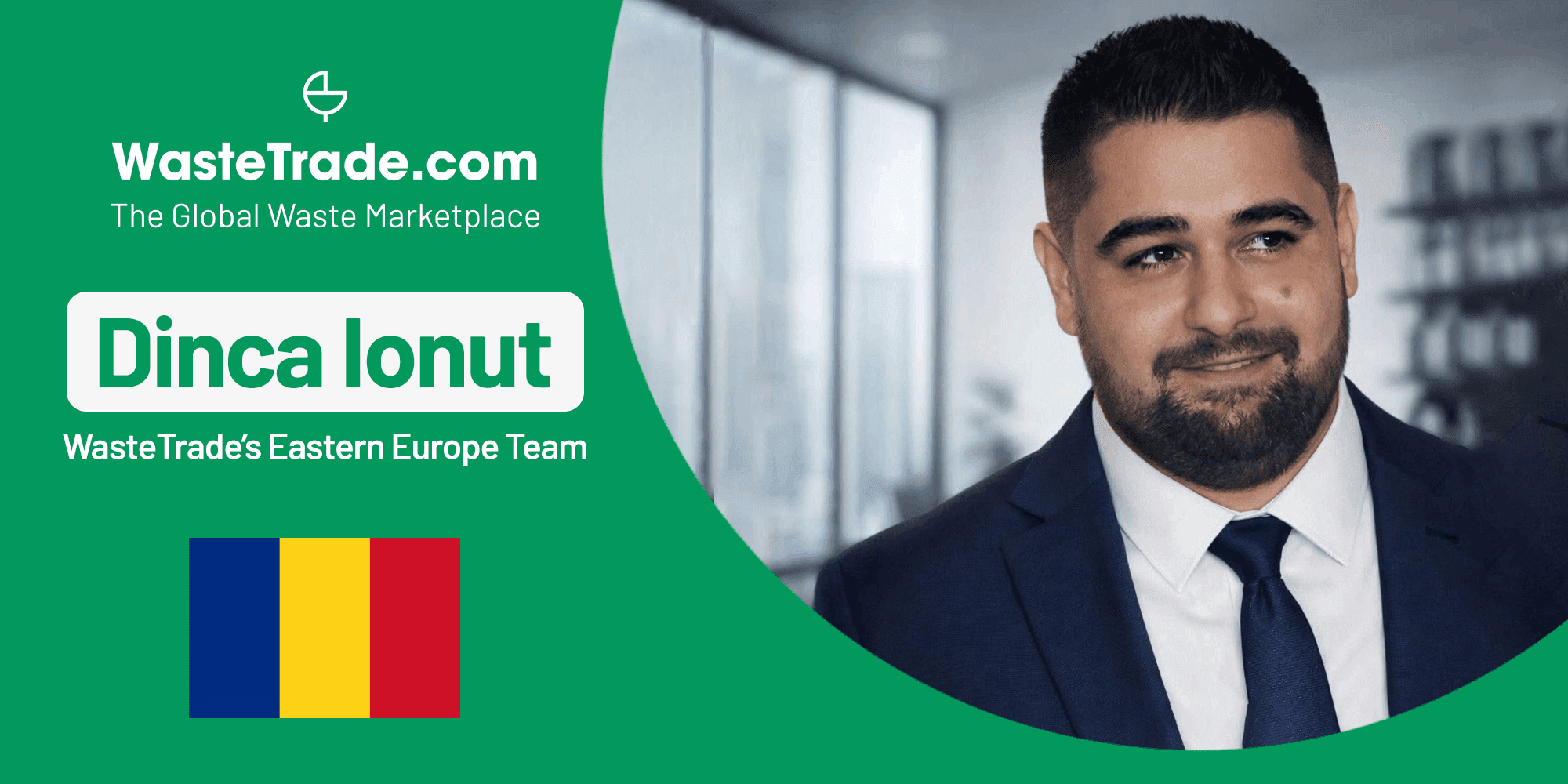
You have recently joined WasteTrade as a Regional Manager covering parts of Eastern Europe. Can you start by telling us about your background and how you first got involved in the plastics and recycling space?
I started my journey in the plastics industry around three years ago. Before that, I was working as a CNC operator in an advertising production company, where I was also managing some of my own projects from start to finish.
After that, I joined Pakire Polymers as a plastics operator, where I gained hands-on experience working directly with materials. Over time, I also got involved in procurement, handling the sourcing of various materials and necessities for the factory.
This combination of production and procurement gave me a solid foundation and naturally pushed me towards the commercial side of the recycling and plastics industry.
You mentioned that your experience has been more on the material side, particularly plastics. How has that shaped your understanding of the industry so far?
Working directly in production helped me understand materials from a practical point of view – not just theoretically. I learned how different types of plastics behave, what quality means in real terms, and how important consistency is.
Later, being involved in procurement helped me understand pricing, supplier relationships, and how decisions are made on the buying side. This mix helps me today when I speak with both sellers and buyers.
Moving into a more commercial and trading-focused role is a big change. What has that transition been like for you in the early stages?
The transition to a more commercial role has been a big step, but also a natural one. I wanted to grow beyond operations and be more involved in decision-making, negotiations, and building partnerships.
In the beginning, it comes with a learning curve, but I see it as a challenge that pushes me to develop faster.
What attracted you to WasteTrade, and what made you want to take on this new challenge?
What attracted me to WasteTrade was the opportunity to move into a more dynamic and international environment. I was looking for a new challenge where I could grow, learn faster, and be closer to the trading side of the industry.
The platform itself also stood out to me, as it brings more structure and transparency into a market that is often quite fragmented.
Since joining, what have been your first impressions of how WasteTrade operates and supports its regional teams?
Since joining in January, my first impressions have been very positive. The team is supportive, and there is a strong focus on helping you grow into your role.
I also like the fact that you are encouraged to take initiative and build your own market.
You are working across markets like Romania, Poland, and parts of Central and Eastern Europe. How would you describe the current landscape for materials like PET, HDPE, and LDPE in these regions?
In countries like Romania and Poland, there is good availability of materials like PET, LDPE, and HDPE, but quality and sorting standards can vary.
There is also strong demand, both locally and for export. The market is quite dynamic, and relationships still play a big role in closing deals.
Logistics can be a major challenge in Eastern Europe. What have you seen so far in terms of haulage, costs, and availability?
Logistics is definitely one of the main challenges in the region. Transport costs can vary a lot, and availability is not always consistent. At the same time, if you manage logistics well, it can become a competitive advantage
You are also starting to explore areas like WEEE. What opportunities do you see in expanding into different material streams?
WEEE is a segment I am currently starting to explore more. I see potential there because of increasing regulations and growing volumes.
There is an opportunity to connect suppliers with the right recycling partners and build more structured flows.
From your perspective, where are the biggest opportunities for WasteTrade in your region right now?
I think the biggest opportunity for WasteTrade in this region is to bring more visibility and structure into the market.
There is a lot of material available, but it’s not always efficiently traded. By connecting the right partners, we can unlock more consistent business.
As you continue to develop in the role, what are your main priorities over the next 6 to 12 months?
My main priority over the next 6–12 months is to be very active in the market and build a strong network across the entire value chain – from collectors to recyclers and end users.
I want to better understand each segment, strengthen relationships, and turn these connections into consistent business opportunities.
At the same time, I aim to increase activity on the platform and start closing regular deals.
Looking ahead, how do you see both your own role and WasteTrade’s presence in Eastern Europe evolving?
I see both my role and WasteTrade growing significantly in Eastern Europe.
Personally, I want to become more established in the trading side and contribute to building a strong presence in the region.
Finally, outside of work, how do you like to spend your time? Do you have any hobbies or interests that help you switch off?
Outside of work, I am a very dedicated father, and my family is my main priority. They keep me grounded and motivated, and they push me to go beyond my comfort zone every time.
At the same time, I like to stay active and continuously focus on my personal and professional development.
You can reach Dinca at: dinca@wastetrade.com