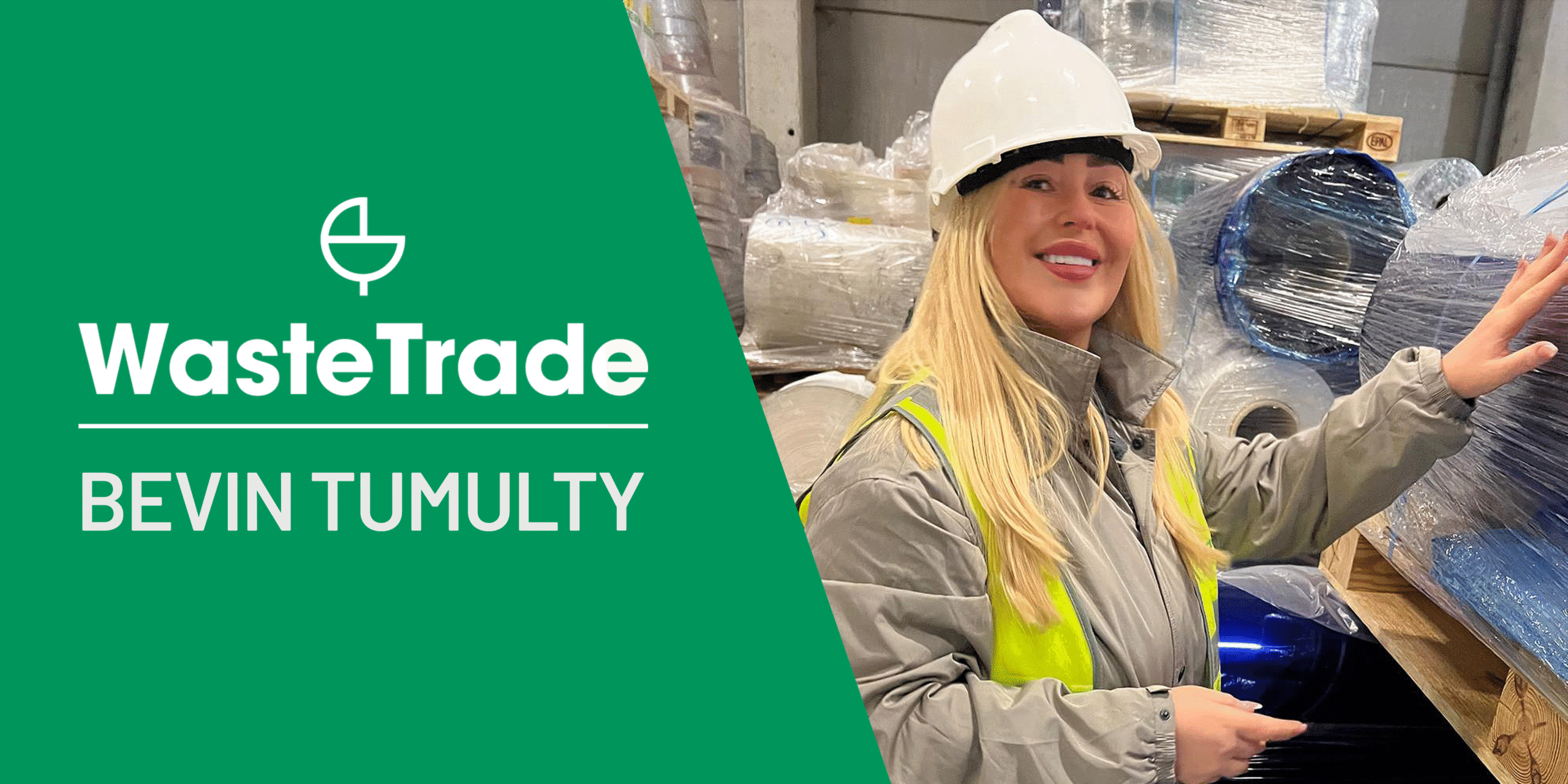
To start off, could you briefly introduce yourself and tell us what inspired you to co-found WasteTrade?
I’m Bevin Tumulty, the founder of WasteTrade.com. I launched the platform in response to key challenges I observed in the recycling industry – namely, a lack of transparency, inefficient connections between suppliers and recyclers, and increasing complexity around global compliance. My goal was to build a digital marketplace that enables the responsible and efficient trade of recyclable materials, fully aligned with both local and international regulations – unlocking environmental impact and commercial opportunity in equal measure.
How would you describe the core mission of WasteTrade today, and how has that evolved since the company was founded?
Our mission is to build a global, transparent, and regulation-ready digital marketplace for recyclable materials which can be used by corporates and governmental bodies alike. Since our launch, we’ve expanded beyond simply connecting buyers and sellers; we now provide integrated tools for logistics coordination, compliance management, real-time pricing, and strategic alliances. We’re enabling businesses not just to trade waste, but to manage it more effectively and responsibly.
Market Trends
We’re currently seeing significant shifts in global recycling markets – what trends are you noticing across the recyclable materials landscape?
The global recycling sector is undergoing rapid transformation, driven by innovation, regulation, and shifting market demands. Advanced recycling technologies – including chemical and textile-to-textile processes – are gaining ground, improving the recyclability of complex materials. Governments are enforcing stricter environmental policies, such as Extended Producer Responsibility (EPR), while end users are demanding traceability, circular design, and verified ESG performance. Automation and AI are enhancing material sorting efficiency, and there’s growing attention on hard-to-recycle streams like textiles and multi-layer plastics. Together, these trends are pushing the industry toward a more transparent, data-driven, and circular economy – where both suppliers and recyclers must adapt to stay competitive and compliant.
Are there particular material streams that are showing volatility or growth right now? What’s driving that?
Several material streams are currently showing significant volatility or growth in the global recycling sector. Food-grade recycled plastics (PCR) and recycled PET (rPET) are seeing strong demand, driven by regulatory pressure, brand commitments to sustainable packaging, and improved processing infrastructure. Battery recycling is also surging, propelled by the rapid expansion of electric vehicles and stricter disposal regulations. At the same time, streams like rPET and LDPE remain volatile due to their sensitivity to oil prices, seasonal fluctuations, and inconsistent collection quality.
In addition to these trends, WasteTrade is observing growing global momentum in fibre recycling – particularly paper and cardboard – as well as increased demand in the metal recycling sector, where industrial users are seeking sustainable alternatives to virgin inputs. These shifts highlight the importance of traceability, quality control, and agile trading platforms like WasteTrade to help suppliers and end users navigate a rapidly evolving materials landscape.
In 2025, the alternative fuels sector is expanding rapidly, with strong momentum behind waste-to-fuel technologies, refuse-derived fuels (RDF), and renewable fuels like biodiesel, RNG, and hydrogen. Innovations such as pyrolysis, gasification, and electrofuels (e-fuels) are being scaled globally, supported by decarbonisation targets and government incentives. Projects like Enerkem’s Varennes biorefinery are converting non-recyclable waste into clean fuels, creating new demand for materials once destined for landfill. As this sector grows, platforms like WasteTrade are well positioned to facilitate the sourcing and traceable trade of feedstocks essential to the alternative fuel economy.
How are geopolitical factors, such as trade restrictions, global conflict, or supply chain tensions, impacting material prices and recycling operations in the UK, Europe, and elsewhere around the world?
Geopolitical factors are significantly reshaping recycling operations and material prices around the world. Due to current world unrest, the cost of energy is a critical factor impacting recyclers, particularly in energy-intensive processes like mechanical recycling, sorting, washing, and melting. Higher energy costs increase the price of recycled materials. This can make virgin materials (which may benefit from subsidies or stable input costs) more attractive – especially in markets without strong recycled content mandates. As a result, recyclers face reduced demand, leading to stockpiles and downward price pressure.
WasteTrade.com has observed some recyclers investing in energy-efficient machinery, heat recovery systems, or onsite solar and biogas to reduce long-term energy dependence. These investments, however, require upfront capital many SMEs may not have. For recyclers, energy cost control is now a core operational concern. WasteTrade sees this driving interest in local feedstock sourcing (to reduce transport energy), improved bale quality (to reduce processing energy), and stronger policy frameworks that support recycled content use – even when energy prices are high.
Has the increasing push for onshoring and supply chain resilience changed how companies source or value recycled materials?
Our team has definitely seen a shift in how companies source and value recycled materials due to the growing focus on onshoring and supply chain resilience. Global disruptions – from the pandemic to geopolitical tensions – have exposed the risks of relying too heavily on international supply chains. In response, businesses are increasingly turning to locally sourced recyclates as a more stable and controllable alternative to imported virgin materials. Even when local recycled feedstock comes at a slightly higher cost, the benefits in terms of security, traceability, and ESG alignment are now being recognised. At WasteTrade, we’ve seen a clear uptick in demand for regional supply options, with buyers placing more importance on quality assurance, compliance, and long-term reliability. Recycled materials are no longer viewed simply as cost-saving substitutes – they’re becoming strategic assets within resilient, sustainable supply chains.
What role do you see a digital marketplace like WasteTrade playing in future-proofing businesses against market volatility?
By digitising the trading process, we enable businesses to access real-time pricing, verified suppliers, and compliant logistics all in one place. More importantly, our platform ensures traceability, documentation, and regulatory alignment, which are increasingly essential for ESG reporting and cross-border compliance. We help businesses secure stable supply chains for recyclable materials, reduce dependency on informal networks, and respond quickly to market changes with data-backed decisions. In short, our platform transforms recycling from a reactive process into a strategic, future-ready function of modern business.
From your perspective, what’s the most overlooked trend in the recycling or waste management sector right now?
While there’s a lot of focus on volumes, pricing, and compliance at the surface level, many businesses still lack reliable systems to accurately track the origin, movement, and destination of recyclable materials. This gap poses a serious risk – not only in terms of regulatory compliance, but also for ESG reporting, carbon footprint accounting, and supply chain transparency. As regulations tighten and buyers demand more proof of environmental performance, the companies that have invested in robust, verifiable data will be far better positioned to compete and grow. It’s not just about moving waste anymore – it’s about proving its journey, and too few players are prepared for that shift.
Mechanical Recycling
Can you explain why mechanical recycling is such a crucial process in today’s circular economy?
Mechanical recycling is becoming more important than ever because it gives companies a practical way to deal with their own plastic waste. Many brands are now forming partnerships with mechanical recyclers – or even building their own in-house recycling systems – so they can turn used materials back into new products. This “closed-loop” approach means, for example, a company can collect its own packaging waste, recycle it, and reuse it in future packaging. It helps them cut costs, reduce their environmental impact, and meet growing demands from customers and regulators to be more sustainable. At WasteTrade, we’re seeing a clear trend: brands want more control over their waste and a reliable supply of quality recycled materials – and mechanical recycling is one of the best ways to achieve that.
What are some of the biggest challenges facing mechanical recyclers in the UK and Europe?
Firstly, contamination and inconsistent feedstock – mixed materials, food residue, or poor sorting – can render entire batches unusable, driving up costs. Secondly, uneven or low volumes of quality input make it hard to run efficient operations. As mentioned before, high energy prices also weigh heavily on budgets, especially in energy-intensive processes like melting and washing. Finally, increasing regulatory pressure and evolving standards require more investment in compliance systems, tracing, and reporting. Together, these factors can squeeze margins, hinder scalability, and slow the transition to truly circular packaging systems.
We often hear about the ‘recyclability’ of packaging or products, but how big is the gap between what’s technically recyclable and what actually gets recycled?
I can say the gap between what’s technically recyclable and what actually gets recycled is still very large – and often misunderstood. Just because a material can be recycled doesn’t mean it will be. In reality, many “recyclable” products aren’t processed due to contamination, poor design, lack of collection infrastructure, or economic viability. For example, multi-layer packaging or black plastics are often labelled recyclable but rarely get recovered in mechanical recycling. This gap creates confusion for both consumers and businesses and undermines circular economy goals. At WasteTrade, we work to bridge that gap by improving material traceability, promoting cleaner input streams, and connecting mechanical recyclers with the kind of feedstock they can actually process efficiently. True recyclability comes down to design, logistics, and economics – not just technical possibility.
What innovations or technologies are you seeing emerge to improve the effectiveness or efficiency of mechanical recycling?
We’re seeing some exciting innovations that are really improving the efficiency and effectiveness of mechanical recycling. AI-powered and sensor-based sorting technologies are making it possible to identify and separate materials with far greater accuracy, which reduces contamination and increases output quality. Hot-washing systems and advanced flake purification processes are also helping recyclers produce higher-grade recycled plastics, including food-safe material. On top of that, blockchain and digital traceability tools, like the ones WasteTrade.com are implementing, are being used to track material from source to reprocessor, building trust and compliance into the process. These technologies are not only boosting the performance of recycling facilities – they’re making it more viable for businesses to depend on recycled materials in their supply chains. At WasteTrade, we’re actively supporting these developments by helping recyclers source better feedstock and digitise their operations.
In your view, what policy or regulatory changes would most support mechanical recyclers right now?
In my view, one of the most impactful policy changes to support mechanical recyclers would be the introduction and enforcement of mandatory recycled content targets across industries – especially in packaging, construction, and consumer goods. This would create guaranteed demand for recycled materials and help level the playing field with cheaper virgin alternatives. We also need more consistent and harmonised waste classification standards across borders, as the current complexity around cross-border shipments creates costly delays and uncertainty.
Additionally, governments should offer incentives for investment in recycling infrastructure and energy-efficient technology, particularly for SMEs who are often left behind. Finally, better product design regulations that require packaging to be recyclable in practice – not just in theory – would improve feedstock quality at the source. At WasteTrade, we see firsthand how policy can either unlock or limit recycling potential, and we believe a more aligned, ambitious framework would give mechanical recyclers the confidence to scale.
Are there any successful models – countries or companies – that you think others should learn from when it comes to mechanical recycling?
Yes, there are several successful models that others can learn from when it comes to mechanical recycling within the national and international waste recycling sector. WasteTrade is proud to hold many of these companies within our dataset. We also see real leadership from private recyclers. Rymoplast in the Netherlands is a great example – they’ve developed a highly efficient, closed-loop approach to plastic recycling with a strong emphasis on quality and traceability.
Thees Recycling, based in Germany, is another success story, known for its advanced processing of post-industrial plastics and investment in high-grade regranulate production. Then there’s Ravago, a global player that’s made significant strides in integrating mechanical recycling into large-scale material supply chains, giving manufacturers easier access to recycled content.
These companies are proving that mechanical recycling can be both technically advanced and commercially viable, and they’re setting the standard for what others in the industry should aim to replicate. At WasteTrade, we’re proud to work with partners who share this forward-thinking, circular approach.
Looking Ahead
How is WasteTrade supporting or enabling better mechanical recycling practices through its platform?
At WasteTrade, we’re focused on solving some of the key barriers that mechanical recyclers face – starting with access to clean, traceable, and consistent feedstock. Our platform connects recyclers directly with verified suppliers, helping them secure the quality of input materials needed to run efficient operations. We also streamline the process by managing essential logistics and compliance documentation, which saves time and reduces the risk of delays or non-compliant shipments. Beyond transactions, we’re building a data-driven ecosystem that supports full traceability and ESG reporting, which is increasingly vital for both regulators and brand partners. Ultimately, WasteTrade isn’t just a marketplace – it’s a tool that empowers mechanical recyclers to scale with confidence, reduce operational friction, and meet growing circular economy demands.
If you could change one thing about the recycling industry today, what would it be?
If I could change one thing about the recycling industry today, it would be to see a stronger focus on education and inclusion – starting from the classroom and extending right through to leadership. There’s still a significant gap in how recycling and circular economy principles are taught at school level. Embedding this knowledge early on would not only raise awareness but also inspire the next generation of innovators and sustainability leaders. Equally, I believe the industry would benefit from more female-led companies and diverse leadership. Recycling, like many industrial sectors, has traditionally been male-dominated, but some of the most impactful ideas and initiatives I’ve seen have come from women driving change – whether in policy, technology, or business. If we want a truly modern, effective recycling industry, we need to foster both education and diversity as core pillars of progress. At WasteTrade, we’re committed to being part of that shift.
What’s next for WasteTrade in 2025; what should the industry be watching out for?
Looking ahead to 2025, WasteTrade is entering a really exciting phase of growth and international expansion. We’ve just launched our newly incorporated office in Ghana, which will allow us to establish a stronger presence across West Africa – a region with incredible potential for scalable recycling infrastructure and circular economy development. At the same time, we’ve formalised our presence in Eastern Europe through WasteTrade.com Romania SRL, giving us a strategic base to serve key EU markets and strengthen our international coverage.
Technologically, we’re continuing to push the platform forward. We’re expanding our focus on blockchain integration to ensure greater traceability, data integrity, and compliance in global waste transactions. In parallel, our AI capabilities are evolving to deliver smarter material matching, pricing insights, and risk monitoring – making trading faster, more transparent, and more efficient for users across the supply chain. We’re also in the early stages of developing our Middle East presence, where we see strong alignment between WasteTrade and the region’s sustainability goals.
So in short, 2025 is about scaling up – not just in reach, but in the depth of service we offer to recyclers, suppliers, and logistics partners worldwide.