A Takeover That Says more Than it Seems
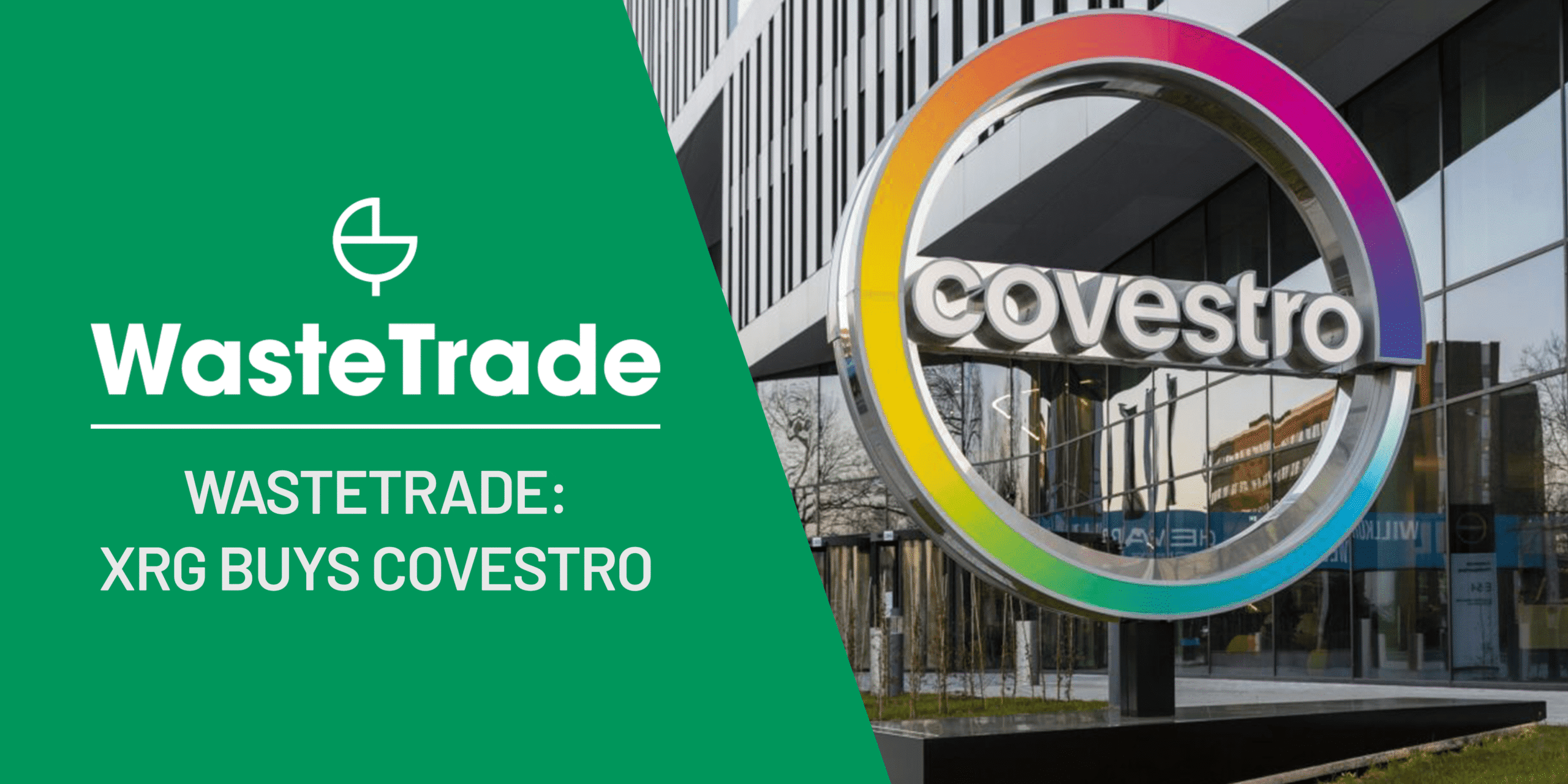
XRG’s takeover of Covestro is being read as another big-ticket chemicals deal. It is not. It is a signal. Capital is moving decisively into polymers because polymers sit at the centre of everything regulators now care about – vehicles, packaging, construction, electronics, energy efficiency. What looks like an investment story is, in reality, a regulatory one.
XRG did not buy Covestro to run recycling plants or chase marginal efficiency gains. It bought access to advanced materials markets that are becoming more tightly regulated every year. That distinction matters. The next phase of growth in polymers will not be driven by volume alone, but by who can operate inside tightening rules on emissions, recycled content and producer responsibility.
Why XRG Bought Covestro
Covestro is one of the world’s largest producers of high-performance polymers, with deep exposure to automotive, construction, electronics and industrial manufacturing. It brings scale, global reach and decades of materials science capability. For XRG, that is the foundation.
But the real value lies in future positioning. As recycled content mandates expand and Extended Producer Responsibility schemes become more demanding, polymer producers will be judged not just on product performance, but on provenance. XRG is buying a platform that can be adapted to a world where compliance, verification and traceability define market access.
This is not about owning waste streams. It is about controlling materials that must increasingly prove where they came from and where they are going.
What Sustainable Polymers Really Mean
“Sustainable polymers” is an elastic term. In practice, most are not fully recycled materials today. Many are virgin polymers engineered to reduce emissions during use – lighter vehicles, better insulation, longer product life. Others rely on mass balance systems, bio-attributed feedstocks or chemically recycled inputs that sit upstream of traditional recycling.
Regulators are now asking harder questions. Was recycled content real or allocated on paper? Was it additional or displaced from another use? Can it be traced back to an actual waste source?
Chemistry alone does not answer those questions. Data does.
Recycling is Not the Bottleneck, Proof is
Across Europe and beyond, recycling capacity is growing. Mechanical and chemical recycling investments are accelerating. Yet the industry is discovering that capacity without verification does not unlock compliance.
EPR schemes, recycled content mandates and Scope 3 reporting frameworks demand evidence. Not claims, not averages, not marketing language. Evidence that a specific quantity of material moved through a compliant system and re-entered production.
This is where many polymer strategies stall. The waste and recycling sector remains fragmented, regional and inconsistent in data quality. Without shared infrastructure, even well-funded circular ambitions struggle to survive regulatory scrutiny.
EPR and Recycled Content are Reshaping Supply Chains
Extended Producer Responsibility has shifted responsibility upstream. Producers are no longer accountable only for what they sell, but for what happens after use. At the same time, recycled content requirements are moving from voluntary targets to enforceable thresholds.
These policies do not fit linear supply chains. A linear model cannot tell regulators where material originated, how it was processed, or whether it has already been counted elsewhere.
Circular supply chains require coordination across multiple actors, consistent material definitions and reliable records. Without that, compliance risk becomes commercial risk.
Where WasteTrade Fits
WasteTrade exists in the space where policy meets reality.
It is not a waste broker. It is regulatory infrastructure. A platform designed to connect physical material flows with the data and verification frameworks regulators require.
WasteTrade enables traceable, auditable movements of recyclable materials across borders and sectors. It provides clarity on material type, grade, quantity and destination. Most importantly, it creates a record that can be relied upon by producers, recyclers, PROs and regulators.
In a market where capital is pouring into polymers, WasteTrade addresses the question that money alone cannot solve – how recycled and circular inputs are proven, not promised.
Bridging Capital and Waste Systems
Deals like XRG-Covestro highlight a growing disconnect. Capital is flowing faster than the systems needed to support regulatory compliance.
Polymer producers can invest billions in plants and technology, but they remain dependent on fragmented waste systems for feedstock. Without traceability, those feedstocks cannot support recycled content claims or EPR obligations at scale.
WasteTrade acts as the connective tissue. It links waste producers, recyclers and material users into a single, verifiable chain. That reduces compliance risk, supports investment decisions and allows circular strategies to operate in the real world, not just in boardroom slides.
What This Means for Automotive and Manufacturing
For automotive OEMs and Tier 1 suppliers, recycled content is no longer a branding exercise. It is a regulatory requirement with penalties attached. Supply security now includes the ability to prove compliance across borders and suppliers.
Polymer producers and compounders face the same reality. Sustainable materials that cannot be verified will struggle to hold value. Access to compliant, traceable feedstock will become a competitive advantage.
For EPR schemes and Producer Responsibility Organisations, the challenge is scale. Manual reporting and fragmented data cannot support expanding obligations. Infrastructure is required.
For regulators and policymakers, enforcement depends on systems that can track materials without stifling trade. Platforms like WasteTrade make policy enforceable without making it unworkable.
The Future of Polymers Will be Verified
The XRG-Covestro deal shows where capital believes the future lies. Regulation will decide who actually succeeds.
The polymer industry is moving into a phase where materials must be traced, verified and accounted for across their entire lifecycle. Circularity is no longer a concept. It is an operational requirement.
WasteTrade exists to make that system function. Not by rewriting policy or reinventing chemistry, but by building the infrastructure that allows circular supply chains to stand up to regulatory scrutiny.
In the next phase of polymer transformation, the winners will not be those who claim sustainability loudest, but those who can prove it quietly, consistently and at scale.