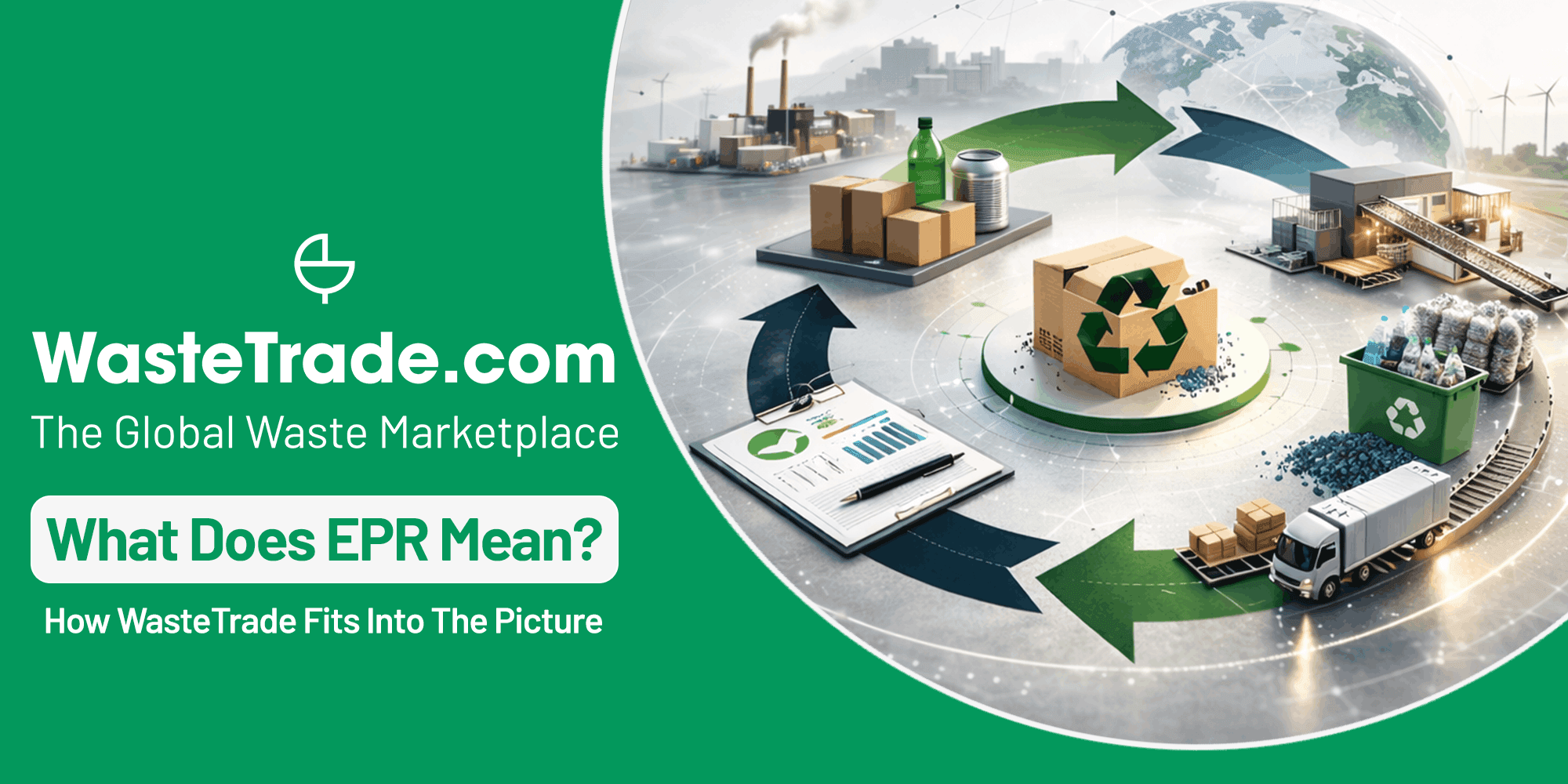
When people ask “What does EPR mean?”, they often expect a tidy regulatory definition. Extended Producer Responsibility sounds technical, even abstract. In practice, it is neither. It is a financial reallocation on a national scale.
EPR means producers now pay for the full cost of managing household packaging waste. It means packaging design decisions carry fee consequences. It means data accuracy has become a commercial risk. And in its first year, it has already required a government intervention to prevent fee instability.
The recent confirmation that Year 1 disposal fees under the UK packaging regime will not increase, despite a funding shortfall, offers short term stability. It does not remove the underlying pressure. If anything, it clarifies where the pressure now sits.
EPR Scheme
The EPR Scheme for packaging replaces the previous system of shared cost and partial responsibility. Under the new model, producers fund the efficient management of household packaging waste in full. Local authorities receive payments to collect, sort and process packaging materials. Producers receive the bill.
The funding mechanism is straightforward in theory. Total efficient waste management cost divided by total packaging tonnage placed on the market determines the per tonne fee. In Year 1, as producers refined and resubmitted data, total reported tonnage fell. The denominator shrank. A shortfall appeared.
Under normal regulatory conditions, per tonne fees would have been recalculated upwards. Instead, the government has agreed to close the gap as a one off measure. Producers will pay what was set out in their Notices of Liability. Local authorities will still receive the expected £1.4 billion for 2025 to 2026.
This was not an act of generosity. It was a decision to protect stability in the first year of a complex national reform.
UK EPR
UK EPR is now operational. It is not theoretical. Invoices are real. Data reporting obligations are detailed. Enforcement will follow.
Year 1 fees are flat base rates by material. Plastic attracts a significantly higher per tonne charge than paper and card or glass. That structure reflects average cost profiles across local authorities. It does not yet reward or penalise design nuance.
That changes in Year 2.
From 2026 onwards, UK EPR introduces fee modulation based on recyclability. The Recyclability Assessment Methodology will classify packaging and adjust charges accordingly. Materials that are difficult to recycle will become more expensive. Packaging that aligns with established collection and processing systems will be treated more favourably.
This is where EPR moves from accounting exercise to design discipline.
Extended Producer Responsibility For Packaging
Extended Producer Responsibility For Packaging is not simply about who pays. It reshapes how packaging is specified, sourced and traded.
Brand owners now have direct financial exposure to material choice. Importers placing packaging on the UK market assume full obligation. Retailers with own brand lines face scrutiny not only on volume, but on composition.
If packaging data is wrong, fees are wrong. If tonnage is misclassified, liability shifts. The Year 1 shortfall illustrates how sensitive the system is to reporting accuracy. As deadlines move forward and guidance tightens, tolerance for correction will narrow.
For businesses that operate on tight margins, the difference between a recyclable polymer and a composite format is no longer marginal. It is measurable in pounds per tonne.
The Funding Gap Was a Warning
The Year 1 shortfall occurred because total packaging tonnage reported to regulators fell after resubmissions. The cost of managing waste did not fall in parallel. The gap had to be filled.
This exposed two realities.
First, the EPR Scheme is only as stable as the data it relies upon. Producers must now treat packaging data with the same seriousness as financial reporting.
Second, the political system will not absorb volatility indefinitely. The current intervention has been described as exceptional. That language matters. It signals that future recalculations may fall squarely on producers.
In other words, Year 1 was protected. Year 2 may not be.
Design Has a Price
Under Extended Producer Responsibility For Packaging, recyclability is becoming a financial lever.
Packaging formats that disrupt existing collection streams, that rely on niche processing capacity, or that contaminate recycling systems will carry higher cost exposure once modulation is active. Businesses that have not stress tested their packaging portfolios against these criteria are taking a risk.
At the same time, demand for high quality recyclate is set to rise. As producers seek to demonstrate compliance and improve recyclability profiles, competition for verified secondary material will intensify.
This is not abstract sustainability language. It is supply chain arithmetic.
Infrastructure Is Expanding
The £1.4 billion flowing to local authorities in 2025 to 2026 is already being allocated. Collection services are being maintained. Sorting facilities are being upgraded. Suffolk County Council’s investment in enhancing the Masons MRF site in Ipswich, supported by pEPR funding, is one example among many.
As infrastructure expands, throughput increases. More material is captured. More output enters the secondary market.
The question then becomes practical. Where does that material go. How is it priced. Who verifies quality. How are transactions structured across borders under tightening regulatory oversight.
This is where digital trading infrastructure starts to matter.
Market Liquidity Matters
The EPR Scheme changes cost allocation, but it also reshapes material flows. Producers facing higher exposure under UK EPR will look for ways to source compliant materials more efficiently. Recyclers benefiting from improved infrastructure funding will look for reliable outlets for processed output.
WasteTrade sits in this space.
As a global B2B marketplace for recyclable materials, WasteTrade connects waste producers, processors and buyers in a transparent trading environment. Listings are detailed, counterparties are verified, and transactions are structured with compliance and secure payment mechanisms built in.
In a world where Extended Producer Responsibility For Packaging ties cost directly to material characteristics, access to accurate market information becomes commercially valuable. WasteTrade provides visibility on material availability, grading and pricing across regions. That helps procurement teams make decisions grounded in real supply conditions rather than assumption.
Compliance Is No Longer Peripheral
UK EPR places greater emphasis on documentation, traceability and regulatory conformity. Cross border movement of waste materials remains subject to strict rules. Mistakes are costly.
WasteTrade’s model incorporates compliance support and structured logistics planning. For businesses navigating both EPR reporting obligations and international material flows, reducing friction in documentation and verification is not an administrative luxury. It is risk management.
The combination of regulatory oversight and financial exposure means producers cannot treat secondary markets as informal or opaque. They require transparency and assurance. Digital marketplaces that embed compliance into the transaction process reduce uncertainty at precisely the moment uncertainty is expensive.
Strategy, Not Reaction
The government’s decision to stabilise Year 1 fees under UK EPR buys time. It does not remove structural change.
Producers should now be modelling packaging portfolios against modulated fee scenarios. They should be reviewing data governance processes to ensure reporting resilience. They should be securing supply relationships for recyclable inputs before competition tightens.
WasteTrade does not replace strategic planning. It enables it. By connecting supply and demand across verified networks, it helps businesses align material sourcing with regulatory reality. It supports liquidity in secondary markets at the same time as Extended Producer Responsibility For Packaging increases pressure on primary material choices.
What does EPR mean? It means the economics of packaging have shifted. It means the cost of waste is no longer distant. It sits on the producer’s balance sheet.
Those who treat Year 1 as a warning rather than reassurance will be better placed when modulation begins. Those who build visibility and flexibility into their material supply chains now will navigate UK EPR with greater confidence.
The policy framework is set. The infrastructure funding is flowing. The discipline is coming.
The market will adjust. The question is who adjusts first.