The global trade in waste and recyclable materials is expanding rapidly. Demand for secondary raw materials is growing, cross-border supply chains are tightening, and more businesses are looking beyond domestic markets to keep material moving.
At the same time, regulatory enforcement is increasing just as quickly.
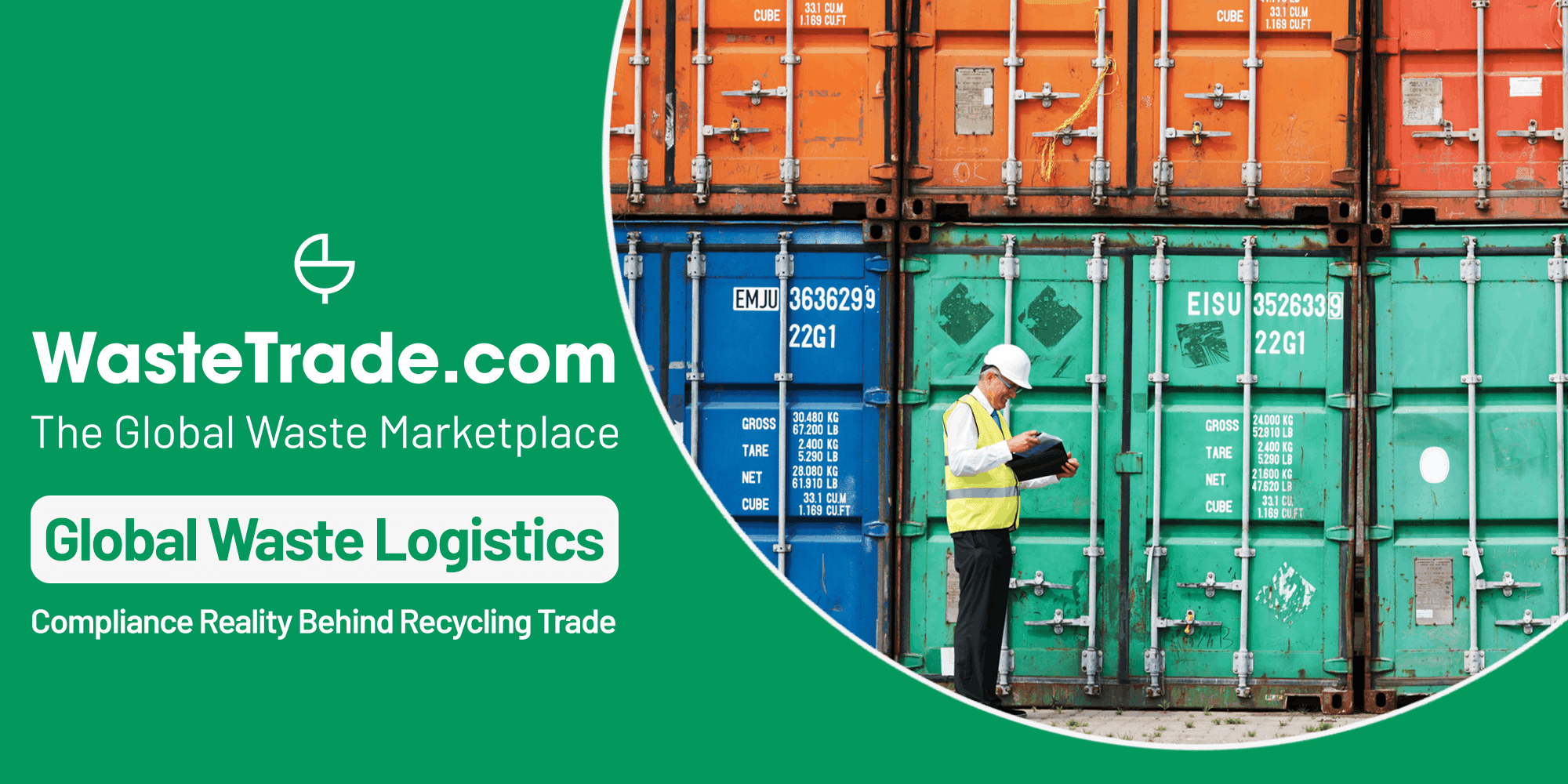
One assumption continues to cause more disruption, cost, and legal exposure than almost any other: the idea that waste logistics is simply freight with a different label. It is not. Waste and recyclable materials sit in a distinct legal category, governed by environmental law, customs regimes, and international agreements that do not apply to finished goods.
For companies trading recyclables across borders, this distinction matters more than ever.
Waste Logistics Is A Regulated Activity
Waste does not become unregulated simply because it has value or a recycling destination. In most jurisdictions, regulation applies at every stage of movement, from initial handling through to final recovery.
That includes:
- Collection and storage
- Transport and transhipment
- Export and import
- Recovery or disposal at destination
Each step must demonstrate who is responsible, whether they are authorised to act, and under which legal framework the material is moving. Treating waste as just another commodity is one of the most common mistakes in international recycling markets, and one of the most expensive.
Waste Carrier Licences Are Not Optional
Around the world, the terminology differs. Waste carrier licences, transporter permits, operator registrations, environmental authorisations. The language changes, but the obligation does not.
Only authorised operators may transport waste.
This requirement is enforced globally, not just in highly regulated markets. Transporter details are routinely checked against environmental and customs documentation, and misalignment can invalidate an otherwise compliant shipment.
In the United Kingdom, for example, waste transporters must be registered with the relevant regulator, whether that is the Environment Agency, SEPA, NRW, or NIEA. Carrier registration details must align with Annex VII documentation, TFS notifications, and commercial paperwork. Using an unregistered carrier can undermine the entire movement.
Across the European Union, similar expectations apply under the Waste Shipment Regulation, with increasing scrutiny on transporter authorisation, traceability, and destination permits.
The same principles extend well beyond Europe.
Import Controls In Turkey, Africa, And The Middle East
In Turkey, waste and recyclable imports are tightly controlled. Importers and transporters must be licensed, HS codes are closely scrutinised, and tariffs apply to certain clean recyclable materials depending on classification. Errors in coding or unclear waste descriptions frequently lead to reclassification, unexpected duties, or outright refusal at port.
Ghana enforces waste movements through Environmental Protection Agency oversight and port authority controls. Shipments are reviewed for Basel compliance, proof of recovery operations, and transporter authorisation. Incomplete or inconsistent documentation can result in delays or rejection, even where material is non-hazardous.
Egypt operates a similarly strict regime, with ministry-level approvals and strong customs oversight. Authorities draw a clear distinction between waste and raw material. When HS codes, waste descriptions, and intended use do not align, shipments are often stopped or reclassified.
Saudi Arabia has also increased regulation of waste and secondary materials, linking import licensing and environmental approvals to wider sustainability objectives. Classification disputes and documentation inconsistencies increasingly trigger enhanced review.
Across these regions, enforcement is not theoretical. It is happening daily.
Basel Codes And HS Codes Are Not The Same Thing
One of the most persistent sources of global compliance failure is the assumption that environmental classification and customs classification automatically align. They do not.
Basel codes are used to classify waste under the Basel Convention, determining whether material is waste, whether it is hazardous, and whether it can move freely or requires notification. Many countries reference Basel principles in environmental enforcement.
HS codes, by contrast, are customs tools. They determine tariffs, import restrictions, and inspection regimes. Customs systems do not always map cleanly to environmental classifications.
When Basel and HS codes are misaligned, the result is often delay, dispute, or financial exposure. Authorities may reclassify material, apply unexpected duties, or question whether the shipment should have moved at all.
This risk is increasing as more countries introduce tariffs or restrictions on recyclable materials, particularly where there is concern about waste dumping or misdeclared imports.
Tariffs And Financial Exposure Are Increasing
The idea that clean recyclables move freely across borders is becoming outdated. Turkey’s tariff on certain recyclable imports is one clear example, but it is not unique.
Across multiple regions, recyclable materials are now subject to:
- Tariffs linked to HS classification
- Enhanced inspection regimes
- Import licensing requirements
- Reclassification risk at port
In many cases, financial exposure arises not because material is problematic, but because documentation does not tell a consistent story. Clean material does not guarantee unrestricted movement if its legal status is unclear.
Transit Countries Still Enforce Compliance
Another common misconception is that transit countries are neutral corridors. In reality, major logistics hubs apply some of the highest levels of scrutiny.
The Netherlands is a clear example. As a major European transit country, Dutch authorities enforce EU Waste Shipment Regulation requirements rigorously. Annex VII documentation, TFS notifications, transporter authorisation, and destination permits are all subject to review.
Compliance failures upstream are frequently identified at transit ports. A shipment may leave its country of origin without issue, only to be flagged elsewhere due to inconsistencies in paperwork or classification.
Responsibility does not disappear in transit.
Documentation Must Be Consistent Across Borders
Regulators are not looking for volume. They are looking for alignment.
For waste to move legally, documentation must tell one clear, consistent story across environmental and customs systems. That includes:
- An authorised waste transporter
- Accurate environmental classification
- Correct HS code
- Appropriate Annex VII or TFS documentation where required
- A clearly permitted destination and recovery route
Inconsistencies between documents are treated as red flags. Whether the issue arises from misunderstanding, poor coordination, or cost-cutting makes little difference at the point of enforcement.
Why This Matters To The WasteTrade Community
WasteTrade operates as a global marketplace connecting buyers, sellers, and logistics providers across Europe, the Middle East, Africa, and beyond. That means transactions do not sit within a single regulatory framework.
One weak link in a cross-border movement can expose every party involved. Buyers, sellers, transporters, and platforms all carry risk when waste logistics is handled casually.
Responsible trade protects more than individual shipments. It protects market access, regulatory standing, and trust in circular material flows at a global level.
Promoting authorised transport, accurate classification, and transparent documentation is not a barrier to trade. It is what allows trade to continue.
Waste Logistics Is A Global Responsibility
Moving waste and recyclable materials is not simply about getting material from A to B. It is about legal accountability, environmental protection, and traceability across borders.
As enforcement increases worldwide, getting waste logistics wrong is no longer a local issue. It is a global risk with financial, legal, and reputational consequences.
At WasteTrade, supporting responsible global trade in recyclable materials means recognising that authorisation, accurate classification, and compliant logistics are fundamental. Circular markets only function when trust, accountability, and regulatory awareness are built into every movement.