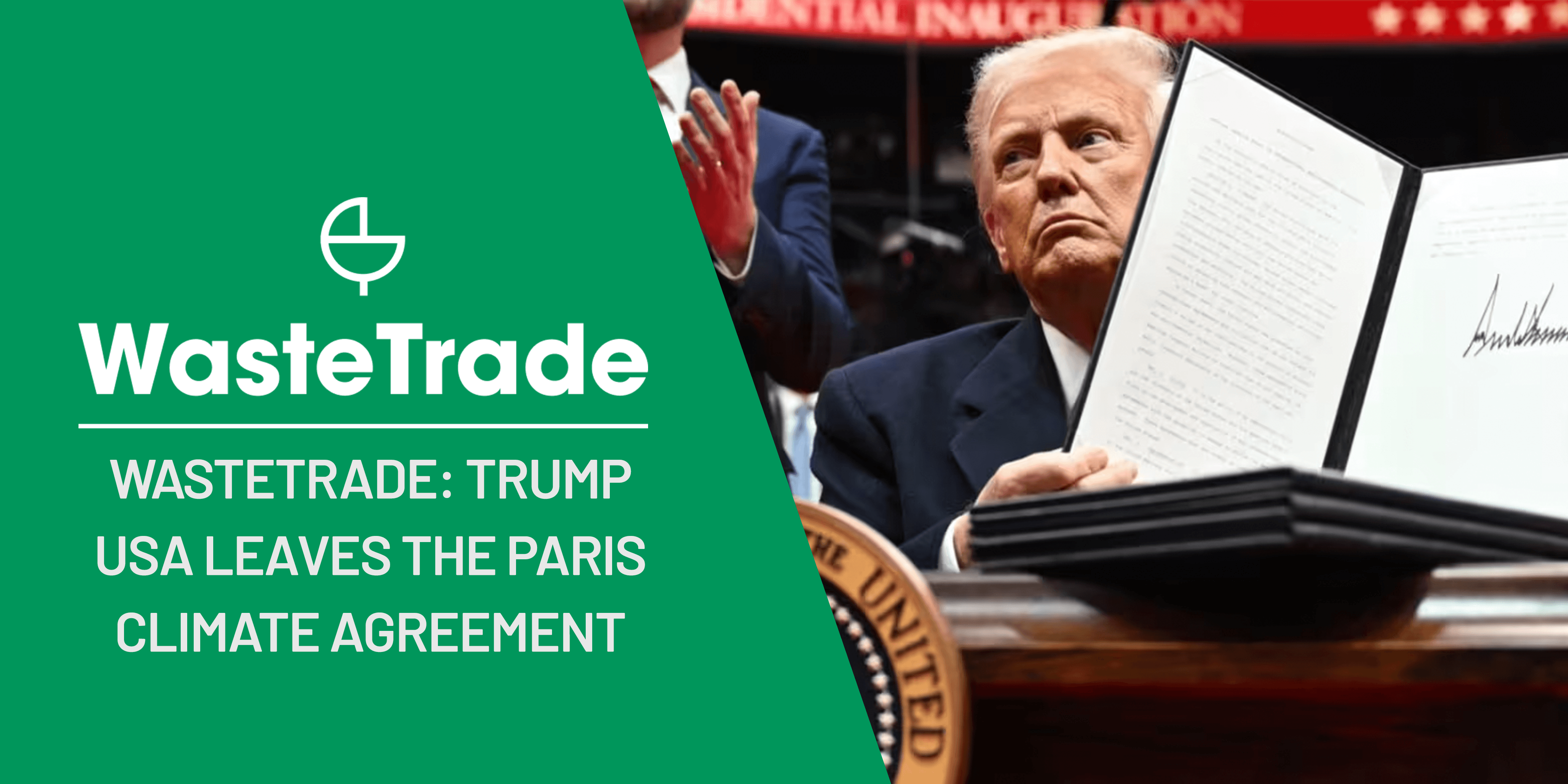
The recent shift in US climate policy, marked by the decision to withdraw from the Paris Climate Agreement and prioritise increased fossil fuel production, has raised significant concerns about the future of sustainability and recycling. The move, accompanied by a rollback of environmental regulations, signals a policy direction that could weaken commitments to circular economy principles and emissions reductions.
While energy security and economic stability are crucial, the environmental and long-term economic consequences of prioritising fossil fuel expansion cannot be ignored. The intersection of climate policy and waste management is critical – recycling and sustainability efforts depend on regulatory support, economic incentives, and a global commitment to reducing waste.
WasteTrade remains politically neutral but firmly supports policies that encourage responsible resource management, waste reduction, and a thriving circular economy. The following analysis explores the implications of these policy changes, particularly the impact of cheap fossil fuels on recycling, and why sustainable policies remain essential for economic and environmental stability.
The Paris Agreement and the Circular Economy
The Paris Climate Agreement, signed by nearly every country, provides a framework for global cooperation in reducing carbon emissions and mitigating climate change. While not legally binding, it plays a pivotal role in setting targets, encouraging investment in sustainable industries, and holding nations accountable for their climate commitments.
Recycling and waste reduction are integral to achieving climate goals. The production and disposal of materials, particularly plastics, contribute significantly to global emissions. By increasing recycling rates and promoting the reuse of materials, businesses and governments can reduce the environmental burden of extraction, manufacturing, and landfill waste.
A weakened commitment to international climate agreements risks undermining these efforts. Without clear regulations and economic incentives, businesses may shift back towards less sustainable practices, reversing progress made in waste management and emissions reductions.
The Risks of ‘Drill, Baby, Drill’ for Recycling
One of the immediate consequences of prioritising fossil fuel expansion is the effect on material costs, particularly plastics. Virgin plastics, derived from petrochemicals, become significantly cheaper when oil prices drop. As a result, businesses have a stronger financial incentive to use new plastic rather than recycled alternatives, reducing demand for recycled materials and making it harder for recyclers to compete.
The impact of this shift extends beyond pricing. Recycling infrastructure relies on stable market conditions to remain viable. If demand for recycled materials decreases, investment in recycling facilities, collection programmes, and innovation in waste management is likely to decline. This, in turn, leads to higher landfill volumes, increased environmental pollution, and a greater reliance on resource extraction.
Furthermore, the expansion of fossil fuel production risks delaying the transition to a circular economy. As the world moves towards more sustainable practices, many industries have been working to reduce dependence on fossil-based materials. A surge in oil and gas production, combined with a rollback of environmental policies, creates an uneven playing field where sustainability initiatives struggle to compete.
A Call for Balance
A false dichotomy often emerges in discussions around climate policy—that economic growth must come at the expense of environmental responsibility. However, long-term economic stability is intrinsically linked to sustainability. Resource depletion, environmental degradation, and climate-related disasters impose significant costs on businesses and governments alike.
Countries that prioritise sustainability are already seeing the benefits. The global market for clean energy, sustainable manufacturing, and waste management is expanding rapidly, offering new economic opportunities and job creation. Recycling and circular economy policies not only reduce environmental harm but also stimulate innovation, providing competitive advantages to businesses willing to invest in sustainable solutions.
Governments have a responsibility to create policies that ensure economic growth does not undermine environmental sustainability. Well-structured regulations can support both objectives, providing businesses with incentives to adopt greener practices while maintaining financial viability.
WasteTrade’s Perspective
WasteTrade firmly supports policies that encourage sustainability, waste reduction, and responsible resource management, and shares in the vision and objectives of the Paris Climate Agreement. The global waste industry stands at a critical juncture—without regulatory support and economic incentives, recycling efforts could be significantly undermined.
Recycling Needs Regulatory Support
A well-functioning recycling market depends on stable policies that encourage businesses to prioritise recycled materials over virgin alternatives. Without such measures, short-term financial pressures will continue to favour unsustainable production and disposal methods.
Sustainable Waste Management Reduces Long-Term Risks
Proper waste management is not just an environmental concern—it has direct economic benefits. Reducing landfill dependence, improving material recovery, and investing in recycling infrastructure lower long-term costs and mitigate the risks associated with resource depletion.
Sustainability Must Remain a Global Priority
The transition to a circular economy is already underway. Countries that invest in sustainable practices will lead in emerging industries, secure economic advantages, and contribute to a more stable global economy. WasteTrade remains committed to supporting businesses in finding ethical, sustainable waste solutions that align with long-term environmental and financial goals.
Looking Ahead
The shift in US climate policy has significant implications for sustainability, recycling, and the broader efforts to transition towards a circular economy. While fossil fuel expansion may provide short-term economic benefits, the long-term consequences – including increased reliance on virgin plastics, weakened recycling markets, and higher environmental costs – cannot be overlooked.
Regardless of political shifts, the need for sustainable waste management remains pressing. Businesses and consumers must continue to demand responsible practices, while governments should recognise the long-term value of supporting recycling and circular economy initiatives.
WasteTrade will continue to advocate for a future where sustainability and economic prosperity go hand in hand. The global waste industry must remain resilient, adapting to policy changes while pushing for solutions that prioritise long-term environmental and financial stability.