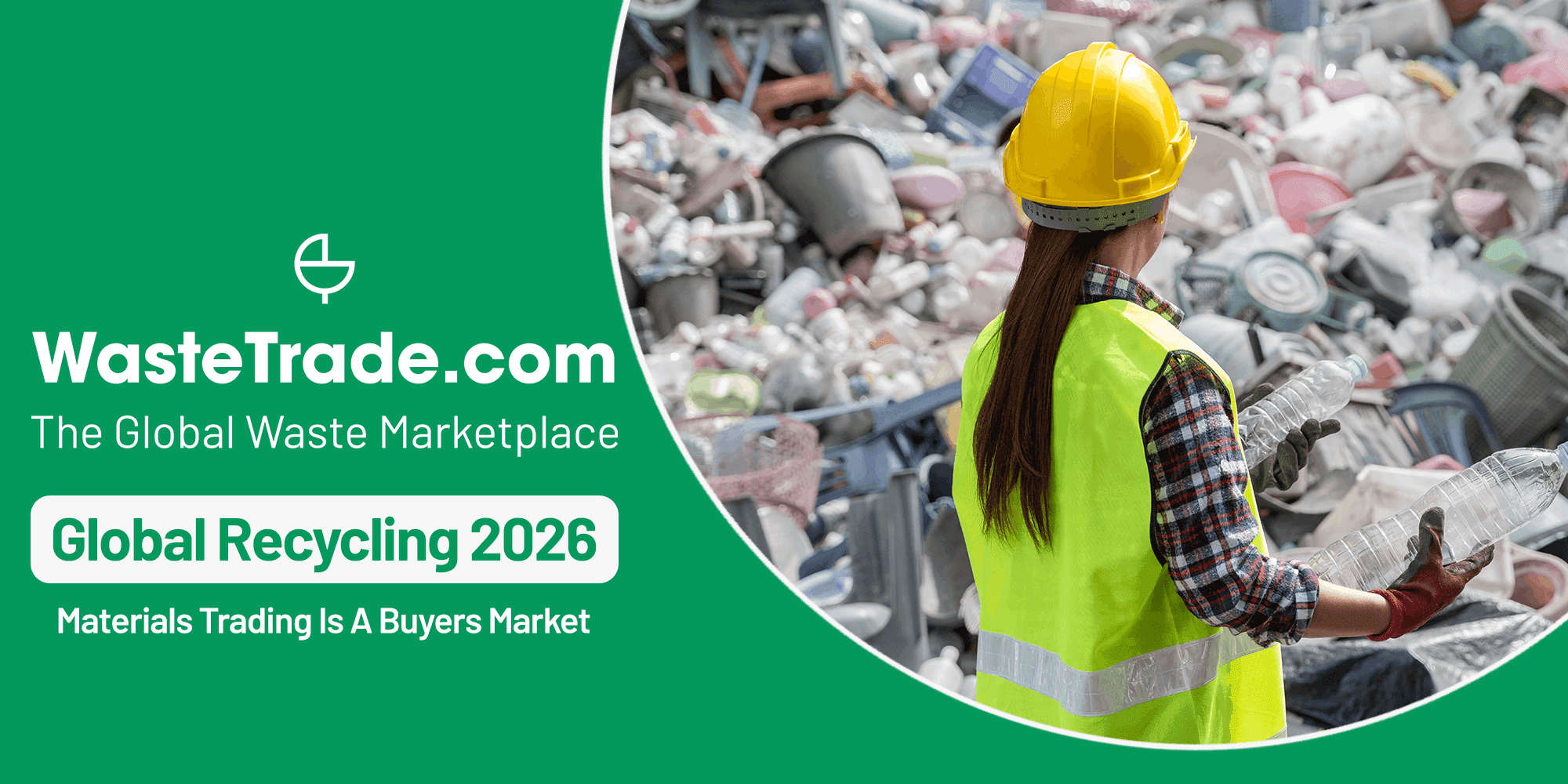
The global waste and recycling industry enters 2026 under familiar pressure, but with a sharper edge. Oversupply, weak energy pricing, uneven demand and tightening regulation are all converging at once. For buyers, this creates opportunity. For sellers and recyclers, it creates risk. For traders, it creates complexity.
This is not a market where volume alone wins. It is a market where quality, traceability, compliance and logistics discipline decide who gets deals done and who is left holding stock.
Why 2026 Is A Buyers Market
At a macro level, the drivers are clear. Energy prices remain subdued, keeping virgin polymers competitive and compressing recycled price premiums. Capacity additions in Asia and the Middle East continue to weigh on global pricing, while demand growth in Europe remains largely policy-driven rather than economic.
Oversupply exists across multiple material streams, but demand has not disappeared. It has become more selective. Buyers are choosing where to apply pressure and where to pay for certainty. That distinction defines the market.
A buyers market does not mean everything is cheap. It means buyers have leverage, choice and time. It also means mistakes are punished quickly.
Energy Prices And Virgin Polymer Pressure
Low energy prices continue to set the floor for virgin material pricing. With oil trading well below recent historical averages, virgin polymers remain structurally competitive across most regions.
This matters because recycled materials are rarely priced in isolation. Buyers benchmark recycled content against virgin alternatives and calculate the premium they are willing to tolerate. When that premium narrows, recycled demand becomes less forgiving.
In 2026, recycled material does not win on price alone. It wins on compliance, traceability and the ability to stand up to audit.
Virgin Polymer Markets By Region
China Polymer Oversupply
China remains the global anchor for polymer pricing. Capacity expansion over the last two years has pushed several resin grades to multi-year lows, creating export pressure across Asia and beyond.
For recyclers and traders, Chinese pricing sets expectations even where material never physically moves through China. It defines the reference point buyers use in negotiations.
Europe High Cost Production
Europe continues to struggle with high energy and labour costs. Many polymer processors are operating well below optimal utilisation. Some have reduced output or shut down entirely.
This weakens Europe’s ability to compete on virgin pricing and reinforces reliance on regulation-driven demand for recycled content. It also creates uneven demand for recyclate - strong where compliance is mandatory, fragile where it is not.
USA And Middle East Feedstock Advantage
The USA and Middle East benefit from abundant feedstock and lower energy costs. This allows aggressive export pricing and steadier operating margins.
Their influence increasingly shapes global pricing dynamics, especially for polyethylene and polypropylene grades.
Recycled Plastics Market Conditions
Asia Recycled Material Pressure
Across Asia, oversupply is evident in many recycled plastic grades. PCR polyethylene and polypropylene face intense pricing pressure, especially in darker colours and lower specifications.
Engineering recyclates such as ABS, PS, PC and PMMA are particularly challenged. Without guaranteed offtake or regulatory support, many operations struggle to remain viable.
Distress selling and inventory liquidation are common, but quality varies widely. Buyers must separate opportunity from risk.
Europe Recycler Margin Squeeze
European recyclers face the double burden of cheap virgin feedstock and rising operational costs. Investment decisions are being delayed or cancelled. Some plants are reducing run rates to protect cash flow.
Demand remains strongest where driven by brand commitments, public procurement rules or recycled content mandates. Outside those lanes, pricing power is limited.
Turkey Import Controls And Delays
Turkey continues to tighten import requirements for plastic scrap. Increased financial guarantees, longer approval timelines and rising contamination expectations have slowed material flows.
For traders, this increases working capital exposure and timing risk. Material quality and documentation standards matter more than ever.
Africa Emerging Supply Hubs
Africa is developing into a meaningful source of recyclable material, particularly in South Africa, Ghana and parts of East Africa. Collection systems are improving and domestic processing capacity is expanding.
The opportunity lies in connecting this feedstock with international demand, but success depends on logistics coordination, quality control and verified documentation.
Middle East Industrial Surplus
Industrial and construction sectors across the Middle East generate significant volumes of plastic waste. At the same time, manufacturers are adopting recycled content policies to meet sustainability reporting requirements.
This combination creates both supply and demand, with growing interest in verified recycled feedstock.
Oceania Structural Pull Market
Australia and New Zealand remain structurally short of recycled material. Local supply is limited, while corporate and government sustainability mandates continue to strengthen.
Certified imported recyclate plays a growing role, particularly where traceability and chain of custody are essential.
Scrap Plastics Oversupply Reality
Scrap plastics face the harshest conditions in 2026. Oversupply is widespread, particularly for black and mixed grades. Many recyclers have reduced procurement or exited the market entirely.
In some cases, plastics processing is subsidised by metal recovery margins rather than plastic value. This is not a sustainable foundation for trade.
Volume without quality has little value in this environment. Buyers increasingly refuse material that lacks clear specification, inspection and recourse mechanisms.
Why Quality Now Defines Value
In a soft market, quality becomes binary. Material either moves cleanly or does not move at all.
Key factors determining tradability include contamination levels, moisture content, polymer purity, colour consistency and documentation. Small deviations can mean the difference between acceptance and rejection.
For traders, quality is not just a technical issue. It is a financial one. Rejected loads tie up capital, incur transport costs and damage relationships.
Regulation Driving Trade Behaviour
UK Recycling And EPR Rules
In the UK, changes to workplace recycling requirements and the rollout of packaging extended producer responsibility are reshaping material flows.
Better source separation should improve feedstock quality over time, but transition periods often create volatility. At the same time, producers are becoming more selective about the recycled content they buy, focusing on materials that support compliance reporting.
EU Waste Shipments And Packaging Rules
The EU Waste Shipments Regulation increases scrutiny, traceability and enforcement across cross-border movements. Digitalisation aims to improve transparency, but it also reduces tolerance for informal practices.
The Packaging and Packaging Waste Regulation further strengthens demand for compliant recycled materials while penalising packaging that is difficult to recycle.
Together, these rules make documentation, classification and shipment management central to every trade.
Global Basel Controls
Basel Convention amendments continue to tighten controls on plastic waste and e-waste movements. Prior informed consent requirements extend lead times and increase administrative burden.
For legitimate traders, this reinforces the value of structured platforms and standardised processes.
How To Trade Recyclables In 2026
Buy Selectively
Price alone is no longer a sufficient filter. Buyers should prioritise consistent specifications, reliable suppliers and repeatable quality.
Samples, photos and inspection protocols should be standard, not optional.
Secure Compliance Early
Clarify waste versus product status, shipment requirements and documentation before finalising price. Late-stage compliance issues destroy margins.
Use Geography Strategically
Source material from regions under pressure and place it into markets with policy-driven demand. Regional arbitrage remains one of the few reliable sources of value.
Protect Downside Risk
Contracts should clearly define acceptance criteria, inspection points, dispute windows and chargeback mechanisms. Ambiguity favours no one.
The Role Of Marketplaces And Logistics Platforms
In volatile markets, fragmentation creates friction. Deals stall over paperwork, logistics coordination and trust gaps.
Structured marketplaces like WasteTrade exist to reduce that friction. By connecting verified material with global demand and integrating logistics, documentation and compliance support, they help traders focus on decision-making rather than firefighting.
In a buyers market , efficiency and control matter as much as price.
Q1 2026 Market Watchpoints
Several factors could shift conditions quickly. Energy price movements remain critical. Further European recycler closures could tighten supply in specific grades. Shipping and container costs continue to fluctuate, particularly in parts of Asia.
Enforcement intensity at key ports, as well as brand announcements on recycled content sourcing, will also shape demand.
Turning Oversupply Into Advantage
2026 offers opportunity, but only for those who trade with discipline. Oversupply creates leverage, but leverage without control leads to loss.
The market rewards buyers and traders who understand quality, compliance and logistics as deeply as price. It punishes those who chase volume without structure.
In a global buyers market, success comes from choosing the right material, in the right place, under the right conditions.