Plastic has become the public enemy of modern industry. Politicians condemn it, activists target it, and brands scramble to distance themselves from it. Read the headlines and you would think plastic is on its way out.
It is not.
Behind the noise, plastic demand continues to rise. Packaging volumes are growing. Medical and healthcare applications remain non-negotiable. Logistics, construction, automotive manufacturing and consumer goods all depend on plastic in ways that alternatives still cannot match at scale.
This is the plastic dilemma. Public hostility is increasing at the same time as industrial reliance deepens. The result is not the collapse of plastic markets, but their reshaping. And the companies that understand this shift are quietly positioning themselves to benefit.
Plastic Demand Is Rising Despite The Narrative
Plastic consumption is not falling. It is moving.
Single-use items may be restricted, but that does not reduce the need for food-safe barriers, lightweight packaging, durable components, medical devices or transport materials. E-commerce alone has pushed plastic film, strapping and protective packaging to record levels.
What has changed is not demand, but acceptability. Virgin plastic has become politically awkward. Procurement teams are under pressure. Sustainability reporting has moved from marketing to regulation. The material itself remains essential, but how it is sourced now matters more than ever.
Manufacturers are not looking for less plastic. They are looking for different plastic.
Regulation Is Reshaping Value Not Destroying It
Extended Producer Responsibility schemes, recycled content mandates and traceability requirements have altered the economics of plastic. They have not removed value from the system. They have moved it.
Under EPR, producers must prove recovery, document recycling rates and report material flows with precision. Recycled content targets require manufacturers to secure consistent, compliant secondary raw materials. None of this works without access to reliable supply.
Regulation has done something important. It has turned recycled plastic from an environmental afterthought into a commercial necessity. The winners are not those who complain loudest about compliance costs, but those who organise their material flows well enough to meet them.
Waste Is Only Waste If You Lose Control Of It
For decades, plastic was treated as a disposal problem. Collection, hauling and tipping fees defined the business model. Once material left the site, its value largely disappeared.
That model no longer holds.
Plastic becomes valuable at the point where its destination is controlled. Sorting, specification, consistency and onward routing now matter more than volume alone. A smaller, predictable stream of well-documented material can outperform larger, poorly defined flows every time.
This is where the language needs to change. Plastic is no longer waste. It is feedstock. And like any feedstock, its value depends on quality, reliability and proof.
Secondary Raw Materials Are Driving The Market
Manufacturers are not buying recycling stories. They are buying material.
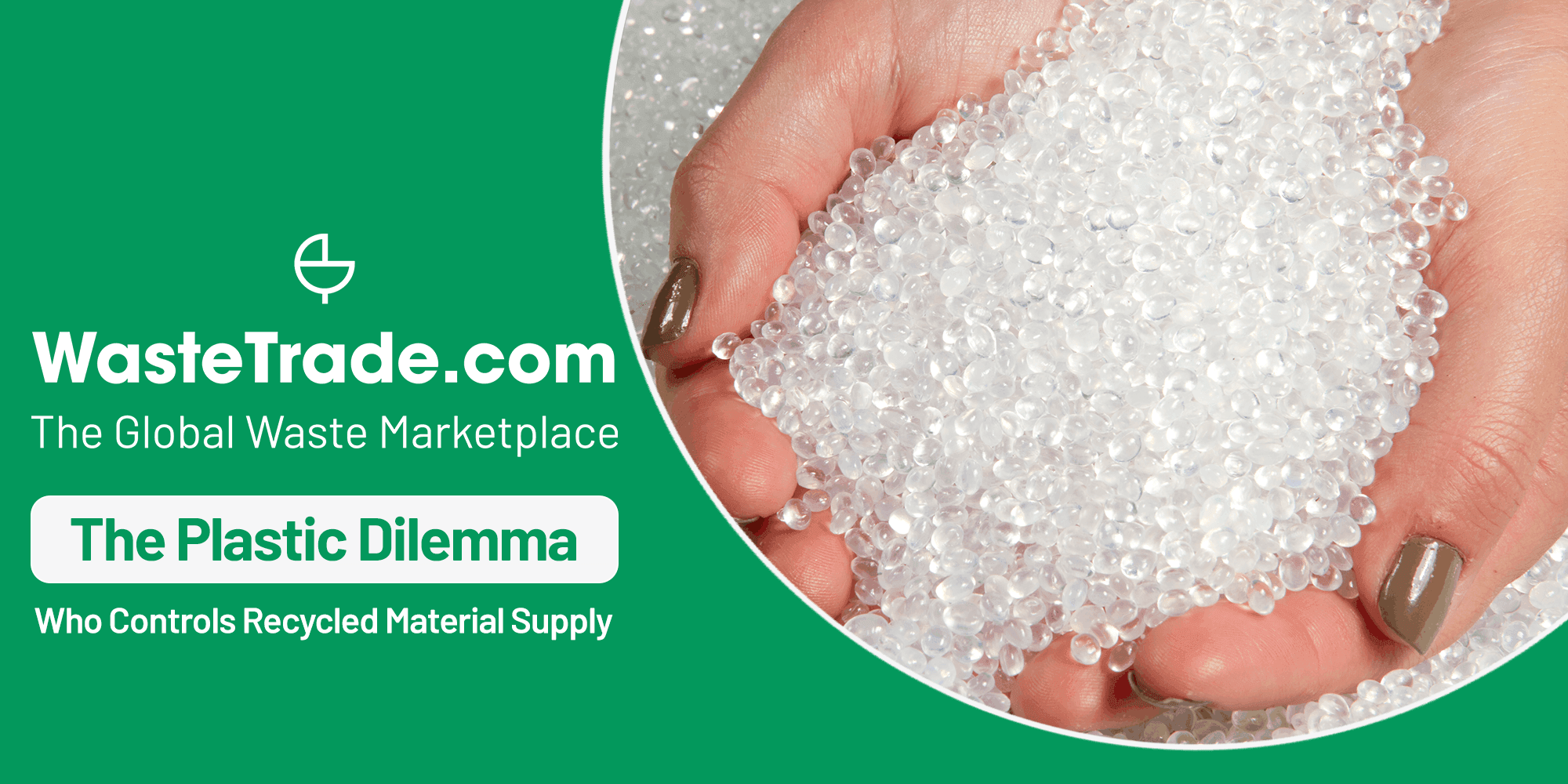
Recycled pellets, flakes and compounds that meet defined specifications now compete directly with virgin polymers. In many cases, they command a premium. Not because they are cheaper, but because they solve regulatory and procurement risk.
What buyers want is simple. They need consistent grades, documented origin, traceability for reporting and confidence that supply will not disappear mid-contract. Price still matters, but certainty matters more.
This is why secondary raw materials sit at the centre of the modern plastic market. The transaction has moved upstream. Recycling is no longer the end of the process. It is the beginning of a new supply chain.
Recycled Plastic Supply Is A Commercial Advantage
Operators producing HDPE, LDPE, PP, PET or PS often underestimate what they hold. The assumption is that scale is everything. It is not.
Manufacturers will prioritise suppliers who can deliver smaller but consistent volumes, backed by documentation and repeatability. Long-term supply agreements are replacing spot trades. Reliability is being rewarded.
Platforms like WasteTrade make this visible. By listing material by grade, form, quantity and frequency, recycled plastic starts to behave like any other traded commodity. Sellers gain insight into where demand sits. Buyers gain access to supply that would otherwise remain fragmented.
This is not about moving more tonnes. It is about moving the right tonnes to the right buyers.
EPR Has Turned Recyclers Into Strategic Partners
Packaging producers now face direct accountability for the materials they place on the market. They need proof of recovery, evidence of recycled content and clear audit trails.
This creates an opportunity for waste and recycling companies that understand their position in the chain. By bundling collection, processing and supply, they can become part of a producer’s compliance strategy rather than a disposable service provider.
Long-term relationships replace transactional contracts. Documentation becomes part of the product. The conversation shifts from cost per tonne to risk management and continuity of supply.
Digital marketplaces support this shift by providing visibility, transaction history and repeat trading relationships that stand up to scrutiny.
Documentation Has Become A Product In Its Own Right
Proof has value.
Brands want to demonstrate responsibility. Regulators require evidence. Auditors demand clarity. All of this relies on accurate records of what was collected, processed and supplied.
Companies already doing the work often fail to monetise the proof. Plastic-neutral claims are the obvious example, but the principle goes wider. Verified recovery, traceable supply and documented recycling rates all carry economic weight.
When transactions are structured, recorded and repeatable, documentation stops being a cost and starts becoming an asset. This is one of the quiet shifts taking place across the industry.
Plastic Value Depends On Geography
Plastic markets are not uniform. Regulation, manufacturing capacity and supply constraints vary widely by region.
In the United States, compliance and documentation drive demand. Certified recycled content often outperforms cheaper alternatives because it simplifies reporting and reduces risk.
In the European Union, recycled content targets have created structural shortages. Demand regularly outstrips supply, particularly for food-grade and packaging-grade material. Compliant recycled plastic attracts premium pricing.
In Asia, manufacturing demand remains vast. Local recycled supply often cannot meet certification requirements, creating opportunities for international suppliers with the right documentation.
Platforms that enable cross-border trade allow material to move to where it is most valued, rather than where it happens to be collected.
From Waste Management To Resource Supply
The most significant shift underway is not regulatory. It is strategic.
When companies stop seeing themselves as waste managers and start operating as resource suppliers, everything changes. Margins improve. Client profiles shift. Competition moves away from hauliers and towards raw material producers.
Control of material flow becomes leverage. Access to supply becomes power. The businesses that understand this transition are building positions that will define the next decade of plastic trade.
WasteTrade exists in this space. It is not a disposal tool. It is infrastructure for material exchange, designed around how modern plastic markets actually function.
The Future Of Plastic Trade Is Already Here
Plastic is not disappearing. Regulation will continue to tighten. Recycled content requirements will increase. Traceability will become non-negotiable. What is changing is the level of responsibility placed on every business that touches plastic, from the point of generation through to its next use.
The companies that thrive will be those who understand that regulation creates markets as much as it constrains them. Secondary raw materials will become more valuable. Documentation will carry weight. Control of supply will matter more than ever. Making the right material choice will no longer be a branding exercise, but a commercial and regulatory decision that must stand up to scrutiny.
This shift demands infrastructure that reflects how plastic trade actually works. WasteTrade plays a vital role in this transition by enabling businesses to make informed, ethical material choices, trade recycled plastics with full traceability, and navigate regulatory obligations without losing sight of commercial reality. By connecting verified buyers and sellers and structuring material flows around compliance, WasteTrade supports genuinely circular trade rather than theoretical circularity.
The plastic dilemma is not about whether plastic survives. It is about who adapts quickly enough to control where it goes next, and who can demonstrate that those movements are compliant, transparent and accountable.
Plastic may remain the villain in public debate. In commercial reality, it is one of the most valuable materials moving through global supply chains today. The difference between struggling and succeeding will come down to whether you treat it as waste, or as the resource the market is clearly asking for, and whether you can prove that it is traded responsibly, traceably and at scale.