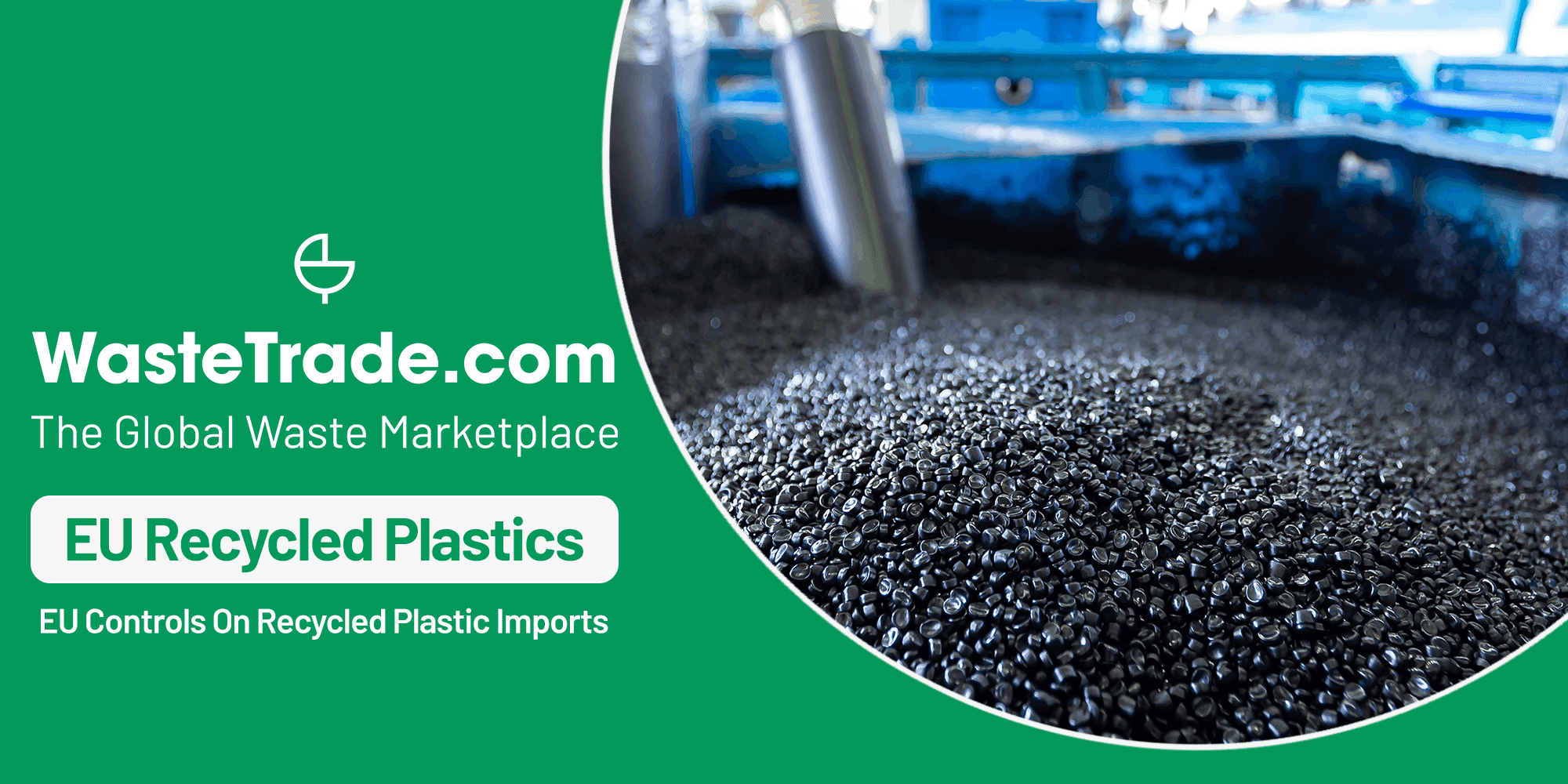
EU Recycled Plastic Imports
Europe is preparing to place tighter controls on recycled plastic imports, marking an important shift in how the region regulates the trade in secondary plastics. The European Commission has begun introducing measures designed to strengthen the EU plastics recycling sector and ensure that imported recycled polymers meet the same standards as materials produced within Europe.
These steps form part of a wider circular economy strategy aimed at stabilising demand for recycled materials and improving confidence in recycled plastics across European supply chains.
Among the most significant changes are new customs classifications that distinguish virgin plastics from recycled plastics, increased scrutiny of imported recyclate, and stronger documentation requirements for certain applications such as food-contact packaging. Authorities also plan to expand market monitoring and conduct audits of recycling facilities operating outside the EU.
The message emerging from Brussels is clear. Recycled plastic imports into the EU will face closer scrutiny in the coming years, and businesses trading these materials will need stronger documentation and clearer proof of origin.
Pressure on Europe’s recycling sector
The EU’s move towards stricter oversight reflects growing concern about the condition of the European plastics recycling industry.
Recyclers across Europe face a difficult operating environment. Energy costs remain high, compliance obligations continue to grow, and the price of virgin plastic has been volatile. At the same time, imported plastics and recycled polymers often arrive on the European market at lower prices.
Industry groups have repeatedly warned that this combination of factors is placing pressure on European recyclers and discouraging investment in recycling infrastructure.
The issue is not simply price competition. Many recyclers argue that imported materials sometimes enter the market with less transparent documentation or weaker verification of recycled origin, making it difficult to ensure fair competition.
European policymakers now appear increasingly willing to address that concern.
Why recycled plastic imports are difficult to track
One of the central problems facing regulators has been the difficulty of accurately identifying recycled plastics in global trade.
Current customs systems often fail to clearly distinguish between virgin polymers and recycled polymers. As a result, authorities have struggled to track the true scale of recycled plastic imports entering the European market.
This lack of clarity has wider consequences. Without clear categorisation, regulators find it harder to verify recycled content claims, enforce compliance rules or monitor the performance of the recycling market.
Improved customs codes are intended to close that gap. By separating virgin and recycled plastics within trade classifications, authorities hope to gain a clearer picture of how materials move into and through the European market.
Better data should also make it easier to identify irregularities and enforce regulatory standards.
EU Plastic Waste Imports
Recycled plastic imports into the EU originate from a wide range of global markets. Key supply regions include parts of Asia, Turkey, the Middle East and North Africa.
These imports typically consist of recycled polymers such as PET, HDPE and polypropylene. Once processed into pellets or flakes, they are used as feedstock for manufacturing applications across packaging, consumer goods and industrial products.
Global trade in recycled plastics has grown rapidly in recent years as governments and companies attempt to increase recycled content in products.
At the same time, shifting waste trade patterns have reshaped the market. When China imposed restrictions on waste imports several years ago, recycling flows moved towards new processing hubs in other regions. As those markets developed, recycled plastics began moving across borders in more complex supply chains.
This globalised trade now sits at the centre of the EU’s concerns.
Why imports have attracted regulatory attention
European regulators are increasingly focused on recycled plastic imports because of the potential risks associated with inconsistent documentation and unclear material origins.
Several issues have drawn attention.
Authorities want to be able to confirm that materials classified as recycled are genuinely derived from plastic waste. They also need to verify the recycling processes used outside the EU and ensure materials comply with European product rules.
Differences in quality standards between markets add another layer of uncertainty.
For industries that rely on recycled plastics, these uncertainties create commercial risks. Manufacturers must ensure that materials used in their products comply with EU regulations and meet safety requirements, particularly in applications such as food-contact packaging.
If the origin or processing history of imported recyclate is unclear, buyers may face regulatory exposure.
Waste Imports and Global Recycling Trade
The global waste and recycling trade has changed significantly over the past decade.
China’s waste import restrictions forced recycling markets around the world to reorganise. Materials that once flowed into China began moving to other destinations, including Turkey and Southeast Asia. At the same time, Europe has attempted to strengthen its own recycling capacity.
Demand for recycled plastics is also rising. Governments are introducing recycled content requirements for packaging, while major brands are committing to increasing the use of recycled materials in their products.
These changes have increased the importance of reliable supply chains for recycled plastics.
In response, the EU is working towards a more structured market for secondary raw materials through wider policies such as the Circular Economy Act, the Packaging and Packaging Waste Regulation and new product traceability initiatives.
Recycled Plastic Imports
The European Commission’s new control framework introduces several mechanisms designed to strengthen oversight of recycled plastics entering the EU.
Separate customs codes will distinguish virgin plastic polymers from recycled polymers. This will allow authorities to track recycled plastic imports more accurately and analyse market trends more effectively.
Stronger compliance documentation will apply to imported recyclate used in sensitive applications. Businesses may need to provide clearer evidence of recycling processes and demonstrate that materials meet EU regulatory standards.
European authorities also plan to audit recycling installations operating outside the EU. These inspections will help verify the legitimacy of recycling operations and confirm that materials exported to Europe originate from genuine recycling processes.
At the same time, the Commission intends to monitor global plastics markets more closely. This monitoring will inform any further trade measures that may be introduced to protect the competitiveness of the European recycling sector.
How tighter controls could reshape recycled plastic imports
Stricter oversight is unlikely to eliminate recycled plastic imports into the EU. Europe will continue to rely on global supply chains to meet rising demand for recycled materials.
However, the character of those imports may change.
Suppliers that can demonstrate clear documentation, traceable supply chains and consistent quality standards are likely to find it easier to access the European market. Materials with unclear origin or incomplete documentation may face greater scrutiny at the border.
For buyers, procurement decisions may increasingly focus on reliability rather than simply price.
Packaging manufacturers, consumer goods producers and other industrial users must ensure that their materials comply with EU rules and sustainability commitments. As regulatory pressure grows, companies will favour suppliers that can provide verifiable recycled content and robust documentation.
Traceability becomes the central issue
Behind the policy debate lies a deeper shift in how recycled materials are traded.
Historically, much of the global recycling trade operated on trust and informal relationships. Buyers relied heavily on supplier assurances regarding material composition and origin.
That approach becomes more difficult in a regulatory environment that demands clear proof of recycled content, documented processing methods and traceable supply chains.
For businesses operating in plastics recycling and manufacturing, traceability is becoming a core commercial requirement.
The challenge for plastics traders
Companies trading recycled plastics now face a more complex landscape.
They must manage cross-border logistics, supplier verification, regulatory documentation and material quality control.
Each of these factors carries commercial risk. A shipment that lacks proper documentation or raises questions about recycled origin can create delays, regulatory complications or reputational damage for buyers.
As the EU strengthens oversight of recycled plastic imports, these risks will become more visible.
Where WasteTrade fits into a tightening market
The shift towards stricter controls on recycled plastic imports highlights the importance of structured and transparent trading systems.
WasteTrade connects verified buyers and sellers of waste and recyclable materials, including plastics, while providing tools that help organise documentation, logistics and transaction records.
Participants on the platform are vetted before trading, reducing uncertainty around counterparties. Listings provide clear material specifications, allowing buyers to understand polymer type, quantity and other key details before entering a transaction.
Each trade creates a documented record that supports transparency across the supply chain.
WasteTrade also coordinates logistics and compliance documentation, helping businesses move materials across borders more efficiently.
In a market where traceability and documentation are becoming increasingly important, these capabilities allow businesses to trade recycled plastics with greater confidence.
The future of recycled plastic imports in Europe
The EU’s tightening oversight of recycled plastic imports signals a shift in how recycled materials will move through the European market.
Imports will remain an important part of the supply chain, but expectations placed on suppliers are changing. Buyers, regulators and manufacturers will increasingly demand clear documentation, verifiable recycled origin and reliable trading partners.
For businesses involved in plastics recycling and global materials trading, the ability to operate within this more structured environment will become an advantage.
As Europe moves towards a more transparent market for recycled plastics, platforms that support verified transactions and traceable supply chains will play an increasingly important role in how recycled materials are traded across borders.