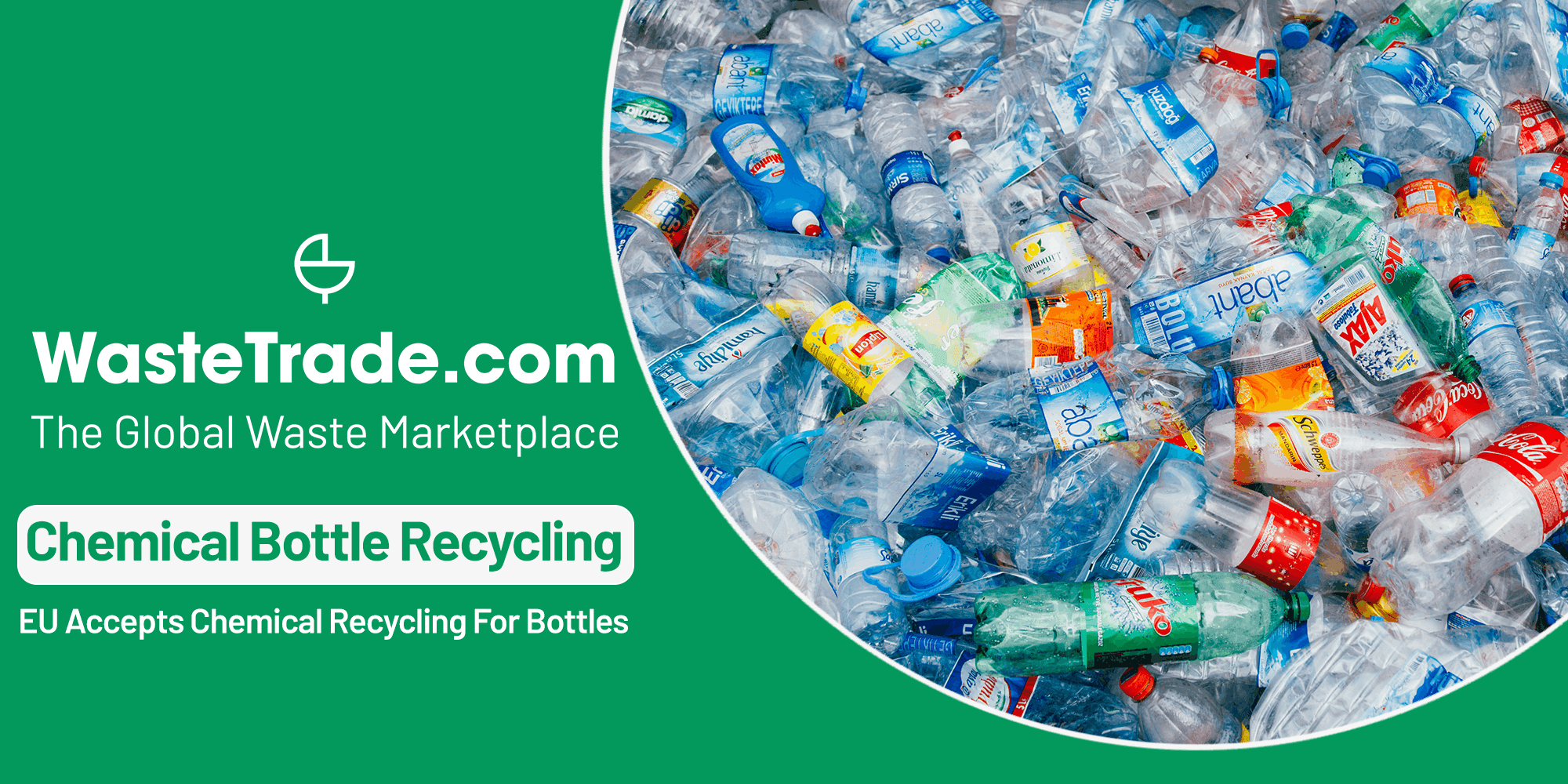
Europe has entered a new stage in the debate around plastic bottle recycling. In 2025 the European Commission began formalising rules that allow chemically recycled plastic to count toward recycled content requirements in beverage bottles. The change may sound technical, but it could reshape how recycled plastics markets develop across the EU.
For years the regulatory system largely recognised mechanically recycled plastic when calculating recycled content in bottles. Chemical recycling existed on the sidelines. Policymakers discussed it, companies invested cautiously in it, and environmental groups argued over it, but the rules that determine what counts as recycled content remained unclear.
That uncertainty is now beginning to lift. The Commission has introduced a methodology designed to integrate chemical recycling into the recycled content framework for single-use plastic beverage bottles. The approach relies on mass balance accounting, strict verification requirements and rules that prevent plastic converted into fuels from being counted as recycled material.
The implications stretch well beyond legislation. Plastic bottle recycling is entering a phase where supply chains, documentation and traceability will matter as much as the recycling technologies themselves.
Plastic Bottle Recycling Is Expanding Beyond Mechanical Methods
Mechanical recycling still forms the backbone of plastic bottle recycling in Europe. Collected bottles are sorted, cleaned, shredded and turned into recycled pellets that can be used again in packaging.
But demand for recycled plastic has grown sharply. EU policy requires PET beverage bottles to contain at least 25 percent recycled plastic from 2025. By 2030 all single-use plastic beverage bottles placed on the EU market must contain at least 30 percent recycled content.
Those targets have created a structural challenge. Food-grade recycled PET remains in short supply, even as brands and packaging manufacturers search for compliant material.
Chemical recycling has emerged partly as a response to that supply pressure. Instead of simply melting and reforming plastic waste, chemical recycling breaks polymers down into their chemical building blocks. These substances can then be used to produce new plastic feedstock that meets strict quality requirements.
The European Commission has made clear that mechanical recycling remains the preferred option where possible because it generally consumes less energy and creates fewer emissions. Yet the policy direction also acknowledges that some plastic streams are difficult to recycle mechanically, particularly when contamination or complex materials are involved.
In those cases chemical recycling could provide an additional pathway within plastic bottle recycling systems.
Plastic Bottle Recycle Targets Are Reshaping the Market
Recycled content mandates tend to change markets quickly. Once legislation requires packaging to contain recycled material, companies must secure supply or face regulatory consequences.
That pressure is now visible across the plastics sector. Beverage brands, packaging producers and polymer manufacturers all compete for recycled feedstock that qualifies under EU rules.
Plastic bottle recycle targets therefore affect more than recycling plants. They influence investment decisions, procurement strategies and waste management practices across the value chain.
When recycled plastic becomes a compliance requirement rather than a voluntary goal, material flows begin to shift. Waste that once had limited value can become strategically important feedstock. Recyclers seek stable supply streams. Manufacturers search for reliable suppliers capable of delivering documented recycled material.
The result is a recycling market that is becoming both more valuable and more complicated.
How Chemical Recycling Fits the System
Chemical recycling technologies take several forms. Some processes heat plastic waste in the absence of oxygen to produce a synthetic oil. Others break polymers down into monomers that can be repolymerised into new plastic.
These outputs often enter the same petrochemical infrastructure used to produce virgin plastic. Refineries and steam crackers convert feedstocks into polymers that eventually become packaging, films and containers.
This industrial integration explains why chemical recycling presents regulatory challenges. Recycled feedstock mixes with conventional feedstock during production. The resulting plastic cannot always be traced physically back to a specific batch of waste.
To address that problem the EU has adopted a mass balance methodology. Instead of tracking individual molecules, the system allocates recycled input across output materials within defined accounting rules.
The framework also excludes fuel production. If plastic waste becomes fuel or energy rather than new material, it cannot count toward recycled content targets.
These rules aim to ensure that chemical recycling contributes genuine material recovery rather than inflating recycling claims.
How Do We Recycle Plastic Bottles When Feedstocks Mix
Traditional plastic bottle recycling relies on physical transformation. A bottle collected from a deposit scheme may eventually return to the market as recycled PET pellets.
Chemical recycling introduces a more complex chain.
Plastic waste may first pass through a chemical recycling facility where it becomes pyrolysis oil or another feedstock. That feedstock then enters petrochemical infrastructure before emerging as polymer suitable for packaging production.
Because recycled and virgin feedstocks mix in these systems, regulators must rely on accounting rules rather than physical separation. Mass balance allows companies to attribute recycled input to a proportion of their output material, provided strict reporting and verification requirements are met.
The Commission’s approach requires supply chain declarations and third party verification in the most complex stages of the process. National authorities also carry out risk based controls.
In practical terms this means companies must now demonstrate not only that material exists but also where it originated and how it moved through the supply chain.
Recyclable Plastic Bottle Supply Chains Are Growing More Complex
The traditional plastic bottle recycling loop is relatively straightforward. Waste collection systems gather used bottles. Recyclers process the material into pellets. Converters turn those pellets into new packaging.
Chemical recycling introduces additional stages and actors. Waste may move through specialised recycling plants before entering large chemical manufacturing systems. From there it passes through polymer production and eventually into packaging manufacture.
Each step creates new transactions and new documentation requirements. Companies must verify recycled origin, confirm compliance with EU methodology and maintain records that withstand regulatory scrutiny.
A recyclable plastic bottle therefore represents more than a container. It represents a supply chain with multiple stages, data points and verification steps.
As recycled content requirements tighten, these documentation demands will only increase.
Traceability Becomes Central to Recycling Markets
The EU’s new framework reflects a broader shift in how recycling markets operate. Governments want stronger evidence that recycled content claims reflect real material flows.
That shift places new emphasis on traceability.
Buyers increasingly want to know where recycled plastic came from, how it was processed and whether it qualifies under EU rules. Without that information companies risk placing non compliant packaging on the market.
Recyclers and material suppliers therefore face growing pressure to provide reliable documentation. Supply chain transparency is no longer optional. It is becoming part of the basic infrastructure that supports recycled plastics markets.
Digital platforms and structured material data are beginning to play a larger role in that environment.
How WasteTrade Supports Plastic Bottle Recycling Markets
WasteTrade operates as a global marketplace for recyclable materials, connecting waste producers with recyclers and material buyers. As recycling systems become more regulated and complex, platforms that organise information and transactions gain practical value.
Feedstock sourcing is one example. Chemical recyclers often require large and consistent volumes of plastic waste. Digital marketplaces allow processors to identify suitable supply streams and connect with generators that may otherwise remain outside their procurement networks.
Material information is another area where structured platforms can help. WasteTrade listings allow sellers to specify material type, grading, packaging and quantities. Buyers can assess whether a material stream fits their processing requirements before committing to a transaction.
Transparent transaction records also support supply chain documentation. When companies trade recyclable materials through structured platforms, they generate clear records that help demonstrate origin and movement of materials.
These capabilities become increasingly relevant as recycled content claims require stronger evidence and verification.
The Future of Plastic Bottle Recycling
Europe’s recognition of chemical recycling does not signal the end of mechanical recycling. Mechanical processes will continue to dominate plastic bottle recycling systems because they remain efficient and widely established.
However the regulatory framework now acknowledges that multiple recycling technologies may contribute to the supply of recycled plastic.
That development reflects a wider shift. Plastic bottle recycling is no longer simply about collecting waste and processing it into pellets. It is becoming a network of technologies, supply chains and compliance frameworks designed to keep materials circulating within the economy.
As recycled content targets expand and verification rules tighten, the recycling sector will rely increasingly on transparent material flows and reliable supply chains.
The companies that can source, document and trade recyclable plastic efficiently will help shape how Europe meets its recycling ambitions in the years ahead.