A Serious Step For Rubber Recycling
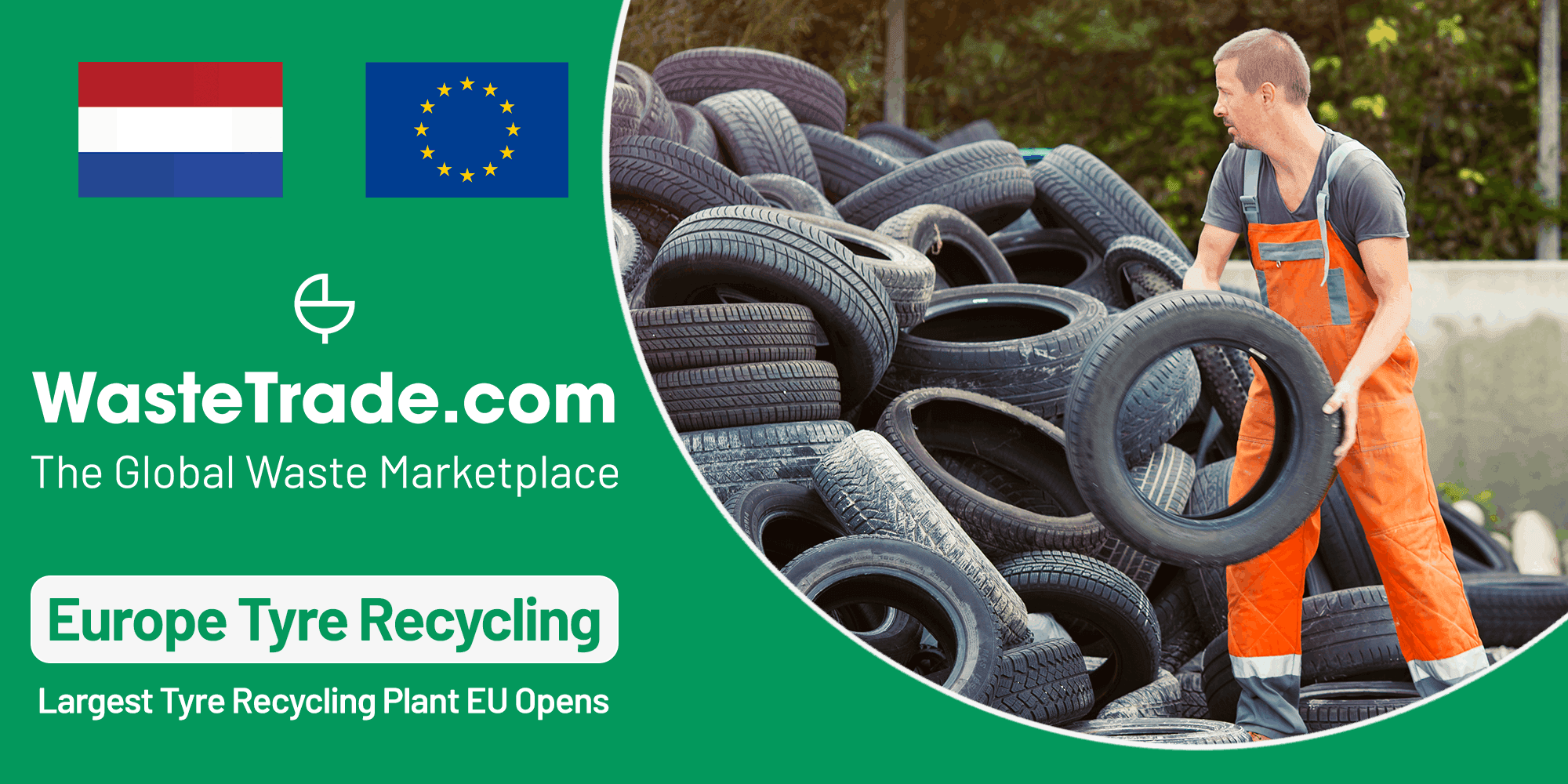
Europe has no shortage of announcements about recycling. What it lacks, more often than not, is scale. That is what makes the opening of Circtec’s tyre recycling plant in Delfzijl worth paying attention to.
Officially opened by King Willem-Alexander in January 2026, the site is now operating as Europe’s largest tyre pyrolysis facility. This is not a pilot line dressed up as progress. It is a functioning industrial plant, already processing tens of thousands of tonnes of tyre waste each year, with a clear path to quadruple capacity.
At full build-out, the site is expected to handle around 200,000 tonnes of end-of-life tyres annually. That alone puts it into territory where it can start to influence the wider rubber recycling market, not just sit on the margins of it.
Turning Tyres Into Industrial Feedstock
What sets this plant apart is not just size, but output.
Rather than producing crumb rubber or feeding tyres into energy recovery, the Delfzijl facility converts rubber waste into materials that sit much higher up the value chain. Circular naphtha, recovered carbon black and fuel products are all part of the mix. These are not secondary by-products. They are inputs that can move straight back into manufacturing and chemical production.
That distinction matters. For years, tyre recycling has struggled to compete with virgin materials on both quality and consistency. Moving into feedstock for chemicals and advanced materials changes that conversation. It positions tyre waste as something closer to a resource than a residue.
Europe Still Has A Tyre Problem
Even with strong collection systems, Europe continues to generate millions of tonnes of end-of-life tyres every year. The uncomfortable reality is that a large share of this material still ends up in energy recovery or low-grade uses.
Recycling rates look healthy on paper, but much of that recycling does not bring material back into high-value applications. That gap is where the real opportunity, and the real challenge, sits.
Facilities like Delfzijl attempt to close that gap. They offer a route to process tyre waste into materials that can re-enter industrial supply chains, rather than being downcycled or burned. Whether that model scales across Europe remains an open question, but this is one of the clearest attempts so far.
This Time, Demand Is Already There
One of the more telling aspects of the project is what sits behind it. Circtec has not built this plant in the hope that buyers will appear. It has secured long-term agreements with bp and Birla Carbon for its outputs.
That changes the risk profile entirely. Too many recycling projects rely on optimistic assumptions about future demand. Here, demand is already locked in. The materials have a destination, and more importantly, they have a role within existing industrial systems.
It is a sign that large buyers are starting to take recycled tyre materials seriously, not as a gesture, but as part of their supply strategy.
Recycling Is Only Half The Equation
There is a tendency to focus on technology when discussing recycling. Better processes, higher yields, cleaner outputs. All of that matters. But it only solves part of the problem.
The other half sits in the market.
As materials like recovered carbon black and circular naphtha move into higher-value applications, expectations change. Buyers want consistency. They want traceability. They want to know that what they are buying today will match what they receive next month.
That is where many recycling markets still fall short. Supply can be fragmented. Quality can vary. Documentation is often inconsistent. These are not minor issues. They are barriers to scale.
Where WasteTrade Fits In
This is the point where infrastructure on the trading side starts to matter as much as infrastructure on the processing side.
WasteTrade operates in that space. It does not process tyres, but it helps structure the market around materials like rubber, plastics and other recyclables. As recycled tyre outputs become more valuable, the ability to source them reliably becomes a competitive advantage.
Through a global marketplace, WasteTrade gives buyers access to a wider network of suppliers. That matters when local supply cannot meet volume or specification requirements. It also reduces reliance on informal networks, which have traditionally dominated parts of the recycling trade.
Consistency And Confidence In Recycled Rubber
One of the persistent issues in tyre recycling is variability. Two loads of recovered material can look similar on paper and behave very differently in practice.
WasteTrade addresses part of this by bringing more structure into how materials are listed and traded. Verified participants, clearer specifications and visible transaction histories all contribute to a more transparent environment.
That does not eliminate risk entirely, but it reduces it. And in markets where margins can be tight and quality matters, that reduction is significant.
Traceability also becomes more important as regulatory pressure increases. Businesses need to show where materials come from and how they have been handled. Platforms that support that level of visibility are likely to become more relevant, not less.
Removing Friction From Cross-Border Trade
Recycled materials do not respect borders, but trading them often involves navigating them. Logistics, pricing, currency and compliance can all slow deals down.
WasteTrade simplifies some of that complexity by bringing these elements into a single platform. Shipping costs can be estimated earlier. Transactions are easier to manage. Deals move faster.
For businesses working with recycled rubber and tyre-derived materials, that efficiency can make the difference between a viable supply chain and a frustrating one.
A Market Starting To Take Shape
The opening of Europe’s largest tyre recycling plant is a clear signal that the sector is changing. Investment is coming in. Technology is improving. Demand is becoming more defined.
But the next phase will not be decided by processing capacity alone. It will be shaped by how well the market around these materials functions.
If recycled tyre outputs are to compete with virgin materials, they need more than good chemistry. They need reliable routes to market, consistent quality and buyer confidence.
That is where platforms like WasteTrade become increasingly relevant. Not as an add-on, but as part of the infrastructure that allows circular materials to move at scale.
What Happens Next For Tyre Recycling
The Delfzijl plant does not solve Europe’s tyre problem overnight. It does, however, move the conversation forward. It shows that tyre recycling can operate at industrial scale and produce materials that industry is willing to buy.
The question now is whether the rest of the market can keep up.
Because recyclers turning tyres into valuable materials is only part of the story. Making those materials accessible, reliable and tradable is the part that will determine whether this shift holds.