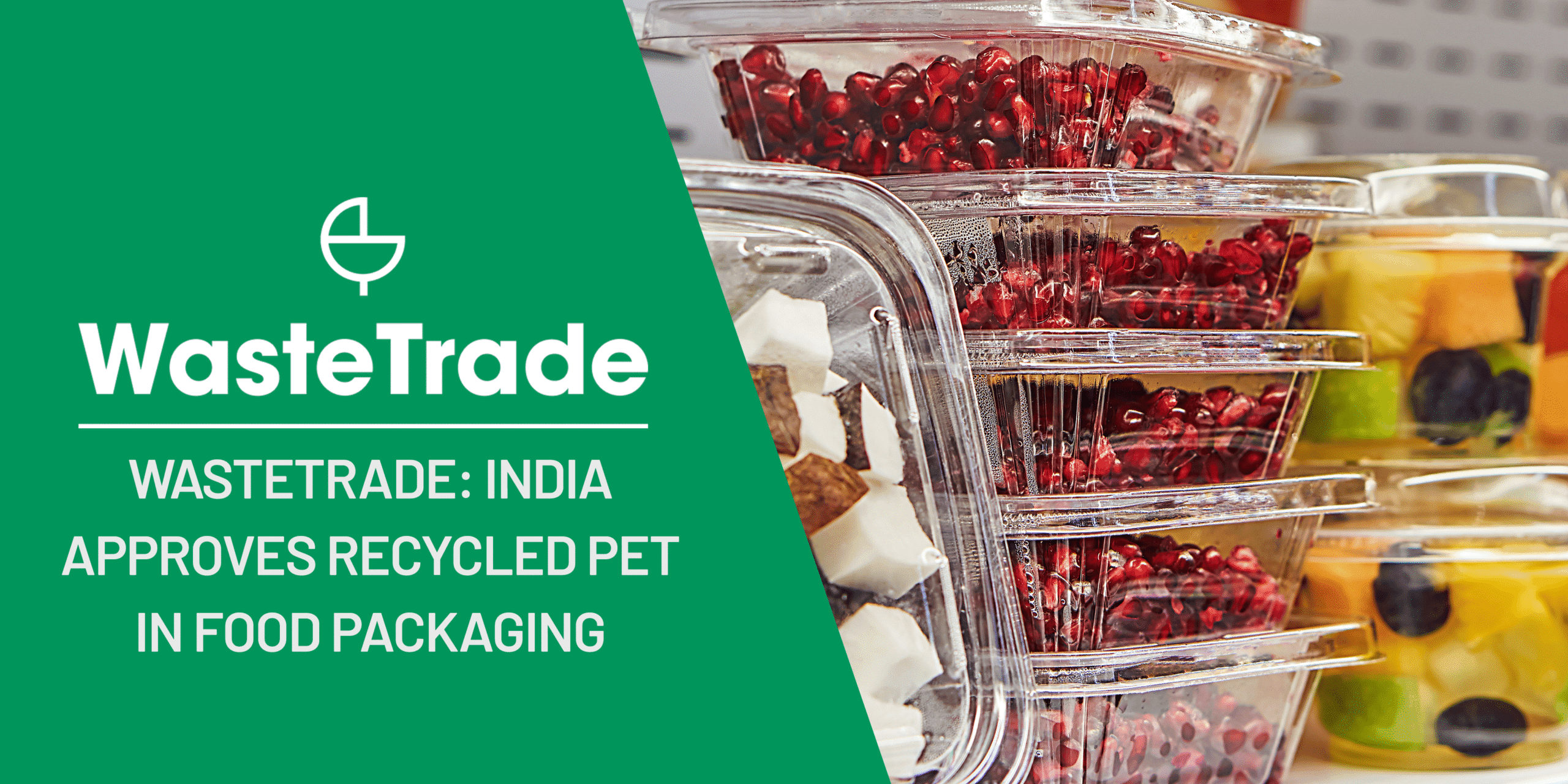
In a significant regulatory development, the Food Safety and Standards Authority of India (FSSAI) has approved the use of recycled polyethylene terephthalate (rPET) in food packaging. Published in the official Gazette on 28 March 2025, the move reflects a considered effort to reduce plastic waste while maintaining food safety – a balance long debated by both industry and environmental groups.
The decision amends clause 4(4)(e) of India’s 2018 Packaging Regulations, officially granting legal clearance for rPET in applications involving the packaging, storage, carriage, or dispensing of food products. The permission is conditional on compliance with technical standards and safety guidelines, which FSSAI will release in due course. For now, the message is clear: recycled materials can and should have a place in the regulated food chain.
“Only products made of recycled polyethylene terephthalate (PET) shall be used for packaging, storing, carrying, or dispensing articles of food as and when standards and guidelines are notified by the Food Authority,” the revised regulation states.
A Carefully Considered Change
The update follows nearly three years of consultation, with the initial draft floated in May 2022. During this time, stakeholders from across the recycling, packaging, and food industries were invited to comment. That India has taken this path after due consideration, rather than following trends blindly, speaks to the seriousness with which the country is approaching environmental and industrial reform.
The implications of this policy shift go far beyond a technical amendment to regulatory language. India, with its vast consumer base and growing packaging industry, has sent a signal that recycled plastics can be safely reintegrated into the economy when properly managed.
Recycled PET and the Global Context
Recycled PET is already used in food-grade packaging across the European Union and the United States, where strict conditions and supply chain monitoring have made it a viable and trusted option. Its qualities – clarity, durability, and gas barrier properties – make it a natural choice for beverages and other food items.
But perhaps more importantly, rPET carries a significantly lower carbon footprint than virgin plastic. By allowing its use in food packaging, India has opened the door to reductions in emissions, landfill reliance, and fossil-fuel extraction – each a necessary step in tackling the environmental consequences of modern consumerism.
What This Means for the Recycling Sector
This change presents a clear opportunity for India’s recycling infrastructure. It is likely to spur investment in advanced recycling technologies, particularly those capable of producing food-grade PET from post-consumer waste. Traceability, contaminant control, and rigorous process validation will now become non-negotiable aspects of operations seeking to participate in this new market.
Yet challenges remain. The actual implementation of this policy depends entirely on the standards yet to be announced by FSSAI. These will define everything from allowable levels of chemical residue to acceptable recycling processes. Industry will need to be patient, but prepared.
There are also calls for a robust monitoring framework to ensure only high-quality rPET enters the food chain. The presence of even trace contaminants could undermine public confidence and the integrity of the entire system. Enforcement and clarity, then, will be as important as ambition.
A Broader Environmental Commitment
India’s move is consistent with its recent steps under the Extended Producer Responsibility (EPR) framework and its evolving Plastic Waste Management Rules. It acknowledges a simple but often overlooked reality: not all packaging waste is created equal, and some materials can be used again safely and productively.
As urban waste volumes rise and landfills strain under the weight of single-use plastics, rethinking what belongs in the bin – and what might deserve a second life – has never been more urgent.
WasteTrade’s Perspective
At WasteTrade, we welcome this development as a thoughtful and pragmatic decision. A change in regulation alone does not shift markets, but it does set the stage for improved material recovery and more intelligent trade.
We believe that the trade of recyclables should not be driven solely by price, but by traceability, quality, and environmental merit. Decisions like India’s encourage all of us – traders, recyclers, manufacturers, and regulators – to raise our standards and embrace greater transparency in how materials move, how they’re processed, and what impact they leave behind.
As a platform connecting waste producers and recyclers globally, we see first-hand how access to high-quality recycled material remains uneven. Policies that legitimise recycled inputs in demanding sectors such as food packaging send a strong message: that reuse, when done right, is not only acceptable – it is necessary.
India’s move is not a cure-all. But it is a well-considered step in the right direction, and we hope it becomes a reference point for other nations still debating how to balance safety with sustainability.