2026 EU Plastic Export Restrictions and the Shift in Global Scrap Flows
Across the global recycling sector, 2026 marks more than a regulatory milestone – it marks a structural rebalancing of where plastic scrap is sourced, how it moves, and which regions will emerge as the most reliable suppliers. The European Union’s upcoming restrictions on exporting lower-grade plastics, mixed plastics, contaminated packaging and several composite waste streams to non-OECD countries will reduce export options dramatically.
For years, a significant share of Europe’s plastic scrap has flowed to non-OECD recyclers who play a vital role in processing and reintroducing material into global manufacturing cycles. From 2026, much of that material can no longer move freely. What remains exportable will face tighter controls, higher compliance costs and narrower routes.
This shift creates two immediate pressures: European recyclers will need more stable access to high-quality feedstock as domestic volumes become more volatile, and non-OECD recyclers risk losing a dependable supply of material that has long sustained their production capacity. It is within this emerging gap that the United States becomes an essential part of the new global equation.
Why the USA Matters to Global Recyclers After 2026
The US is uniquely positioned to stabilise international scrap flows precisely when Europe’s outbound capacity tightens. Its scale alone is significant: the country generates one of the largest volumes of plastic scrap in the world, supported by a robust network of MRFs and collection systems that consistently produce well-sorted material.
Crucially, US supply is not limited to post-consumer packaging. It includes a broad range of reliable post-industrial grades – PET, HDPE, LDPE, PP, PSF, PVC, mixed rigids, films and production scrap – offered in clean and consistent forms. While Europe adjusts to the constraints of 2026, the US remains both open and capable of exporting these materials globally.
Beyond volume and quality, the relative steadiness of the US regulatory environment gives international buyers confidence that supply routes are unlikely to be disrupted by sudden policy changes. For countries facing the loss of European feedstock, this predictability matters.
US Plastic Scrap Supply and Its Role for European Recyclers
European recyclers will feel the consequences of the 2026 changes long before they come into full effect. As lower-grade material becomes more difficult to export, more scrap will remain within Europe’s borders. In theory, this increases availability; in practice, it often complicates operations. Plants that depend on clean and stable feedstock may find themselves competing with domestic pressure points created by surpluses of lower-grade scrap.
This is where US material becomes valuable. High-quality US feedstock can be used to supplement domestic supply, helping European recyclers maintain throughput and consistency. The ability to blend or alternate between domestic and imported grades provides a buffer against fluctuating local availability.
WasteTrade’s expansion into the US ensures European buyers can access these streams earlier, with direct relationships rather than layers of intermediaries. For facilities in Europe that rely on steady inputs, this provides a measure of security as the continent’s internal market begins to shift.
Impact of 2026 EU Rules on Non-OECD Recycling Markets
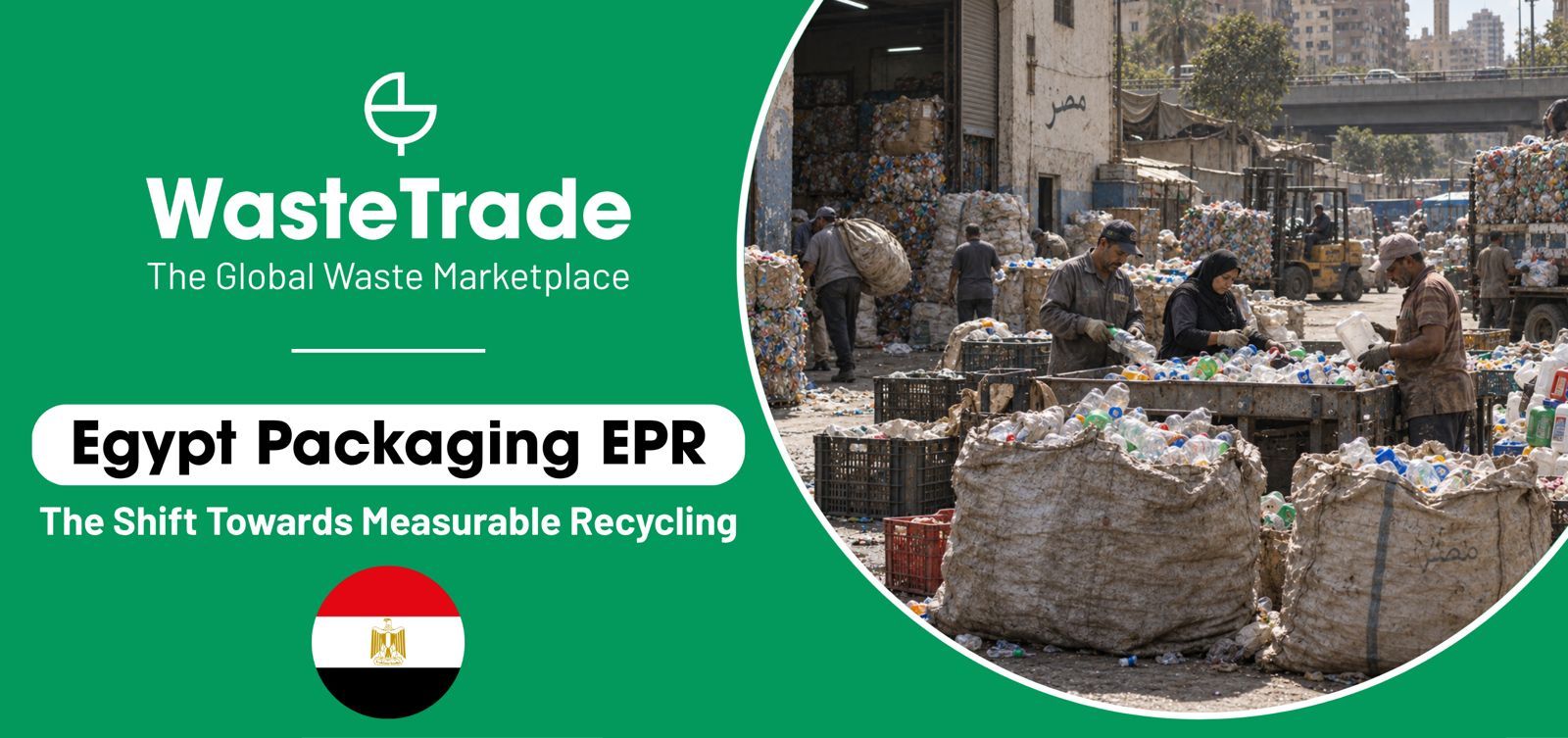
The implications of the 2026 export rules extend well beyond Europe. Countries such as Egypt, India, Malaysia, Vietnam, Ghana and several others across Africa and Asia have built substantial recycling capacity around consistent European supply. Many facilities depend on European post-consumer and post-industrial plastics to maintain production lines at viable levels.
From 2026, these recyclers face the prospect of sudden and significant feedstock shortages. Some will be forced to reduce output; others may halt production temporarily if alternative supply cannot be secured. The risk of under-utilised plants – and the economic damage that follows – cannot be ignored.
The US is the only large market capable of replacing such a wide volume of material in a short time frame. Its extensive infrastructure and broad polymer mix mean it can step into the space Europe is vacating. WasteTrade’s work in the US is designed precisely to make this transition possible: building clear pathways between American suppliers and non-OECD recyclers who must now diversify where they source material.
WasteTrade US Expansion: Building New Supply Pathways
WasteTrade’s expansion across the United States is not exploratory; it is operational and strategic. The company is onboarding verified partners across the East Coast, West Coast and Midwest, focusing on the materials that global recyclers will find most difficult to replace once European exports contract.
This includes:
- PET and PSF
- HDPE and LDPE
- PP
- PVC
- Mixed rigids
- Films (including commercial and post-industrial)
- PI scrap and other industrial feedstocks
The aim is not simply to source material, but to build direct relationships with recyclers, MRFs and collection centres. This ensures that the grades listed through WasteTrade are consistent, properly documented and traceable from the moment they appear on the platform.
By expanding now – before regulatory changes take hold – WasteTrade gives both European and non-OECD recyclers time to form new relationships, test materials, and secure supply lines well ahead of the 2026 shift.
Verified US Material, Digital Documentation and Transparent Supply Chains
In a landscape where supply routes are changing, trust and documentation matter. WasteTrade’s value lies in making these new global pathways secure and transparent.
Each listed US material stream includes:
- Verification of supplier credentials
- Compliance documentation submitted digitally
- Detailed photos and videos
- Pre-shipment inspection information
- A transparent chain of custody
- Integrated logistics and paperwork support
- Tools for bidding, contracting and shipment visibility
For non-OECD recyclers, who are losing established European partners, this level of clarity reduces the risk associated with forming new connections. For European processors, it provides reassurance that US material meets the standards required for consistent production.
WasteTrade’s model is not about adding complexity – it is about simplifying the shift to a new global balance of supply.
Global Recycling Opportunities Created by 2026 Regulations
Although the 2026 EU export restrictions present challenges, they also encourage the market to adapt in constructive ways. Diversifying sources of material strengthens global resilience. Building more transparent supply routes raises quality expectations. And reducing over-reliance on a single region introduces greater stability for recyclers whose operations depend on consistent volumes.
The rise of the US as a major supplier is not a disruption – it is the natural next stage in the evolution of international recycling. WasteTrade’s presence in both regions allows buyers and sellers to navigate this transition without having to build new networks from scratch.
By stabilising supply during a period of change, the company helps ensure that recycling capacity – whether in Europe, Asia or Africa – remains productive rather than constrained.
WasteTrade’s Role in the New Global Recycling Landscape
As the industry moves toward 2026, WasteTrade will continue to expand its US supplier base, adding new recyclers, MRFs and collection centres across multiple regions of the country. The aim is to build a comprehensive network that connects American material with the international markets that need it most.
The company’s commitment is straightforward: support European processors facing domestic pressure, assist non-OECD recyclers in replacing lost European volumes, and provide a dependable path through a period of regulatory transition.
In doing so, WasteTrade is shaping a new set of global relationships – ones that reflect the realities of the 2026 export landscape and the essential role that American material now plays within it.