For many years, waste logistics sat quietly in the background of industrial operations. It was something to be arranged, priced, scheduled and largely forgotten once the material left site. That era is over.
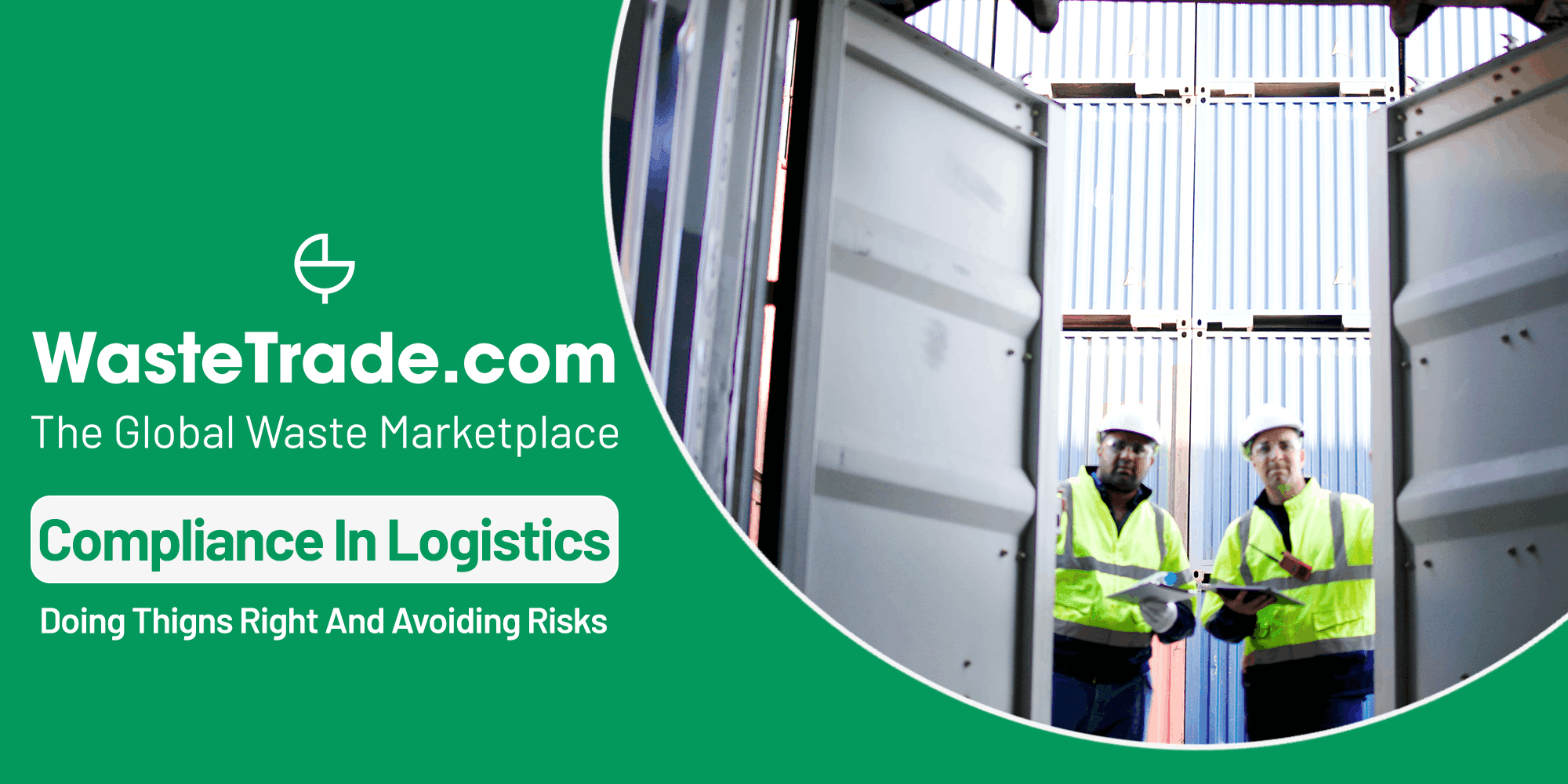
Today, moving waste is no longer a low-risk operational task. It is one of the most exposed points in the entire waste and recycling value chain. Regulatory expectations are rising, enforcement is tightening, and the consequences of getting waste movements wrong are no longer confined to inconvenience or cost. They now extend into legal liability, reputational damage and sustained regulatory scrutiny.
Against that backdrop, waste generators and recyclers are being forced to confront an uncomfortable question. How do you move waste compliantly, at scale, without turning logistics into a permanent compliance burden?
Waste Logistics Is Now A High Risk Activity
Waste movements have become a focal point for regulators worldwide. Cross-border shipments in particular attract attention because they sit at the intersection of environmental regulation, customs control and criminal enforcement.
Authorities are no longer satisfied with superficial assurances that waste has been handled correctly. They increasingly expect demonstrable oversight, clear documentation and traceability from origin to final recovery or disposal. Where that cannot be shown, regulators tend to assume the worst.
This matters because waste logistics is rarely the core expertise of the organisations generating or recycling waste. Manufacturers, processors and recovery facilities exist to make products, recycle materials or recover value. They do not exist to interpret transfrontier shipment rules, track carrier authorisations across jurisdictions or keep pace with changing enforcement priorities.
Yet that is precisely what modern waste logistics demands.
Liability Does Not End When Waste Leaves Site
One of the most persistent misconceptions in the industry is that responsibility for compliance ends when waste is handed over to a transporter or broker. In practice, the opposite is often true.
Regulators routinely look up the chain when investigating illegal or non-compliant waste movements. Waste generators, recyclers, traders and brokers can all be held accountable, even when a third party physically carried out the transport. Using an external provider does not transfer liability. It merely adds another link to the chain.
In many jurisdictions, failing to retain accurate documentation or failing to ensure waste is transferred to an authorised party is itself an offence. Intent is largely irrelevant. What matters is whether proper control and oversight existed.
This reality turns waste logistics into a material business risk, particularly for organisations whose internal systems were never designed to manage regulatory exposure at this level.
Global Waste Movements Are Increasingly Complex
The difficulty of compliant waste logistics is not theoretical. It is structural.
Modern waste supply chains cross multiple borders, each with its own regulatory framework, enforcement culture and administrative requirements. Waste classifications differ. Carrier authorisation systems vary. Customs controls apply inconsistently. Documentation requirements change depending on destination, material and route.
Even experienced compliance teams struggle to stay current across Basel classifications, HS coding, notification regimes, Annex VII requirements and country-specific restrictions. The rules themselves are complex. Their interpretation is often inconsistent. Enforcement priorities shift with little warning.
For many organisations, the compliance effort required to move relatively low-value waste streams safely and legally now outweighs the commercial value of the material itself. The risk, however, remains very real.
Manual Compliance Breaks Under Pressure
Faced with this complexity, many organisations attempt to manage waste logistics internally. They rely on spreadsheets, email chains, shared folders and manual checks. On paper, this can appear workable. In reality, it creates blind spots.
Documentation becomes fragmented. Standards vary between shipments. Responsibility is spread across multiple teams. Compliance checks depend on individual knowledge rather than system controls. Oversight weakens as volumes increase.
None of this implies bad intent. Most compliance failures occur because systems were never designed to provide the visibility and control regulators now expect. Where processes are fragmented, gaps appear. Those gaps are precisely where illegal or non-compliant waste movements occur.
How Illegal Waste Movements Actually Happen
Illegal waste movements rarely result from deliberate wrongdoing by established businesses. More often, they arise from unclear responsibility, incomplete information and a lack of real-time oversight.
A carrier is assumed to be authorised without verification. A classification is reused from a previous shipment without reassessment. Documentation is completed retrospectively rather than at source. Each step seems minor. Together, they create exposure.
When regulators intervene, the absence of a clear audit trail becomes the problem. What cannot be demonstrated is treated as non-compliant, regardless of intention.
This is why compliance managed by exception no longer works. In a complex global environment, compliance must be embedded into the process itself.
Compliance By Design Not By Afterthought
This is where a different model of waste logistics begins to emerge.
Rather than relying on individuals to remember rules and perform checks, compliance is built into the workflow. Decisions are structured. Documentation is standardised. Visibility is shared across all parties involved in a transaction.
WasteTrade was built around this principle. The platform is not designed simply to connect buyers and sellers. It is designed to provide a controlled, auditable framework for waste movements, where compliance is an inherent feature rather than an additional task.
How WasteTrade Changes The Risk Profile
Using WasteTrade fundamentally alters how compliance risk is managed.
Waste listings follow structured workflows that capture material details consistently from the outset. Buyers, sellers and hauliers operate within a visible network rather than as disconnected counterparties. Accreditation and verification reduce reliance on informal assurances. Documentation processes are standardised rather than improvised.
Crucially, WasteTrade creates a clear audit trail for every transaction. Decisions are recorded. Movements are traceable. Responsibility is defined.
For waste generators and recyclers, this matters because it moves compliance away from individual judgement calls and into a system designed specifically for regulatory control.
A Buffer Between Operations And Regulation
One of the most overlooked benefits of platform-based compliance is operational relief.
When waste logistics is managed through ad hoc processes, internal teams absorb the regulatory burden. Knowledge becomes siloed. Mistakes become personal. Capacity is consumed by administration rather than core activity.
By contrast, WasteTrade acts as a buffer between operations and regulatory exposure. Compliance checks are embedded into the platform. Visibility is shared. Risk is managed structurally rather than reactively.
This allows organisations to focus on production, recycling and recovery while waste logistics is handled through a system built to withstand regulatory scrutiny.
Safeguarding Against Non Compliant Waste Movements
Safeguarding against illegal waste movements is not about tightening discipline or increasing oversight manually. It is about removing the conditions in which non-compliance thrives.
WasteTrade addresses this by increasing transparency across the value chain, standardising how waste is listed and moved, and creating unbroken audit trails from start to finish. This makes it significantly harder for errors to go unnoticed and far harder for non-compliant movements to occur accidentally.
In effect, compliance becomes the default state rather than the hoped-for outcome.
Why This Matters Now
Regulators are moving decisively towards stronger controls, greater cooperation and increased expectations of demonstrable oversight. Digital documentation, traceability and active management are no longer optional enhancements. They are fast becoming baseline requirements.
Organisations that cannot show structured control over their waste movements are increasingly exposed, regardless of intent or history.
In this environment, relying on manual processes and fragmented responsibility is no longer a defensible position.
Lower Risk Less Burden Better Outcomes
For waste generators and recyclers, the practical outcomes of using a compliance-led platform are straightforward.
Exposure to illegal waste movements is reduced. Audit readiness improves. Internal compliance overhead falls. Confidence in cross-border trade increases.
Most importantly, waste logistics stops being a distraction from core operations and becomes a controlled, predictable part of the business.
Compliance Should Enable Not Obstruct
Done properly, compliance should not slow organisations down. It should provide clarity, confidence and resilience.
By placing compliance, traceability and responsibility into software rather than people and spreadsheets, WasteTrade enables waste to be traded safely and legally in an increasingly complex global environment.
For organisations serious about managing risk without expanding bureaucracy, that distinction matters.