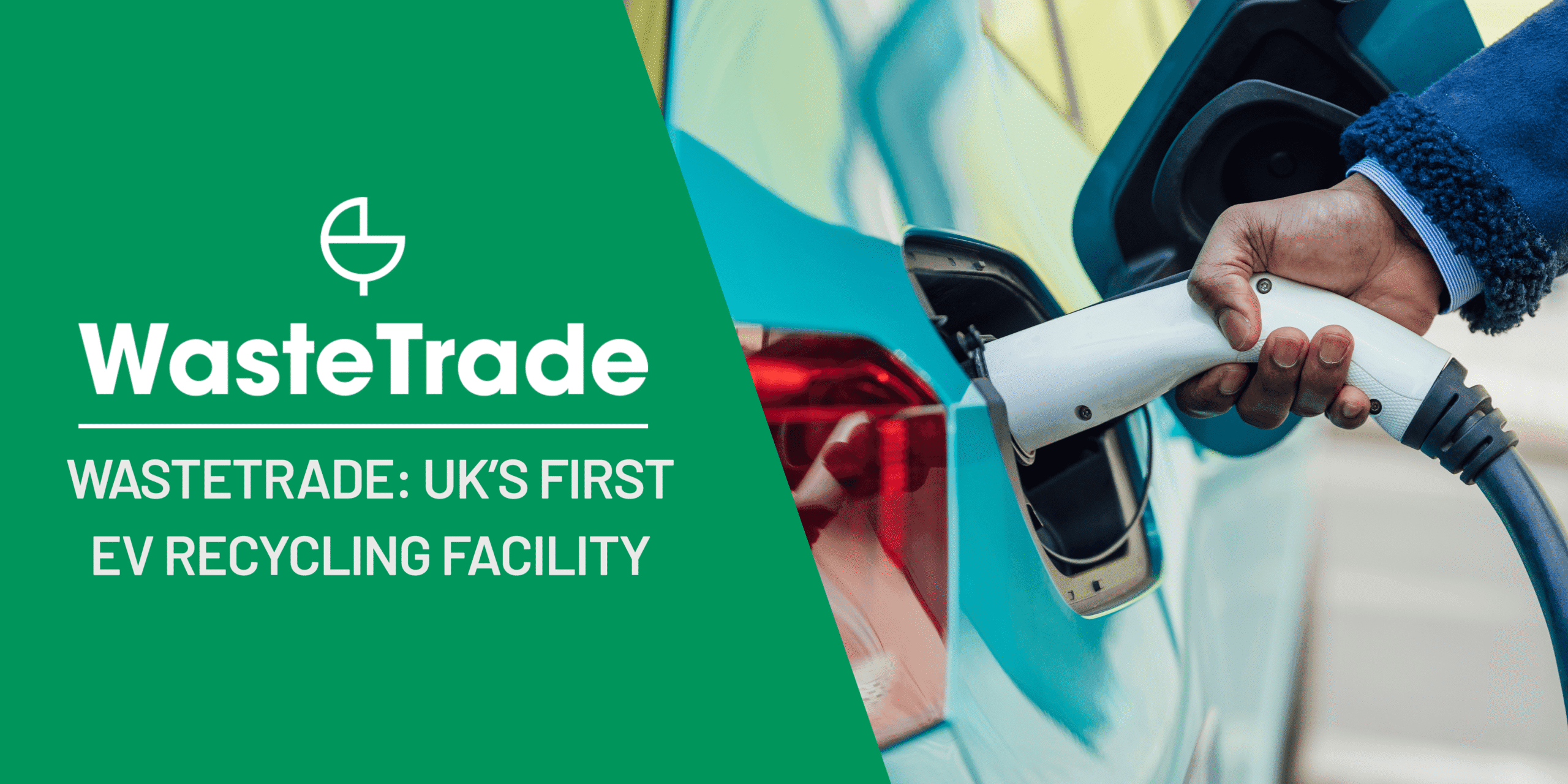
The shift to electric mobility may be well underway, but the silent question lingering beneath the hum of lithium-ion propulsion is what becomes of the battery once the car is done. The transition to low-emission transport, though essential, is material-intensive—and the end-of-life fate of those materials is far from settled. If the UK is to maintain credibility in its ambitions for sustainability and strategic autonomy, then how we treat battery waste must become more than an afterthought.
In this context, Altilium’s construction of a new facility in Plymouth, Devon, feels timely – not simply as a feat of engineering or industrial expansion, but as part of a broader reorientation in how the country manages its relationship with critical minerals.
A Facility with Purpose
Altilium’s ACT 3 plant, now under construction on a four-acre site, represents the UK’s first industrial-scale attempt to recover and refine electric vehicle battery materials entirely within its borders. The numbers are modest by global standards—enough to process materials from 24,000 electric vehicles per year—but the implications are more meaningful than scale alone might suggest.
The facility will use Altilium’s EcoCathode™ process to extract critical intermediate products like Nickel Mixed Hydroxide Precipitate and Lithium Sulphate, both essential precursors for cathode production. These are not exotic byproducts – they are, in essence, the bones of the battery industry. To be able to derive them from waste, within national boundaries, is a significant evolution of Britain’s material handling capabilities.
The UK’s Recycling Dilemma
Until now, the UK’s role in EV battery recycling has been largely peripheral. While companies such as Veolia, Ecobat, and European Metal Recycling have developed systems for collection, dismantling, and pre-treatment, the fate of these materials has tended to lie overseas. Shredded and transformed into black mass, much of the valuable content in these batteries is exported to be processed elsewhere.
This is not simply an inefficiency – it’s a lost opportunity. With demand for lithium, nickel, and cobalt expected to surge in the coming decade, and with geopolitical access to these resources increasingly fraught, retaining and refining material domestically becomes not just preferable but necessary. Altilium’s plant marks an attempt to bridge this gap and to move beyond low-value pre-treatment, into the domain of true materials recovery.
A National Need
Research from the UK Critical Minerals Intelligence Centre paints a stark picture. By 2030, Britain will require access to the equivalent of around 40% of the world’s lithium output as it stood in 2023, simply to keep pace with battery demand. That’s not an abstract figure – it’s a policy problem. Without substantial expansion in domestic processing and recycling, the UK risks swapping one dependency (fossil fuels) for another (foreign critical minerals).
Altilium’s response to this challenge is, if nothing else, strategically literate. By anchoring the facility in Plymouth and engaging Hatch, an experienced global consultancy in materials engineering, they’re not just building a plant, they’re laying the groundwork for a broader supply chain ecosystem. Lessons learned here will inform the proposed ACT 4 facility in Teesside, where capacity is expected to rise to over 150,000 EV batteries per year, supplying enough cathode active material to meet around 20% of national demand.
The Case for Recycled Over Raw
One of the more compelling aspects of Altilium’s story is not what it promises to do, but what it’s already demonstrated. Earlier this year, the company produced the UK’s first EV battery cells using recycled cathode materials at the UK Battery Industrialisation Centre. The results were not merely adequate, but met the performance thresholds required by the automotive sector.
This is more than a proof of concept. Recycled materials, particularly those derived from standardised batteries, offer greater purity and consistency than their mined counterparts. Unlike ore, which comes with a burden of geological uncertainty and energy-intensive refining, recycled material is, in many ways, a more predictable input. Research from Imperial College London supports this view: performance metrics such as battery life, charge times, and impurity levels are often superior in cells made from recycled content.
From Waste to Infrastructure
What’s being built in Plymouth, then, is not just a recycling plant. It’s infrastructure for an economy that is learning to think in loops rather than lines. At present, we still operate within a mostly linear framework: resources are extracted, used, and discarded. Closing that loop – especially in a sector as strategically significant as electric mobility – is not simply good environmental practice, it’s a matter of economic foresight.
Yet infrastructure alone is not enough. Success here also depends on market design, regulatory alignment, and cultural shift—none of which can be delivered by a single company or technology. What Altilium has created is a node within a larger web, and the task now is to weave that web tighter and more efficiently.
WasteTrade’s Perspective: A Quiet Confidence in Circular Thinking
At WasteTrade, we tend to look at stories like this not through the lens of novelty, but through their implications for systems thinking. Recycling, when stripped of its surface gloss, is not just about end-of-pipe solutions – it’s about reconsidering the full journey of materials and the assumptions we make about their expiry.
Our platform exists to support the idea that waste is not a full stop, but a comma, an interruption in the lifecycle of a material that, with the right conditions, can be resumed. That principle applies across sectors, whether you’re dealing in fibre, metal, or composite. What Altilium’s project quietly illustrates is that materials don’t have to leave the system just because their first role has ended. With structure and intention, they can return – sometimes transformed, sometimes simply reintroduced.
The broader movement we’re witnessing, of which this facility is a part, is not a cascade of breakthroughs but a steady correction. It is a shift away from the model that treats extraction as primary and disposal as inevitable, toward one that treats resources as persistent, trackable, and reusable. In a word: circular.
And that’s where the work lies – not in chasing headlines, but in redesigning the everyday mechanics of how materials move through our economies. The more we can build systems that make reuse natural, unremarkable, and commercially viable, the closer we get to something sustainable – not as a slogan, but as a working reality.