Over the past two years, Europe’s chemical recycling sector has moved out of the laboratory and into heavy industry.
Plants are being financed. Sites are being prepared. Long-term polymer offtake agreements are being signed. Technology providers are aligning with major petrochemical groups. What was once discussed as a future solution is now embedded in industrial strategy.
But as projects move from pilot to commercial scale, one constraint has become impossible to ignore.
Feedstock.
Not innovation. Not engineering. Not demand for recycled content. Feedstock certainty.
Across Europe, chemical recyclers are shifting away from opportunistic spot buying and towards structured, long-term supply agreements. That shift is quietly changing how plastic waste is valued, contracted and prioritised.
Chemical Recycling Feedstock Demand Is Increasing Across Europe
Partnerships tell the story.
OMV and Borealis have signed long-term supply agreements with TOMRA Feedstock to secure mixed plastic waste for advanced recycling. TotalEnergies has entered structured arrangements with waste management groups to supply feedstock to its advanced recycling operations in France and Belgium. Eastman has secured European supply partnerships to support its planned molecular recycling facility in France. Carbios and Indorama Ventures continue to work toward industrial-scale enzymatic PET recycling capacity.
These are not speculative announcements about distant technology. They are supply arrangements.
The message is clear. Chemical recyclers are not waiting for feedstock to appear on the spot market. They are locking it in.
Why Feedstock Risk Is The Main Barrier To Chemical Recycling Scale Up
Chemical recycling plants are capital-intensive continuous processes. They are designed around steady throughput.
If volume drops, economics deteriorate quickly.
Unlike smaller mechanical operations that can scale output up or down, advanced recycling facilities require predictable input streams to maintain operational efficiency. Investors expect utilisation rates to match design capacity. Brands signing offtake agreements expect output consistency. Financing depends on credible supply assumptions.
Underutilisation is not a minor inconvenience. It is a commercial risk.
This is why feedstock security has become a board-level issue for chemical recyclers across Europe.
What Chemical Recyclers Actually Require In Feedstock Specifications
The term “low-grade plastic” is misleading. Chemical recyclers are not looking for anything and everything that mechanical recyclers reject.
They require defined streams with known tolerances.
For PET depolymerisation or enzymatic recycling, this may include:
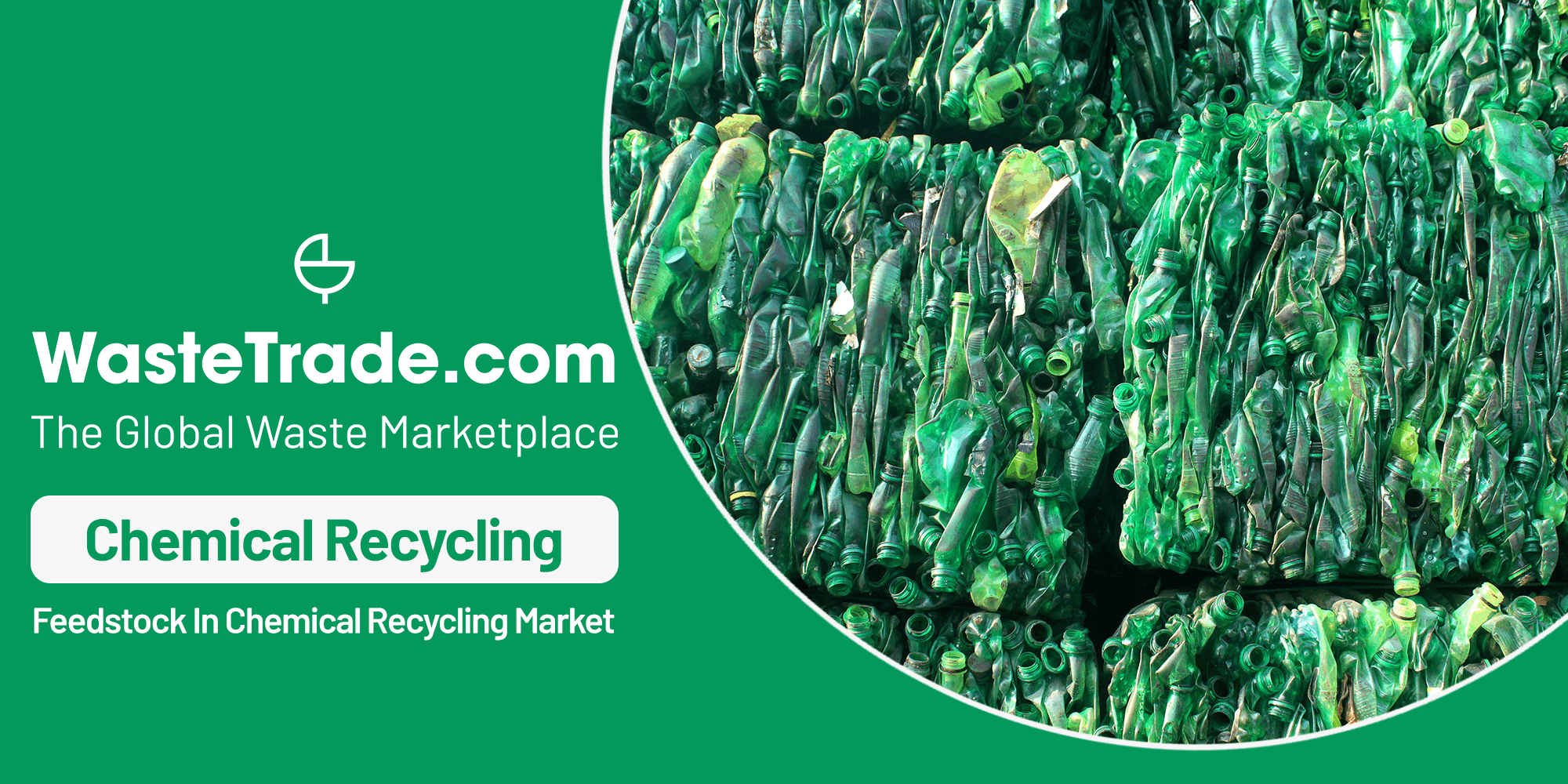
- Coloured PET bottles
- Opaque PET
- Textile-grade PET
- Rejected or off-spec PET flakes
- Defined contamination thresholds
- Controlled PVC levels
For polyolefin pyrolysis and related advanced thermal processes, feedstock often includes:
- Film-heavy mixed polyolefin fractions
- Residual PE and PP streams
- Post-commercial flexible packaging waste
- Material within strict chlorine limits
- Moisture and metal contamination within tolerance
Consistency matters as much as polymer type. Bale density, contamination profiles, moisture content and pre-treatment history all influence yield and cost.
In short, chemical recyclers are not paying for “problem plastic”. They are contracting for defined industrial inputs.
Mechanical Recyclers Are Rethinking Hard To Place Plastic Grades
Mechanical recyclers across Europe are facing their own pressures.
Virgin polymer pricing remains volatile. Imports continue to influence domestic markets. Certain fractions have become harder to place profitably. Contaminated or coloured streams often trade at a discount, if they trade at all.
Chemical recycling introduces a parallel outlet.
Material that struggles to meet food-grade mechanical standards may still have value as chemical feedstock. Rejected flake, downgraded pellets, textile streams and film fractions can move into alternative processing routes, provided specifications are met.
This is not a replacement of mechanical recycling. It is an expansion of the outlet base.
For recyclers holding challenging grades, the question is shifting from “Who will take this today?” to “Who will commit to this long term?”
Long Term Feedstock Contracts Are Replacing Spot Plastic Waste Trades
The traditional plastic waste market has been heavily transactional. Loads traded across borders. Prices fluctuated sharply. Relationships were often short-term.
That model does not support industrial-scale chemical recycling.
What is emerging instead is:
- Multi-year supply agreements
- Defined material specifications
- Volume guarantees
- Structured quality control
- Traceability and documentation requirements
Documentation is no longer a formality. With mass balance accounting frameworks evolving and brand-level recycled content commitments increasing, chain-of-custody clarity is commercially significant.
Material without traceability struggles to access premium chemical recycling routes.
Contracts, not conversations, are becoming the foundation of trade.
Low Grade PET And Mixed Plastic Streams Are Gaining Strategic Value
Certain grades once viewed as marginal are being reassessed.
Coloured PET. Opaque PET. Textile waste. Mixed film fractions. Residual polyolefin blends.
As chemical recycling capacity grows, these streams are being evaluated not as disposal problems but as feedstock assets.
This does not mean all such material suddenly commands high prices. Quality still governs value. However, reliable volumes of defined lower-grade material are attracting structured interest.
Feedstock competition is increasing in regions where multiple advanced recycling facilities are planned or under construction.
Recyclers able to guarantee consistency and documentation are in a stronger negotiating position than those offering irregular supply.
Feedstock Competition In Europe Is Intensifying
Announced capacity across Europe suggests a future mismatch between demand for suitable feedstock and available compliant material.
Projects are not all progressing at the same speed. Some face permitting or financing challenges. Yet where plants do move forward, they require significant annual tonnage.
Chemical recyclers are therefore securing supply early.
Material that might previously have been sold load by load is being contracted forward. Aggregators and waste management groups are entering structured supply relationships. Regional markets are becoming tighter for certain polymer fractions.
Waiting for surplus material to appear on the open market is no longer a viable strategy for operators scaling capacity.
WasteTrade Enables Structured Chemical Recycling Offtake Agreements
Against this backdrop, the role of infrastructure becomes critical.
WasteTrade was built as a global marketplace for waste and recyclable materials. Increasingly, it is being used as structured supply infrastructure.
For chemical recyclers, the platform allows:
- Publication of detailed feedstock requirements
- Access to verified suppliers across multiple jurisdictions
- Aggregation of fragmented volumes
- Structuring of repeat transactions
- Transparent, documented trade flows
For mechanical recyclers and waste management groups, WasteTrade provides:
- Visibility of active chemical recycling demand
- Opportunities to secure forward outlets
- Reduced exposure to short-term price swings
- Clear specification alignment
The difference lies in structure.
Rather than relying on opaque bilateral arrangements, recyclers and chemical recyclers can formalise supply relationships within a transparent environment.
The result is not simply a transaction. It is a repeatable, auditable commercial relationship.
The Next Phase Of Europe’s Circular Plastics Market
Chemical recycling in Europe is entering a more disciplined stage.
Technology announcements are giving way to procurement strategy. Capacity targets are being matched with supply planning. Feedstock is no longer assumed. It is secured.
Over the next 12 to 24 months, several trends are likely to strengthen:
- Increased forward contracting
- Stricter feedstock specification enforcement
- Greater emphasis on traceability
- More collaboration between mechanical and chemical recyclers
- Reduced tolerance for inconsistent supply
Operators who secure supply early will operate with greater stability. Those who delay may find suitable material increasingly committed elsewhere.
A Call To Chemical Recyclers And Advanced Recycling Operators
If you are scaling chemical recycling capacity in Europe, feedstock certainty cannot be left to informal channels.
Structured, transparent offtake agreements provide commercial security. Defined specifications reduce processing risk. Verified supplier networks improve resilience.
WasteTrade provides the framework to formalise those relationships at scale.
As Europe’s recycling landscape evolves, the decisive factor will not be technology alone.
It will be certainty.
Feedstock certainty. Contract certainty. Market certainty.
Those who align supply now will shape the next chapter of Europe’s circular plastics market.