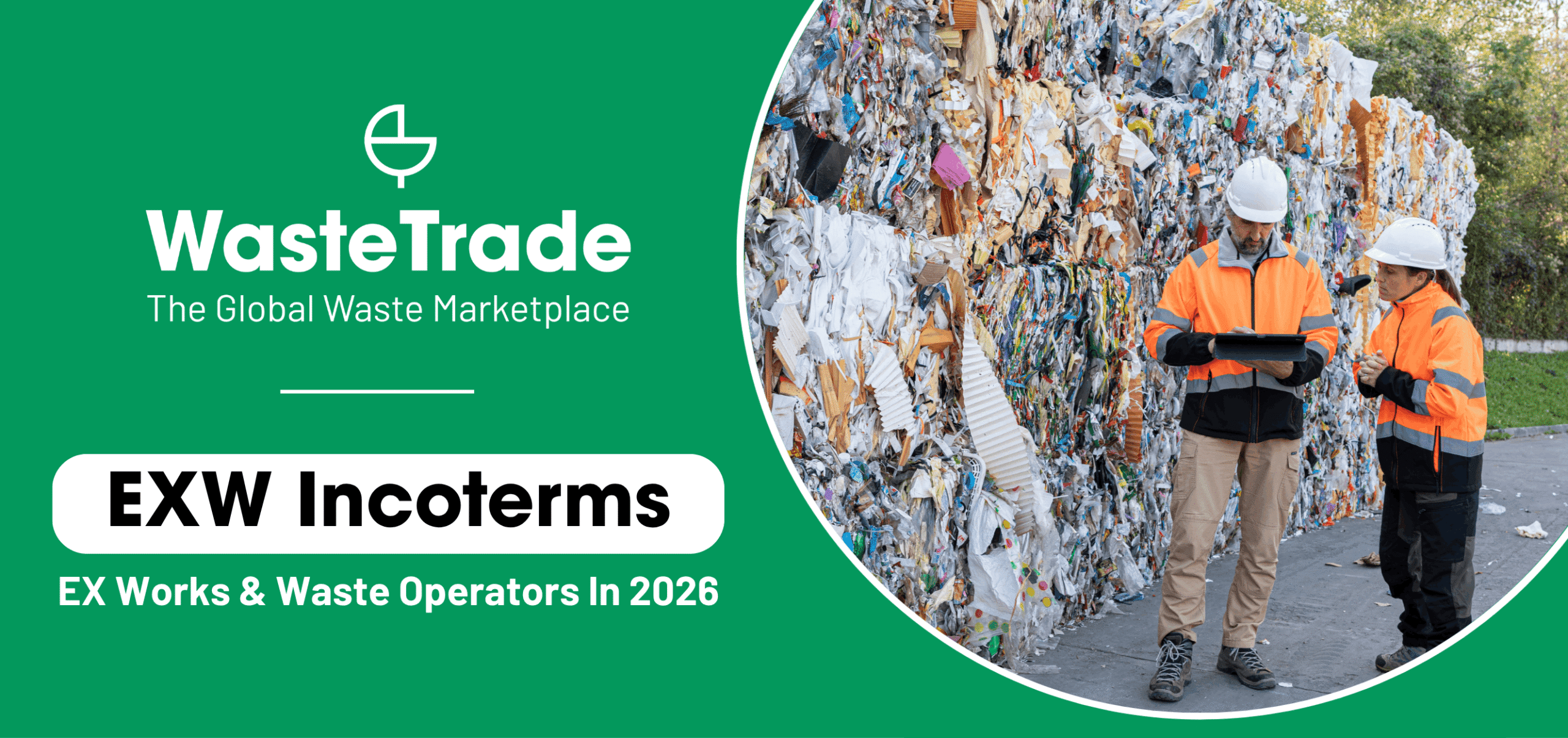
EXW Incoterms explained is usually where most articles stop. A clean definition, a few examples, and a simple conclusion that once goods leave your site, they are no longer your concern. For waste operators in 2026, that version of EXW is no longer enough.
Imagine a typical morning. A truck pulls into your yard, loads 18 tonnes of LDPE film, signs the paperwork, and drives off. You have sold under EXW terms. The material has left your gate. From your side, the job looks complete. But that load is only just entering the part of the journey that now carries the most complexity. It may cross borders, pass through a port, sit in a queue for approval, and eventually arrive at a facility you have never seen. At several points along that route, things can go wrong. Some of those problems can find their way back to you, even when you have done everything you thought was required.
What has changed is not the EXW Incoterms themselves. What has changed is everything that happens after them.
Operators are starting to pay closer attention to what happens next. In some cases, that means working through systems that offer visibility beyond collection, rather than treating the gate as the end of the story. In others, it means asking more direct questions about where material is going and how it gets there.
What Is EXW
If you strip it back, the EXW meaning is simple. EXW stands for Ex Works. Under EXW Incoterms, you make the goods available at your premises. The buyer takes responsibility from that point onwards. That includes transport, export, documentation, and delivery. Risk transfers when the goods are collected.
The Ex works exw definition appeals because it is clean. You are not arranging haulage. You are not dealing with export paperwork. You are not exposed to delays in transit. The transaction happens at your gate. Payment terms follow that point.
This is why EXW Incoterms sit at the centre of waste trading across Europe. Most material moves this way. It keeps operations moving and avoids unnecessary complexity at site level. Even within digital trading environments such as WasteTrade, EXW remains a common structure because it aligns with how operators prefer to work.
But that simplicity only describes the point of handover. It does not describe everything that follows. It does not describe the approvals, the documentation chain, or the risks that sit beyond your line of sight.
Why EXW Is Widely Used
There are practical reasons why EXW works so well in recycling. For a sorting facility or MBT operator, time matters. You are dealing with volume, space constraints, and constant inflow. EXW allows you to move material quickly. You agree a price, arrange a collection slot, and free up capacity.
The exw shipping terms remove layers of friction. You are not coordinating international logistics. You are not negotiating freight rates. You are not exposed to changing transport costs. Your focus stays on processing and output.
From a commercial perspective, EXW price structures also make sense. You know what you are being paid at your gate. There is no ambiguity about what sits inside that number. It is a clean exchange.
That clarity is exactly why EXW became the default. It fits the operational rhythm of waste facilities. It reduces administrative burden. It keeps things moving.
It also creates a blind spot. The easier it is to complete the transaction at the gate, the easier it becomes to ignore what happens once the material leaves.
What EXW Does Not Mean
The most common misunderstanding around EXW meaning is not about what it includes, but what it excludes. EXW transfers cost and transport risk. It does not remove your connection to the material once it leaves.
Your name still sits on documentation. The origin of the waste remains traceable. Under current regulation, there is still an expectation that waste reaches an appropriate destination. That expectation has not disappeared. It has become more visible.
From 2026, that visibility increases. Waste shipments move through a more structured system. Pre-notification requirements apply to plastic exports. Digital submission through systems such as DIWASS standardises how shipments are recorded and approved. Multiple authorities may review a single load before it moves.
This means the period after the gate is no longer a grey area. It is defined, documented, and increasingly auditable.
EXW still defines where responsibility transfers in commercial terms. It does not define where your involvement ends in a practical sense.
Operators who continue to treat EXW as a full stop rather than a handover point are starting to feel the gap between those two ideas. Those working through more structured trading environments are seeing more of what happens next, often for the first time.
What Happens After Collection
Once a load leaves your site under EXW shipping terms, it enters a chain that most facilities rarely see, but increasingly need to understand.
The material moves into documentation assembly, where the shipment is prepared for export. Details of the waste, the parties involved, the route, and the destination facility are recorded. That information does not disappear into the background. It follows the load all the way through the system.
If the material falls under notification requirements, the process continues into pre-notification. Authorities in the country of origin, any transit countries, and the destination country may need to review and approve the shipment before it moves. That process takes time and depends on the accuracy of the information submitted.
After that, the load may pass through a port or border inspection. Officials can review classification, documentation, and compliance. The shipment may move forward without issue, or it may be held for further checks.
Only then does it continue to its destination facility, where it is received, verified, and processed.
At each stage, there is potential for delay or disruption. A missing document, a classification question, or a timing error can stop a shipment that looked straightforward at the point of collection.
This is the part of the journey that used to sit out of sight. It no longer does.
Where trading happens through structured systems, much of this journey is coordinated and visible. Where it relies on informal arrangements, it often depends on trust and assumption. That difference is starting to matter more.
Pre-Notification In 2026
Pre-notification sits at the centre of the changes arriving in 2026. For plastic waste exports, it becomes a standard requirement rather than an exception. That means shipments must be approved before they move.
The process involves more than filling out a form. The notifier must provide detailed information about the waste, the route, the parties involved, and the receiving facility. Financial guarantees must be in place to cover scenarios where a shipment cannot be completed.
Under EXW Incoterms, the buyer or exporter takes on this responsibility. That is where many operators stop thinking about it. In practice, this is where the risk begins to separate.
If pre-notification is not completed correctly, the shipment does not move. If it is completed incorrectly, it may be stopped partway through the journey. In both cases, the material remains in the system, and the consequences start to build. That can mean containers sitting at ports, loads being returned, or agreements breaking down because the material cannot reach its intended destination.
This is not theoretical. It is already happening on certain routes.
This is where the gap in the market becomes clear. Not every trader has the experience, infrastructure, or financial capacity to manage pre-notification reliably. Some do. Many do not.
WasteTrade’s thorough due diligence, vetting, and standardisation procedures reduce this risk. They do not change EXW. They make sure the part that happens after EXW is actually executable.
EXW Price Meaning
The exw price meaning often gets reduced to a simple idea. It is the value of the material at your gate. It excludes transport, export costs, and delivery. That remains true.
What has changed is what sits behind that price.
In 2026, moving material across borders involves more process. There are compliance costs, administrative requirements, and potential delays. These factors sit outside the EXW price, but they influence whether the transaction works in practice.
The gap between EXW price and delivered reality is getting wider.
A low EXW price from a buyer who cannot execute the downstream process carries a different kind of risk. The material may not move as expected. The cost of failure may sit elsewhere, but the operational impact can still return to your site in the form of delayed collections, renegotiations, or material backing up on your floor.
WasteTrade’s structured trading environment helps to narrow that gap. They align what is agreed at the gate with what can actually happen after the gate.
EXW Shipping Terms | What Can Go Wrong
It does not take extreme scenarios for things to go wrong under EXW shipping terms. Small issues can have disproportionate effects once the material leaves your control.
A load may be classified as clean, non-hazardous material. An authority reviewing the shipment may disagree. The container is held while the classification is reassessed. Time passes. Costs accumulate.
A notification may be submitted, but consent has not yet been granted when the truck moves. The shipment becomes non-compliant. It may need to be returned. The process becomes complicated very quickly.
A destination facility may no longer be available due to regulatory changes or commercial issues. The route collapses. The buyer must find an alternative, or the material sits in limbo.
Documentation may not match the physical load. A routine check turns into a detailed inspection. The shipment slows down.
These are not rare events. They are part of the reality of cross-border waste movement. They become more visible as regulation tightens and as authorities take a closer look at what is moving through their systems.
In structured trading environments, such as WasteTrade, these risks are reduced because routes, documentation, and counterparties are assessed before the material moves. That changes the nature of the transaction between the seller of the waste and the recycler buying it from reactive to planned.
Choosing The Right Partner
EXW Incoterms have not changed. The environment around them has. That shifts the focus from the Incoterm itself to the capability behind it.
A credible trading partner now needs to demonstrate more than a willingness to buy material. They need to show that they can execute everything that happens after the gate. That includes experience with pre-notification, access to financial guarantees, relationships with relevant authorities, and verified destination facilities.
It also includes resilience. If a route becomes unavailable, they need alternatives. If a process changes, they need the capacity to adapt without disruption.
This is where the market is starting to separate. Some operators continue to work with a network of individual traders, each with varying levels of capability. Others are moving towards environments where those standards are built into the transaction.
Platforms such as WasteTrade sit in that second category. They do not replace EXW. They provide structure around it. They make sure the part after the gate is not left to chance.
EXW Checklist
Before agreeing an offtake under EXW terms, it is worth asking a few direct questions.
Who is responsible for pre-notification, and can they demonstrate that they have completed it on similar routes before? What timelines do they typically work to, and which authorities are involved? What financial guarantees are in place to support the shipment?
Which facilities will receive the material, and how are those facilities verified? What happens if a shipment is delayed, rejected, or needs to be returned? If a route becomes unavailable, what alternatives exist?
These are all questions about what happens after the gate.
A trading partner who can answer them clearly is operating at the level the market now requires. One who cannot introduces uncertainty that may not show itself until the material is already in transit.
If you are already trading through a platform like WasteTrade that requires this level of information as standard, many of these questions are addressed before you need to ask them.
The Gate Is Not The End | EXW Incoterms
EXW Incoterms explained is often treated as a simple exercise. Define the term, outline the responsibilities, and move on. For waste operators in 2026, that approach misses the point.
EXW still defines how material leaves your site. It does not define what happens next. That part of the journey is now structured, visible, and, in some cases, fragile.
The gate is no longer the end of the process. It is the point where a different process begins.
Understanding that shift is not about changing how you sell. It is about understanding the chain you are part of, even when you are not directly managing it.
If you want to look more closely at how your current arrangements hold up under the 2026 changes, it is worth having that conversation. WasteTrade works with operators dealing with exactly these questions every day.