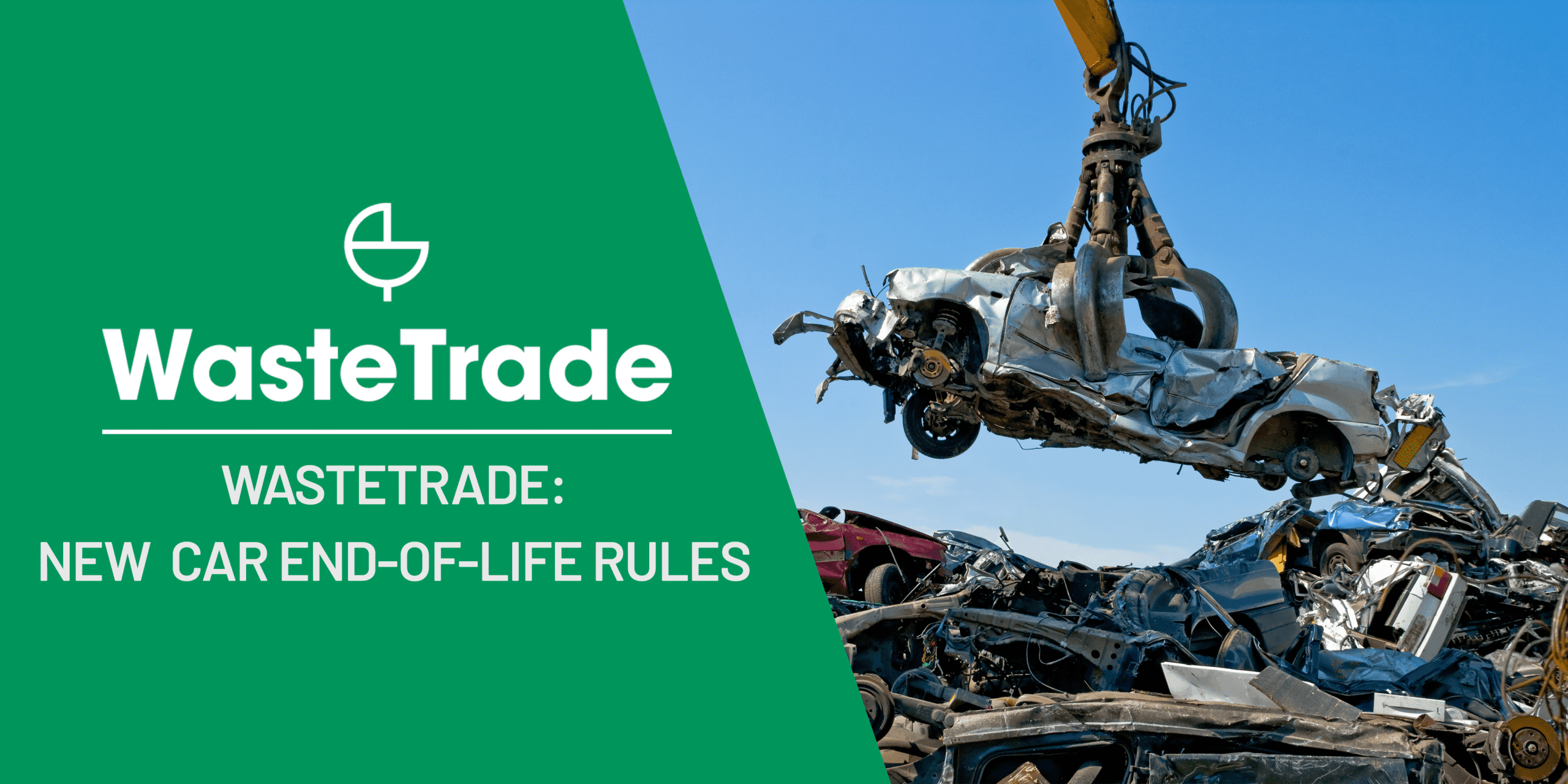
Europe is tightening the rules around vehicles at the moment they stop being vehicles and start becoming materials. What appears to be a regulatory update is, in reality, a structural shift in how recycling, manufacturing, and trade intersect.
Each year, around 6.5 million vehicles reach end of life across the EU. For decades, a large share of the material value embedded in those vehicles has been lost through weak enforcement, informal treatment routes, and exports that removed materials from regulated systems. The EU’s new end-of-life vehicle regulation is intended to close those gaps.
For recycling markets, this is not simply about compliance. It is about who can supply materials that manufacturers are now legally required to use and prove.
The EU End-of-Life Vehicle Regulation
The provisional agreement reached by the European Parliament and Council introduces binding circularity rules covering the entire vehicle lifecycle. Design, dismantling, recycled content, producer responsibility, resale, and export are all addressed within a single framework.
The regulation is built around four clear objectives:
- Keeping valuable materials within the EU economy
- Improving the quality and traceability of recycled outputs
- Reducing illegal exports and informal treatment
- Shifting financial responsibility onto vehicle producers
What distinguishes this regulation from earlier initiatives is its focus on enforcement. The rules are designed to change how materials move, not just how they are reported.
Vehicle Design and Dismantling
One of the most consequential changes is the requirement that new vehicles must be designed to allow easy removal of parts and components by authorised treatment facilities.
Design determines what can be recovered cleanly and what is lost or downgraded. Easier removal enables:
- Cleaner separation of plastics, metals, electronics, and assemblies
- Lower contamination before shredding
- Higher quality outputs downstream
Over time, this shifts vehicle recycling away from blunt bulk processing towards deliberate material recovery. It also increases the number of discrete, tradable material streams entering the market.
Recycled Plastics in Vehicles
The regulation introduces mandatory recycled plastic content in new vehicles:
- 15 percent within six years of entry into force
- 25 percent within ten years
Within those targets, 20 percent must come from closed-loop sources, including plastics recovered from end-of-life vehicles or parts removed during the use phase.
This is not a symbolic requirement. It creates binding demand for recycled plastics that meet automotive specifications and can be traced back to compliant sources.
For manufacturers, recycled content is no longer a voluntary sustainability claim. It is a regulatory obligation that must withstand scrutiny.
Closed-Loop Plastic Supply
Closed-loop requirements change how automotive plastics are sourced.
OEMs must now demonstrate:
- Where recycled material comes from
- How it was processed
- That it meets both technical and regulatory standards
Informal sourcing and unverifiable blends become liabilities rather than conveniences. Supply chains are forced to prioritise auditable material flows, where documentation matters as much as polymer type or price.
This shift is already visible. WasteTrade has recently welcomed an end user in Europe actively seeking co-mingled automotive technical scrap in bales, with clear requirements around provenance, processing route, and regulatory compliance. This is not hypothetical future demand. It is a direct response to the new rules.
Steel and Aluminium Recycling
The regulation also signals future targets for recycled steel and aluminium, to be introduced following feasibility studies.
While metals already have high recycling rates, binding targets would place greater emphasis on:
- Traceability
- Grade consistency
- Documented recycled content claims
For recycling markets, this points towards fewer opportunistic transactions and more specification-led trading supported by verifiable data.
Extended Producer Responsibility
Three years after entry into force, vehicle manufacturers will be required to cover the cost of collecting and treating end-of-life vehicles under strengthened extended producer responsibility rules.
This is intended to:
- Channel more vehicles into authorised treatment facilities
- Reduce leakage into informal or export routes
As producer responsibility tightens, compliant recyclers gain access to more predictable feedstock, while unregulated operators are pushed out of the market.
End-of-Life Vehicle Treatment
The regulation sets clearer expectations for how end-of-life vehicles must be handled, including requirements around:
Designated collection points
Authorised treatment facilities
Defined treatment standards
This formalisation improves material quality and reduces long-standing grey areas that have undermined recycling markets.
For traders and processors, it raises expectations around counterparties and documentation. Who you buy from becomes as important as what you buy.
Vehicle Depollution Requirements
Mandatory removal of fluids, hazardous substances, and specific components before shredding is another critical element.
Proper depollution improves:
- Metal recovery rates
- Plastic recyclability
- Environmental performance
Cleaner inputs produce higher quality outputs. As depollution standards rise, operators able to supply better-defined material streams gain a commercial advantage.
Used Vehicles and ELV Classification
The regulation tightens the distinction between used vehicles and end-of-life vehicles. When vehicles change hands, particularly through economic operators, documentation must demonstrate that they are roadworthy and not end of life.
This closes long-standing loopholes that allowed ELVs to be traded or exported as used vehicles, draining material out of regulated systems.
Export Controls on End-of-Life Vehicles
Five years after entry into force, exports of non-roadworthy vehicles will be banned.
Alongside clearer customs documentation requirements, this keeps more vehicle-derived material within the EU recycling system. It also increases scrutiny of cross-border movements and recycled content declarations.
As enforcement tightens, Basel Convention classifications, Green List materials, and Annex VII documentation become routine operational requirements rather than specialist knowledge.
Electric Vehicles and Material Intensity
Electric vehicles intensify these trends.
Compared with conventional vehicles, EVs contain higher volumes of:
- Aluminium
- Copper
- Engineered plastics
- Electronics and battery systems
As EVs reach end of life in greater numbers over the coming decade, dismantling quality, traceability, and compliant recycling become even more important. The new ELV framework lays the groundwork for managing that transition without repeating earlier mistakes.
Impacts on Recycling Markets
Taken together, these changes introduce a fourth pillar into recycling markets.
Price, volume, and logistics still matter. They are now joined by:
- Material traceability
- Circularity
- Auditable compliance
This reshapes the market. Informal supply chains lose relevance. Transparent, documented material flows become the baseline rather than the exception.
The Role of Marketplaces in ELV Recycling
As regulation tightens, recycling can no longer operate as a loose network of bilateral deals. It requires infrastructure that connects producers, recyclers, processors, and end users within a single, compliant framework.
WasteTrade is not a traditional waste broker. It operates as digital circular infrastructure designed for regulated material flows.
In practical terms, WasteTrade:
- Connects automotive manufacturers and end users with verified recyclers
- Supports tracking from material generation through processing to reintegration
- Enables auditable proof of recycling and reuse
- Supports Basel Green List and Annex VII documentation
- Provides cross-border transparency for recycled materials
- Differentiates between formal and informal recycling routes
- Aligns with EU, UK, and emerging extended producer responsibility frameworks
For automotive producers, this reduces guesswork. It allows sourcing of packaging and material streams that are already compliant, reduces reliance on virgin polymers and metals, and lowers exposure to greenwashing risk as regulatory scrutiny increases.
The Future of Vehicle Recycling
Europe’s new end-of-life vehicle rules do not offer quick fixes. They impose discipline on a system that has long relied on opacity and informal workarounds.
Vehicle recycling is moving towards integrated material systems where origin, processing route, and end use must be demonstrable. As recycled content targets expand and scrutiny of exports and environmental claims increases, the ability to prove compliance becomes as important as the material itself.
In that environment, infrastructure matters. Platforms like WasteTrade reflect the direction regulation is pushing the industry, enabling compliant trade at scale rather than layering process on top of broken systems.
Vehicles are becoming regulated material assets. Recycling is becoming part of the manufacturing supply chain. The rules are clear, the materials are valuable, and the market is already adjusting.