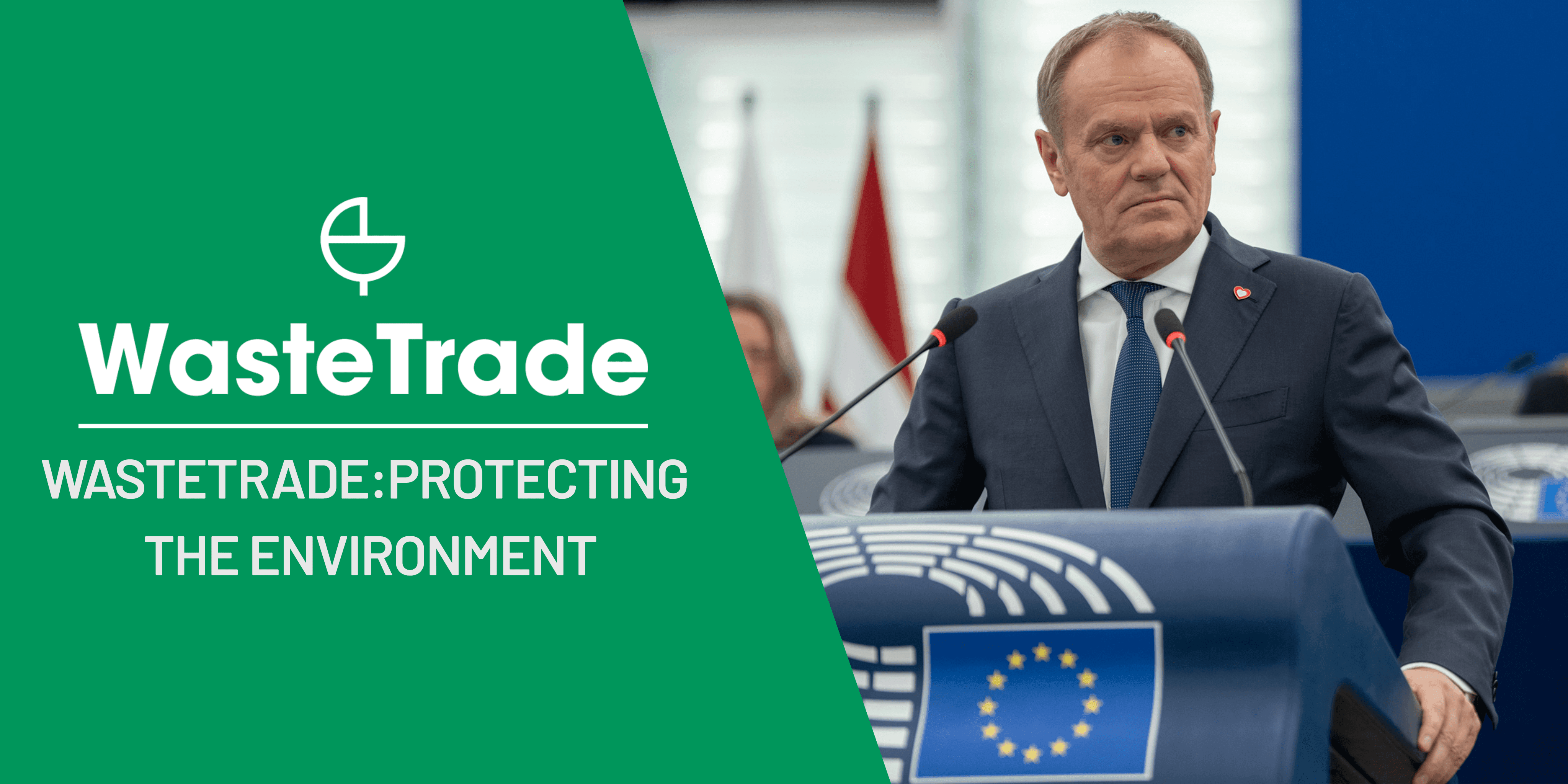
The European Union stands at a crossroads, grappling with the challenge of maintaining economic competitiveness while adhering to ambitious sustainability goals. The debate has intensified following Polish Prime Minister Donald Tusk’s recent speech in the European Parliament, where he criticised the EU’s Green Deal for driving up energy costs and weakening Europe’s global standing. His remarks reflect growing concerns that stringent environmental policies may be compromising industry and economic growth.
Yet, this perspective overlooks a crucial reality: economic strength and sustainability are not opposing forces. A well-structured transition to a circular, low-carbon economy can be a catalyst for prosperity rather than a hindrance. The question is not whether Europe can afford sustainability, but rather whether it can afford to neglect it.
Tusk’s Critique of the Green Deal
In his address, Tusk warned that high energy prices were placing European businesses at a severe disadvantage against global competitors, particularly those in the US and China. He called for a critical review of Green Deal legislation, arguing that excessive regulation and high costs could push industries to relocate outside Europe. His stance implies that deregulation and reduced environmental constraints are necessary to restore Europe’s economic strength.
Tusk also linked economic struggles to political instability, warning that persistently high energy costs could lead to public discontent and the collapse of democratic governments. His concerns reflect broader fears that sustainability policies, if not carefully managed, could alienate the public and erode confidence in European institutions.
Is Deregulation the Answer?
Tusk’s argument assumes that high energy prices are primarily a result of environmental policies, but the issue is far more complex. Energy costs are shaped by a multitude of factors, including global market fluctuations, geopolitical tensions, and infrastructure investment decisions.
Deregulating environmental policies might offer temporary relief, but it does not provide a long-term solution. In fact, it risks undermining Europe’s ability to lead in emerging green industries. Rolling back sustainability commitments could discourage investment in renewable energy, recycling, and circular economic models – sectors that have the potential to drive future growth and job creation.
Moreover, Europe’s high energy prices are, in part, a consequence of its reliance on imported fossil fuels. Moving away from sustainability policies would only deepen this dependence rather than alleviate it. Investing in domestic renewable energy production, energy efficiency, and circular economy initiatives offers a more stable and competitive foundation for the future.
European Defence and Energy Independence
Tusk’s speech extended beyond economic policy, touching on European defence and security. He advocated for a common European defence strategy and a European missile shield, arguing that Europe must take greater responsibility for its own security.
While his focus was on military readiness, energy security is an equally vital component of Europe’s resilience. Reducing reliance on imported fossil fuels – whether from Russia, the Middle East, or other regions – would strengthen Europe’s strategic position. A sustainable, circular economy plays a key role in this effort by minimising waste, improving resource efficiency, and reducing the need for raw material imports.
If Europe were to abandon its environmental commitments in the name of short-term competitiveness, it would only weaken its long-term security. A truly self-sufficient Europe is one that invests in sustainable infrastructure and energy independence, rather than retreating into outdated economic models.
Economic Growth Through Circularity
At WasteTrade, we recognise the importance of economic development, but we reject the idea that sustainability must be sacrificed to achieve it. The notion that environmental policies inherently weaken competitiveness is outdated and short-sighted. In reality, sustainable economic models offer greater resilience, efficiency, and long-term profitability.
A circular economy, where materials are continuously reused, recycled, and repurposed, is not only environmentally responsible but also economically advantageous. Companies that invest in circular systems reduce costs by cutting waste, securing stable material supplies, and mitigating risks associated with resource scarcity. The recycling industry, in particular, is poised to become a major driver of employment and innovation, ensuring that Europe remains competitive in the global marketplace.
Legislation and regulatory frameworks play a critical role in accelerating this transition. Well-designed policies provide businesses with the certainty needed to invest in sustainable infrastructure and practices. Without strong environmental and circularity regulations, the shift towards a fully circular economy will be slower, leaving Europe at a disadvantage compared to regions that are already making significant progress.
Deregulation, as proposed by Tusk, would undermine this progress and prolong reliance on unsustainable practices. Instead, the focus should be on refining policies to ensure they support businesses in adapting to circular and sustainable models, rather than abandoning them altogether.
Balancing Priorities
Europe does not have to choose between economic strength and sustainability. The two can and must go hand in hand. The transition to a low-carbon, circular economy should be seen not as a burden but as an opportunity – one that ensures long-term competitiveness, resource security, and economic stability.
To achieve this, policymakers must resist calls for short-term deregulation and instead focus on creating a regulatory environment that supports sustainable investment and innovation. Businesses, in turn, must embrace circular economy principles, recognising that they are not just an environmental necessity but a competitive advantage.
Europe’s future will be shaped by the decisions made today. The path forward is not to retreat from sustainability but to integrate it more effectively into economic and industrial strategies. By doing so, Europe can remain a global leader – not just in environmental policy but in economic resilience and prosperity.