For years, transparency in global supply chains has been discussed more than it has been delivered. Digital systems have promised traceability, regulators have promised oversight, and businesses have promised responsibility. Yet in many sectors, especially in waste and recycled materials, transactions still rely heavily on fragmented paperwork, manual declarations, and trust built through repetition rather than data. Recent Digital Product Passport Updates suggest that this may be beginning to change.
The Digital Product Passport, often shortened to DPP, is moving from policy concept to operational reality across Europe. The question is not simply whether it will exist, but how it will function in practice, and whether it will meaningfully reshape how materials are valued and traded.
WasteTrade, operating at the intersection of waste management, recycling and manufacturing feedstock, is now incorporating Digital Product Passport architecture directly into its platform. The implications extend beyond compliance. They touch pricing, risk, trust and, ultimately, the viability of a more circular economy.
What Is A DPP
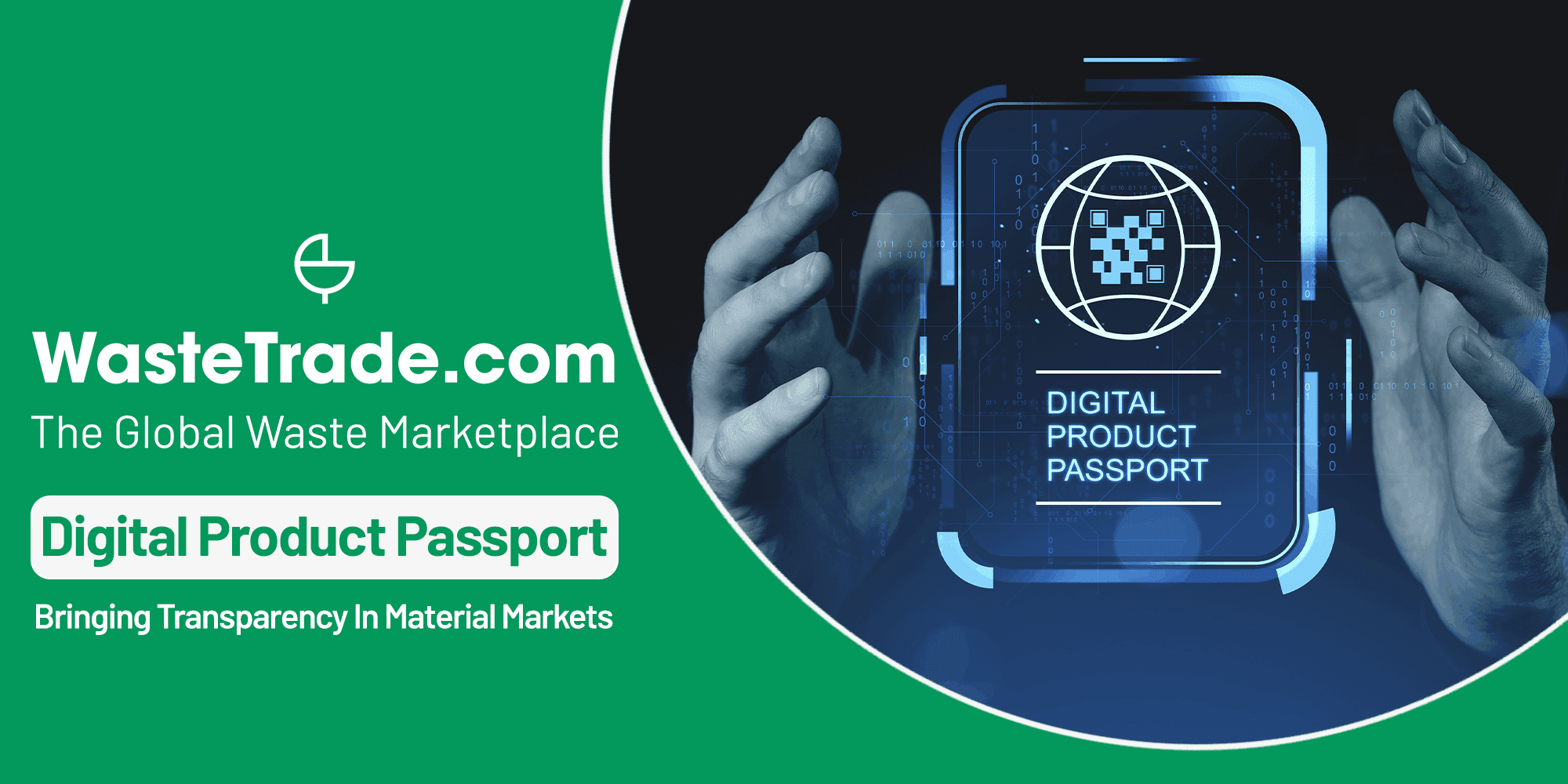
At its simplest, a Digital Product Passport is a structured digital record linked to a physical product or material. It is accessed via a unique identifier, often a QR code, and contains standardised, machine-readable data about composition, origin, environmental impact, repair instructions, recycling pathways and compliance documentation.
In theory, the DPP travels with the product throughout its lifecycle. It creates continuity where previously there was fragmentation. Rather than relying on static PDFs or isolated declarations, the passport functions as a living data record.
The central claim behind the Digital Product Passport is straightforward. If information about materials becomes visible, comparable and verifiable, better decisions follow. Producers design differently. Buyers select differently. Recyclers process differently. Regulators enforce more effectively.
Whether this claim holds depends entirely on how the system is implemented.
Digital Product Passport EU
The current momentum behind Digital Product Passport Updates is driven largely by the European Union. Under the Ecodesign for Sustainable Products Regulation, the Digital Product Passport EU framework is intended to make sustainability data mandatory and interoperable across a growing range of product categories.
The ambition is significant. By requiring structured product-level data, the EU aims to support durability, repairability, recycled content verification and improved end-of-life management. The Digital Product Passport EU architecture is being developed with interoperability in mind, so that data can move across sectors and borders without losing integrity.
However, the regulatory dimension has also fuelled scepticism. Some argue that DPPs risk becoming another compliance obligation layered onto already complex reporting systems. There are concerns about cost burdens for smaller businesses, data confidentiality, and the practical difficulty of standardising information across diverse industries.
The debate is healthy. It forces a more serious question. Are Digital Product Passport Updates simply adding administrative weight, or are they laying the foundations for a more intelligent material economy?
DPPS Meaning
The meaning of DPPS, or Digital Product Passport Systems, extends beyond documentation. At their most basic, they record data. At their most effective, they alter incentives.
If a passport merely stores information for regulatory review, it will struggle to gain commercial traction. If it begins to influence pricing, risk assessment and supplier selection, it becomes embedded in everyday decision-making.
The deeper DPPS meaning, then, is not traceability alone. It is decision architecture. Structured transparency changes behaviour because it reduces uncertainty. In material markets, uncertainty has always carried a cost.
The Debate Around Digital Product Passports
Critics of the Digital Product Passport framework raise legitimate concerns. Data collection requires investment. Interoperability standards are still evolving. There is a risk of information overload if every product carries excessive detail that no one uses. There is also the danger that companies treat DPP compliance as a box to tick rather than a system to integrate.
Others question whether consumers will meaningfully engage with passport data at all. If transparency does not translate into changed purchasing behaviour, the system may appear symbolic rather than transformative.
Yet the counterargument is compelling. Most of the technologies required for effective Digital Product Passport Systems already exist. Unique identifiers, cloud databases, structured data standards and scanning technologies are not new inventions. What is new is the intention to align them at scale.
When properly designed, Digital Product Passport Updates can reduce information asymmetry. And information asymmetry is one of the primary inefficiencies in waste and recycled material markets.
From Products To Materials
Much of the Digital Product Passport EU discussion focuses on finished consumer goods. WasteTrade operates further upstream. It trades materials and lots rather than completed products.
Here, the concept evolves into something slightly different but equally powerful. Each traded material stream can carry its own digital identity. A bale of polymer, a load of fibre, a batch of recyclate can be associated with structured data covering origin category, composition range, contamination profile, packaging format, sampling results and handling requirements.
In waste markets, materials frequently lose their identity as they move through the chain. They become generic categories. Mixed plastics. OCC. Fibre blend. With each transfer, information can degrade.
Embedding Digital Product Passport architecture at material level prevents that erosion. It retains character and history.
WasteTrade’s Approach
WasteTrade has begun incorporating Digital Product Passport logic directly into its platform workflows. The focus is practical rather than theoretical.
At listing stage, structured data fields capture detailed material characteristics. Sellers attach laboratory results, imagery and compliance documentation within a consistent schema. This creates a standardised baseline rather than a patchwork of informal descriptions.
Each traded lot is assigned a digital identifier. Custody events can be logged at loading, transfer and receipt, creating a timestamped chain of handling. When recyclers process incoming material, transformation data can be recorded, including yield, output grade and residue.
Crucially, passport data does not sit separately from transactions. It informs them. Buyers reviewing listings are not simply assessing price and volume. They are evaluating transparency, historical consistency and evidence.
In cross-border movements, passport data supports compliance documentation and aligns with broader Digital Product Passport EU developments in digitalised waste shipment systems. Rather than duplicating paperwork, the passport becomes a structured data source feeding necessary declarations.
Commercial Benefits
For sellers, Digital Product Passport Updates embedded within WasteTrade reduce dispute risk. Clearer specification reduces ambiguity at intake. Verified transparency strengthens credibility and may justify stronger pricing where material quality is consistent.
For buyers, structured passport data lowers inspection uncertainty. It enables more informed supplier comparison and reduces the likelihood of rejected loads. It also simplifies internal ESG reporting, as documentation is consolidated and accessible.
Recyclers benefit from improved feedstock visibility. Better characterisation supports operational efficiency and yield management. When recyclate is sold onward, transformation data strengthens its provenance.
Across the wider waste management and manufacturing sectors, Digital Product Passport Systems contribute to standardisation. Markets function more efficiently when information is consistent. Pricing begins to reflect measurable quality rather than assumed risk.
Circularity And Accountability
The circular economy is often discussed in abstract terms. In reality, it depends on mundane details. What is in the material. Where it came from. How it was handled. What it became.
Digital Product Passport Updates address these details. They do not create circularity alone, but they support the conditions required for it. Transparency reinforces accountability. Accountability supports trust. Trust supports long-term relationships and investment.
WasteTrade’s incorporation of Digital Product Passport architecture is not framed as a moral gesture. It is a recognition that material markets evolve when information improves. When identity is preserved and verified, materials retain value rather than degrade into anonymity.
Looking Ahead
Digital Product Passport EU regulations will continue to evolve. Standards will mature. Industry adoption will vary. There will be friction and adjustment.
Yet the direction is clear. Structured, interoperable product and material data is becoming embedded in European industrial policy. The more relevant question for businesses is how early and how intelligently they integrate it.
By embedding Digital Product Passport Systems directly into material transactions, WasteTrade is aligning transparency with commercial function. Not as an afterthought. Not as a compliance appendix. But as part of the mechanics of trade.
If Digital Product Passport Updates fulfil their promise, they will not simply document the past of a product or material. They will shape its future.