London’s skyline is constantly changing. New towers rise, old industrial buildings disappear, and entire districts are reshaped in the process. Behind that visible transformation lies another reality that is less often discussed but far more substantial by volume. There are vast quantities of scrap materials to be dealt by the construction waste disposal London sector.
This week’s announcement of the UK’s first Circular Construction Hub in the Royal Docks reflects a growing recognition that the construction industry must treat waste differently. The project aims to reuse materials generated by development in the area and divert at least 950 tonnes of construction waste from landfill over the next five years.
The hub is the first step in a wider Circular Economy Village planned for the London Borough of Newham. Partners including Tipping Point East, Material Cultures, RESOLVE Collective and Yes Make are working alongside the Greater London Authority and Newham Council to create a site where construction materials can be recovered, reused and repurposed rather than discarded.
For London, a city building thousands of homes and infrastructure projects every year, the initiative highlights a wider shift. Construction waste disposal in London can no longer rely on landfill and basic recycling alone. The industry is starting to recognise that materials leaving demolition sites are not simply waste. They are resources moving through an increasingly complex market.
Digital trading platforms such as WasteTrade are becoming part of that emerging system, connecting construction waste streams with buyers, recyclers and manufacturers who can put those materials back into use.
Construction Waste Management London
London produces vast quantities of construction waste each year. Major regeneration schemes across the capital generate material flows on a scale few other sectors can match. The redevelopment of the Royal Docks itself illustrates this reality. Projects like the Lendlease-led Silvertown development, approved to build around 7,000 homes, involve enormous volumes of concrete, metals, timber and packaging materials moving through construction sites.
Managing these flows efficiently has become a central challenge for developers, contractors and local authorities. Construction waste management in London has traditionally focused on removal and processing. Materials are placed into skips, transported to transfer stations and then separated for recycling or disposal. Aggregates such as concrete and brick are typically crushed and reused as road base or fill material.
While this approach achieves relatively high recovery rates on paper, it does not always preserve the value of the materials themselves. Recycling concrete into aggregate, for example, prevents landfill but does little to reduce demand for newly produced building materials.
Circularity in Construction
Circular construction initiatives are designed to go further. The Royal Docks hub aims to create a local system where materials from demolition and refurbishment projects are captured, processed and reused within nearby developments. Instead of travelling long distances to recycling plants or landfill, materials can be kept within the local construction ecosystem.
Policy has played a role in accelerating this shift. London planning guidance increasingly requires developers to demonstrate how projects reduce waste and support circular material flows. Embodied carbon is also becoming a critical issue. The emissions associated with producing construction materials can account for a significant proportion of a building’s lifetime environmental impact.
In this context, construction waste management in London is no longer just about disposal. It is about understanding how materials move through the city and how they can be kept in use for longer.
Construction and Demolition Waste
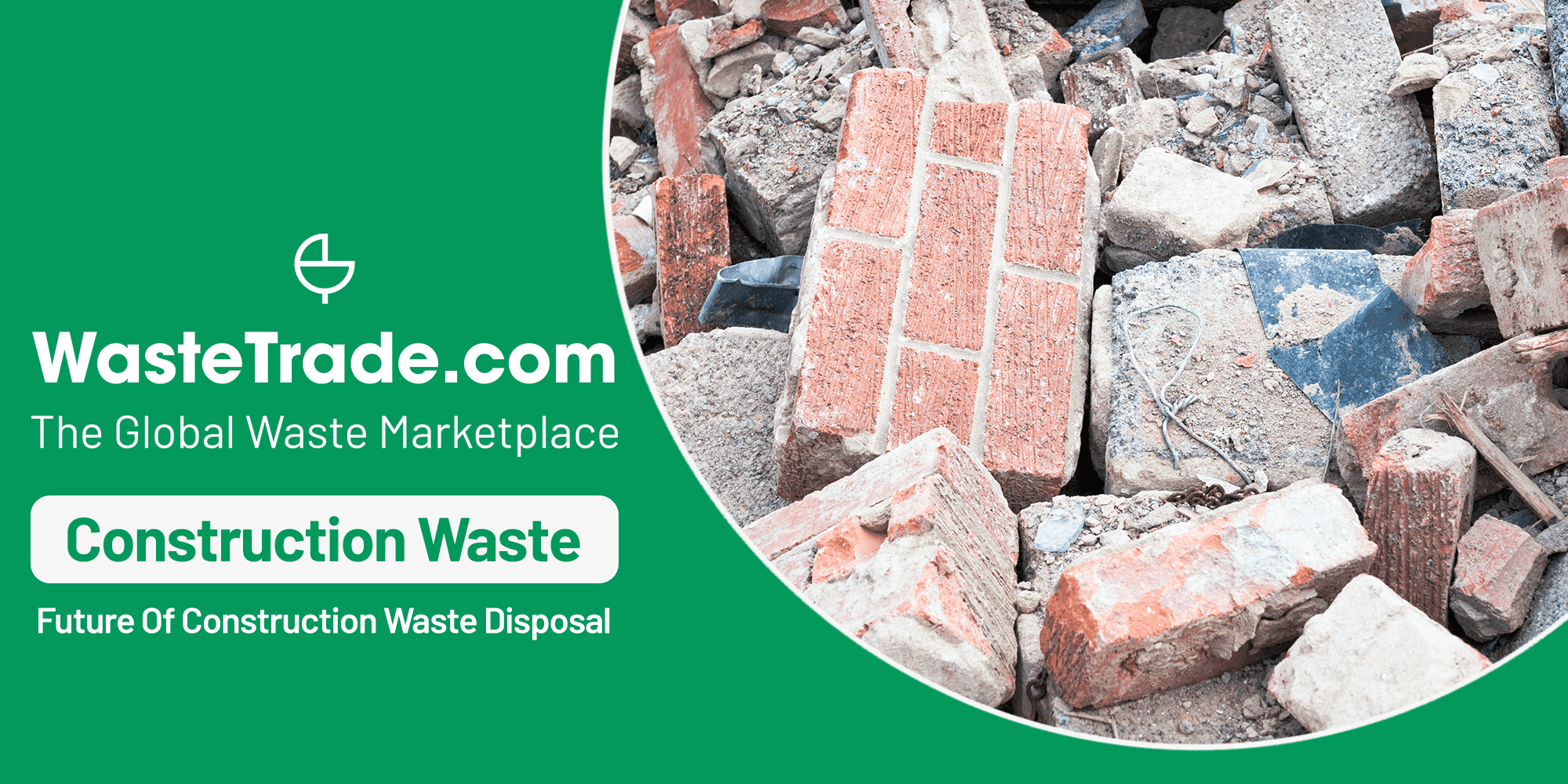
Construction and demolition waste represents the largest waste stream in the UK by tonnage. The sector generates tens of millions of tonnes every year, with materials ranging from heavy aggregates to metals and plastics.
Concrete, brick and asphalt dominate by weight. These materials are relatively easy to recycle and form the bulk of the UK’s recycled aggregates market. Metals also hold strong recycling value. Steel beams, copper wiring and aluminium components are widely recovered and reprocessed.
Other materials present more complex challenges. Timber from construction sites may be contaminated with coatings or treatments. Plastics from packaging or piping systems are often mixed with other waste streams. Insulation materials and plasterboard require specialist processing to avoid environmental risks.
Yet many of these materials retain economic value if they can be separated and routed to the right buyers. This is where the concept of urban mining becomes increasingly relevant. Buildings are effectively reservoirs of materials that can be recovered and reused once structures are altered or demolished.
Material Challenges Facing the Industry
The difficulty is not simply recovering those materials. It is connecting them with markets that can absorb them.
Construction sites generate waste unpredictably and across thousands of locations. Demolition contractors may remove large quantities of steel or plastic from a project without knowing who might want it. At the same time, manufacturers and recyclers are constantly searching for reliable material supply.
Digital marketplaces are beginning to bridge that gap. WasteTrade provides a platform where construction and demolition waste streams can be listed, traded and transported through a verified network of buyers and sellers.
Instead of viewing materials leaving a site as disposal problems, contractors can treat them as commodities. Scrap metals, plastics, timber and packaging materials can be offered to recyclers or manufacturers who need those inputs.
The result is a more transparent market where material value becomes visible rather than disappearing into mixed waste streams.
Waste Management in Construction
Waste management in construction has historically been driven by practical constraints. Building sites operate under tight timelines and strict safety requirements. Waste must be removed quickly to keep projects moving.
The standard approach has therefore prioritised simplicity. Mixed skips are filled with surplus materials and collected by waste carriers who transport them to processing facilities. While some separation occurs later, the system is designed primarily for efficient removal rather than resource recovery.
Several structural problems arise from this model.
Supply is fragmented. Thousands of construction projects produce waste at different times and in different locations. Without coordination, valuable materials can easily be lost within mixed waste streams.
Visibility is limited. Contractors rarely know who might be interested in surplus materials generated on site. Potential buyers may exist in the same city but remain unaware that those materials are available.
Logistics adds another layer of complexity. Construction waste is heavy and costly to transport. Moving materials to the wrong facility or buyer can quickly eliminate any economic value.
Addressing the Issue
Platforms such as WasteTrade address these problems by introducing market structure into waste management in construction.
Through the platform, construction companies can list recyclable materials directly to a network of verified buyers. Recyclers and manufacturers can browse available listings and bid for materials that match their requirements. Transport providers can also participate, ensuring materials move efficiently between sites and processing facilities.
This approach transforms waste management from a purely operational task into a trading process. Materials that might otherwise be treated as disposal liabilities become part of a functioning marketplace.
For circular construction initiatives like the Royal Docks hub, this digital infrastructure could prove essential. Physical hubs provide the space to process and store materials, but marketplaces help ensure those materials reach buyers who can actually use them.
Construction Waste Disposal Near Me
For contractors and site managers, the practical question often remains straightforward. When materials accumulate on site, they need a solution quickly. Searches for construction waste disposal near me reflect the urgency of that need.
Traditional options usually involve skip hire or local waste transfer stations. While these services remove waste from site, they may not always capture the underlying value of recyclable materials.
Construction companies are increasingly exploring alternatives that prioritise recovery rather than disposal. Instead of sending materials directly to landfill or generic recycling facilities, they can route them through specialised recycling markets.
WasteTrade supports this approach by connecting construction waste producers with buyers across the recycling and manufacturing sectors. Contractors looking for construction waste disposal near me may find that materials from their site are actually in demand elsewhere.
Metals can be sold to scrap processors. Plastics can be supplied to recycling facilities. Cardboard packaging can enter fibre recycling streams. Timber and other materials may find secondary uses through specialist buyers.
By expanding the market beyond local disposal facilities, digital trading platforms help construction companies reduce landfill reliance while recovering value from materials that might otherwise be wasted.
A Changing Landscape for Construction Industry Waste
The launch of the Circular Construction Hub in the Royal Docks is a signal of where the industry is heading. Cities undergoing large-scale redevelopment cannot rely indefinitely on traditional waste management models. Construction materials must circulate more efficiently through the economy.
Physical infrastructure such as reuse hubs will play an important role. They provide space to recover, process and store materials that might otherwise be lost.
But infrastructure alone is not enough. Markets must exist to absorb those materials and connect supply with demand. Digital platforms such as WasteTrade are beginning to provide that missing layer.
As London continues to build, the question is no longer simply how construction waste disposal London should operate. The more important question is how materials leaving construction sites can remain part of the city’s evolving built environment.
If the answer lies in combining circular construction hubs with digital trading networks, the future of construction waste may look very different from the past. Waste will increasingly be treated not as a burden, but as a resource waiting to be used again.