Bevin Tumulty, WasteTrade Co-Founder
As we move into the new year, I find myself looking back at the obstacles we overcame and everything we achieved in 2025, and looking ahead to what lies before us in 2026.
2025 was not an easy year for the recycling and secondary materials market. Supply tightened, demand shifted unevenly, and regulatory frameworks continued to evolve at different speeds across regions. But those pressures also clarified something we have believed from the start at WasteTrade: circular supply chains only work when they are built on traceability, commercial reality, and trust.
That belief shaped many of the decisions we made last year.
What 2025 Actually Changed for WasteTrade
One of the clearest signals of progress has been the growth of the platform itself. WasteTrade now has more than 4,450 users across hundreds of countries worldwide, spanning buyers, sellers, hauliers, and many other industry professionals. That breadth matters, because circular systems only function when all parts of the chain are present and accountable.
Operationally, we moved from proving concepts to delivering them at scale.
In 2025, WasteTrade placed HelloFresh’s waste into fully accredited end users, delivering a closed-loop outcome that required more than just a transaction. It required verified outlets, documentation, logistics control, and confidence on both sides that the material would end up where it was supposed to. This type of work reflects the direction the market is moving, where outcomes matter as much as volumes.
We also secured annual contracted tonnage from European granule producers, creating reliable, certified supply streams for packaging and construction-grade recycled plastics. For many organisations, this kind of certainty is now essential, not optional, particularly as recycled content requirements and audit expectations increase.
A major internal milestone was the commissioning of our Product Passport, which is now fully live. It provides digital, verifiable information on material origin, quality, and traceability, enabling clients to substantiate recycled content claims and demonstrate compliance with greater confidence. Alongside this, we continued development work to strengthen the audit trail that underpins the system, with blockchain capabilities forming part of that longer-term roadmap.
Beyond the platform itself, we spent time where it matters upstream. WasteTrade contributed to policy discussions around EPR and emerging market frameworks, focusing on practical traceability and the correct placement of incentives and subsidies. Regulation only works when it aligns with how materials actually move, and we see it as part of our role to help close that gap.
Building on the Ground, Not Just Online
Another important shift in 2025 was physical presence.
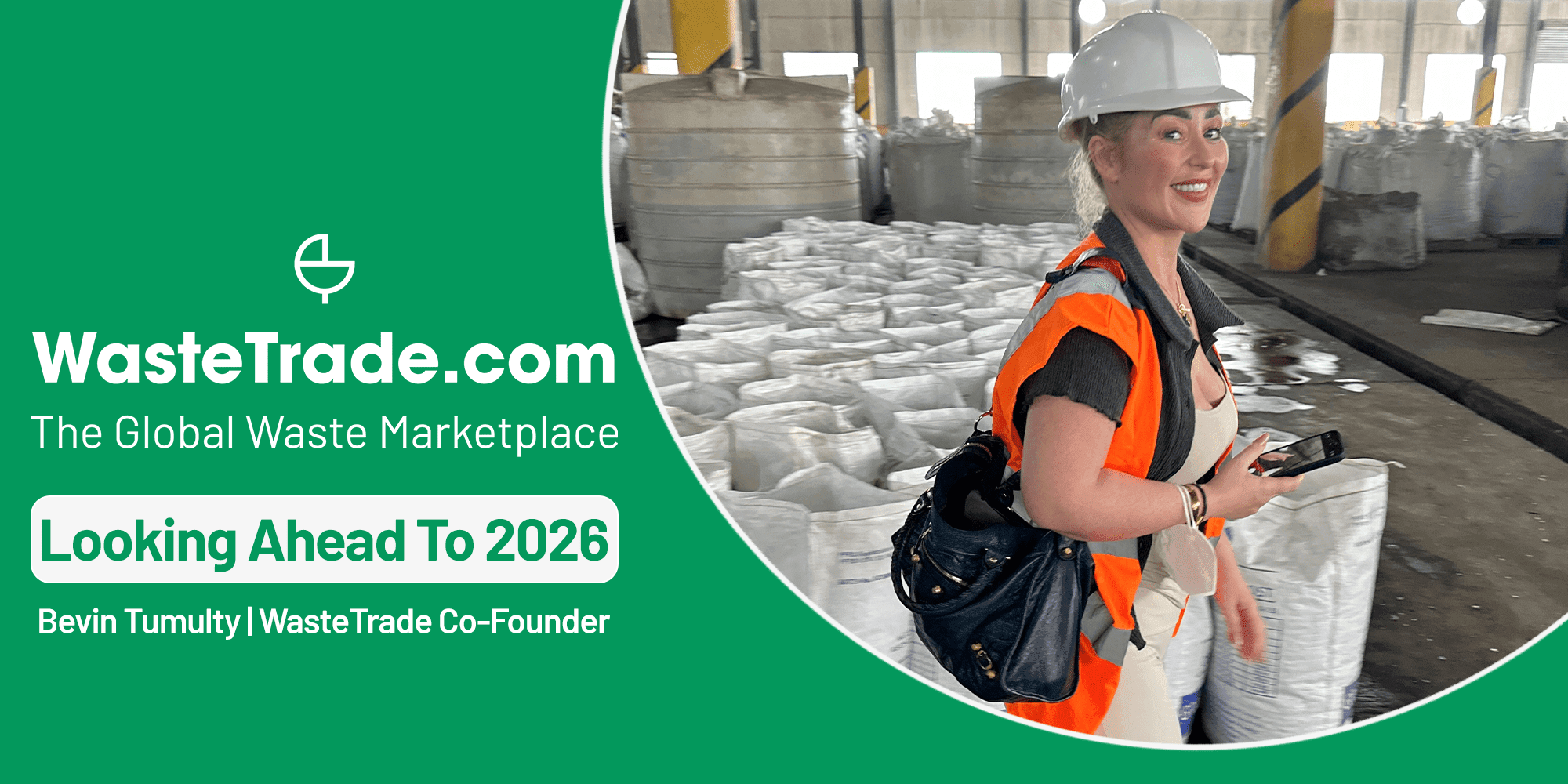
We expanded our regional footprint, placing staff on the ground to oversee loadings, manage quality, and reduce risk for clients. This included strengthened operations in Ghana with the opening of our first office on the African continent, supporting sourcing and logistics while contributing to local employment, and expanded capability in Eastern Europe through Romania, improving service for EU and global customers.
Technology enables scale, but outcomes are still delivered by people. That balance continues to shape how we grow.
What We are Focused on in 2026
We enter 2026 with a clear set of priorities.
We will be opening new regional hubs, with the Netherlands serving as our Western Europe base, Egypt as our Middle East hub, and an East Coast USA office planned for summer 2026. These locations reflect where demand, regulation, and supply chains are converging.
On the platform side, we will continue to build around traceability, compliance, and usability. The Product Passport will be expanded, and the underlying audit trail strengthened further, giving organisations greater confidence as scrutiny around recycled content increases.
We will also continue securing verified, high-volume material streams for packaging, construction, and alternative fuel applications, while growing our IT, operations, and logistics teams to support this activity properly.
Finally, we will remain engaged in policy discussions where practical experience can add value. Circular systems need to be robust, transparent, and commercially workable if they are to last.
Looking Ahead to 2026
What 2025 reinforced for me is that progress in this industry is rarely loud. It comes from doing the unglamorous work properly, building systems that hold up under scrutiny, and earning trust load by load.
WasteTrade is becoming the infrastructure that helps make circular supply chains traceable, auditable, and workable at scale. That is the work we are focused on, and it is what we will continue to build in 2026.
If you are looking to buy or sell verified recycled materials, move material into accredited end markets, or understand how traceability fits into your supply chain, you can create an account on WasteTrade or contact our team for support.
Thank you to everyone who worked with us over the past year. We are looking forward to what comes next.