Across West Africa, recycling sits at an intriguing crossroads. On the one hand, there is undeniable momentum: growing urban populations, rising material consumption and a wide network of people already collecting and recovering recyclables. On the other, a great deal of value is still lost because materials never make it into formal, traceable markets.
For recyclers, manufacturers and buyers who care about where their feedstock comes from, this is more than a missed commercial opportunity. It is a gap in the global effort to treat materials as resources rather than waste.
WasteTrade’s new West Africa hub has been created to address that gap directly. It is a regional focus within a global digital marketplace, designed to connect West African recyclers and waste producers with verified buyers worldwide, while supporting the practical realities of transport and documentation on the ground.
This is not a story about technology in isolation. It is a story about market access, trust and the quiet, methodical work of making trade easier for those who have long been on the margins of it.
West Africa’s Recycling Industry
Africa generates millions of tonnes of recyclable material every year: plastics from consumer packaging, metals from cans and appliances, fibres from cardboard and paper, organic material from rapidly growing cities. In many West African countries, a remarkable proportion of these materials is recovered not by formalised municipal systems, but by individuals and small enterprises who move through streets, markets and informal dumpsites, extracting value wherever it can be found.
The potential is obvious. Demand for recycled polymers and fibres has grown steadily as manufacturers seek to reduce virgin material use and demonstrate responsible sourcing. Global buyers are increasingly willing to look beyond their traditional supply regions if they can find partners who can meet their technical and compliance requirements.
Yet the path from a bale of PET in Accra or a load of HDPE in Lagos to a packaging plant in Europe or a recycler in Asia is rarely straightforward. The obstacles are familiar to anyone who has worked in the sector:
- Collection and sorting infrastructure is patchy and often overwhelmed.
- Supply chains are fragmented, with multiple intermediaries and limited visibility.
- Documentation and compliance standards required for export are complex and changeable.
- Transport is expensive, unreliable, or simply unavailable when needed most.
As a result, a large volume of material either fails to leave the country at all, ends up in low-value local markets, or is lost altogether to landfill and open dumping. The region’s recycling story is not one of absence, but of under-utilised capacity.
The Informal Recycling Sector in West Africa: Strengths and Limitations
Any serious attempt to understand West African recycling has to start with the informal sector. Informal collectors are often the first and most important link in the chain. They recover bottles, cans, cardboard and other recyclables long before they would be captured by any formal system, often with extraordinary persistence and very limited tools.
Their work brings several advantages:
- They recover materials that would otherwise be lost.
- They reach areas where formal services are limited or non-existent.
- They provide a form of income to thousands of people.
However, their position in the value chain is precarious. Prices are volatile. Negotiating power is minimal. Material may pass through several hands before reaching a processor, with little transparency. And crucially, once materials begin moving beyond local markets, the documentation required to satisfy international buyers is rarely present in a robust, verifiable form.
This is not a question of effort or intent on the part of collectors and local recyclers. It is a structural problem: there is no easy way for them to connect what they already do well – recover and prepare material – with the formal standards and documentation that govern cross-border trade.
The challenge, then, is not to replace informal systems, but to give them a bridge into formal, traceable markets without stripping away their autonomy or local expertise.
What Is WasteTrade’s West Africa Hub and Why It Matters
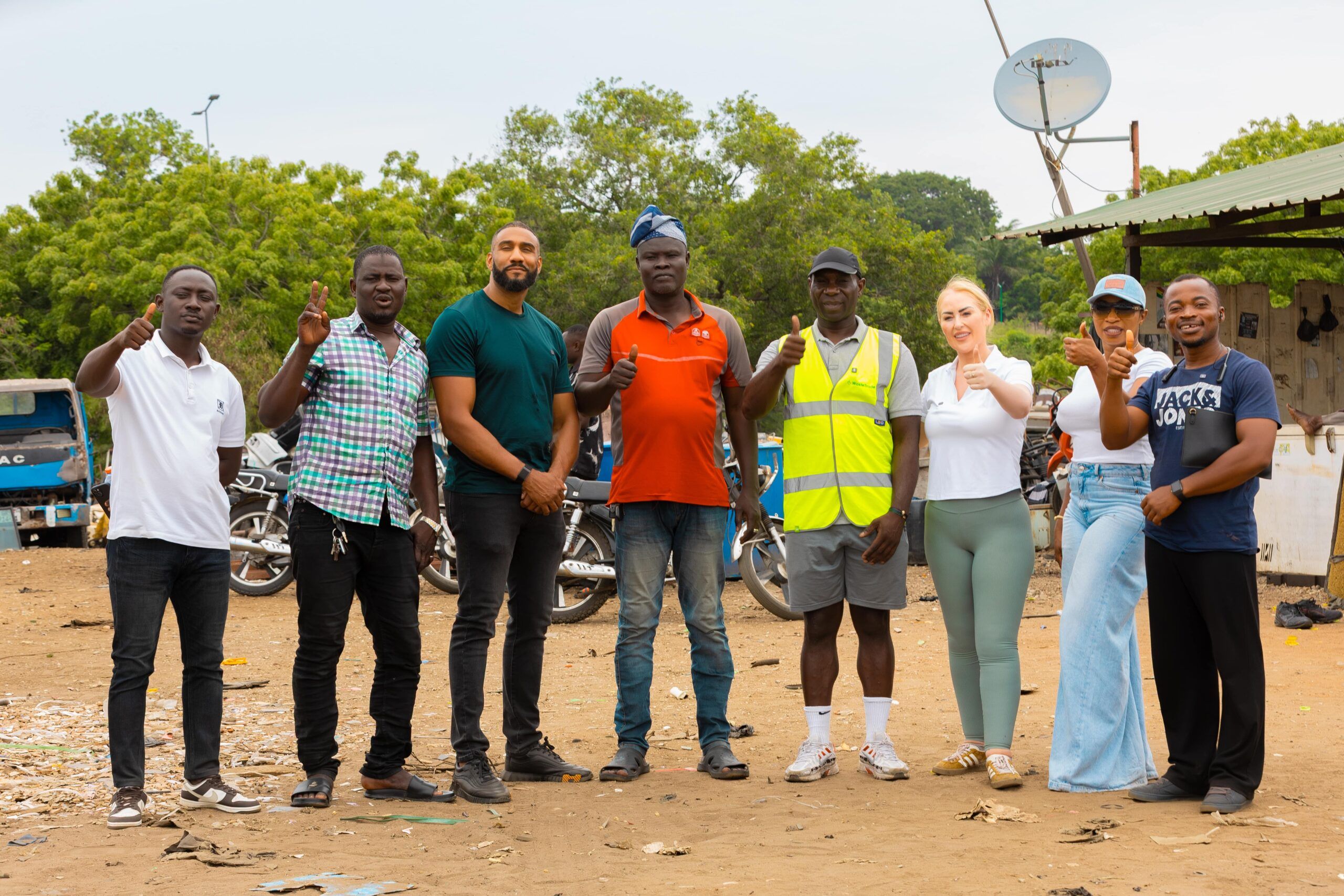
WasteTrade’s West Africa hub is designed as precisely that bridge. It combines a global digital marketplace with a regional focus, working with recyclers, waste producers, aggregators and logistics providers across countries such as Ghana, Nigeria and Ivory Coast.
At its core, the hub has a simple premise: if a recycler in West Africa has material that meets a buyer’s technical requirements, distance and documentation alone should not prevent a trade from taking place. The platform provides the tools to make that connection practical:
- A digital marketplace where materials can be listed with clear specifications.
- A network of verified buyers searching for recycled materials from West Africa.
- Integrated transport options to move material from collection points to processors or ports.
- Digital documentation to record and evidence each transaction.
The aim is not to create a parallel system but to tie together existing activity into something more predictable, transparent and ultimately more valuable for everyone involved.
How WasteTrade Connects African Recyclers with Global Buyers
Opening Up Market Access for Recyclers
For a recycler or waste producer in West Africa, the first step into the hub is the creation of a listing. This might be a series of bales of clear PET bottles, a consignment of HDPE drums, a load of OCC or mixed rigid plastics prepared for sorting. The listing sets out the material type, grade, estimated quantity, location and availability.
Buyers – often recyclers or manufacturers in Europe, Asia or the Middle East – can search for materials that match their requirements. They can filter by grade, country of origin and availability, then place bids or negotiate terms.
Visibility is the true shift here. Instead of relying solely on personal networks or local intermediaries, a recycler in Accra can present a documented offering to a global audience.
A simple scenario illustrates the point. A company in Lagos producing baled HDPE lists a shipment on the platform. A buyer in Europe searching for HDPE that matches their specifications finds the listing, reviews the details and makes an offer. The trade progresses within a framework that both sides can track and trust.
Ensuring Traceable and Documented Recycling Exports
For buyers, especially those bound by regulatory commitments and reporting frameworks, the existence of a willing seller is only the beginning. They need assurance about origin, handling and compliance.
The hub embeds documentation into the process:
- Key transaction details are recorded digitally.
- Supporting paperwork can be uploaded, generated and stored.
- Compliance becomes an auditable trail rather than a disconnected set of files.
For West African recyclers and exporters, this means they can present not only material, but a documented chain that demonstrates responsible handling. For buyers, it reduces risk and provides confidence when sourcing from new regions.
Improving Recycling Logistics and Haulage Across West Africa
Transport is often the point where promising trades collapse. A lack of trucks, unclear responsibilities or mismatched schedules can leave valuable materials stranded.
- WasteTrade integrates haulage into the transaction:
- Users can book verified hauliers within the platform.
- Hauliers gain access to predictable loads and routes.
- Delays can be reduced and collections planned with more certainty.
This does not eliminate every logistical difficulty, but it introduces reliability into a process that often lacks it.
Supporting Circular Economy Growth in West Africa
When market access, transport and documentation work together seamlessly, the outcome is not merely an increase in trade; it is the strengthening of circular material flows:
- PET and HDPE are reintroduced into packaging supply chains.
- Cardboard and paper feed back into fibre production.
- Metals move efficiently into smelting and refining markets.
For global manufacturers, sourcing traceable recycled feedstock from West Africa becomes a credible proposition. For local recyclers, it opens a route that leads well beyond the nearest intermediary.
Where the West Africa Hub Operates and What It Trades
The hub is active across several key markets, each with distinct material flows:
- Ghana: strong PET recovery, along with HDPE, LDPE and cardboard.
- Nigeria: large volumes of PET, HDPE and metals driven by dense urban consumption.
- Ivory Coast: a combination of plastics, fibre and materials collected in and around port cities.
Across these regions, the hub facilitates trade in:
- PET, HDPE, LDPE and PP
- OCC and mixed paper
- Aluminium cans and scrap metals
- Select e-waste fractions via responsible partners
A practical example: a PET recycler in Accra, previously limited to local buyers, can now present baled, export-ready PET to a European packaging producer. Documentation and transport can be managed through the same system. Nothing changes about the material – everything changes about its reach.
Examples of Early Progress and Real-World Use Cases
Early activity from the hub has focused on foundational work: onboarding recyclers, registering reliable hauliers, facilitating first trades and ensuring the underlying processes function smoothly.
These early successes may not yet involve vast tonnages, but the significance lies in proof of concept:
- Materials moved on time and with proper documentation
- Fairer pricing achieved through direct access to buyers
- Hauliers receiving clear, reliable loads
- Recyclers completing their first documented exports
These practical demonstrations build trust far more effectively than bold promises.
Improving Recycling Trade in West Africa
The environmental benefits are straightforward. Better access to markets means more material collected, sorted and recycled instead of being burned or dumped. Rivers and coastlines see fewer discarded plastics. Landfills grow more slowly. Resource efficiency improves.
The social impact is equally important. Informal collectors and small recyclers gain access to more stable demand and clearer pricing. They become part of a value chain that recognises their role rather than obscuring it.
Traceable and documented trade also helps distinguish legitimate recycling practices from those that exploit regulatory gaps. When movements are visible, responsible actors are easier to identify – and support.
How WasteTrade’s West Africa Hub Helps Recyclers, Buyers and Hauliers
For recyclers and waste producers in West Africa:
- Direct access to global buyers
- Consistent listings and structured trade processes
- Support with transport and documentation
For international buyers:
- Reliable, traceable recycled materials from a growing region
- Clear documentation and compliance pathways
- Closer alignment with sustainability goals
For logistics partners:
- Predictable loads
- Access to new clients
- A formal role within structured recycling flows
Connecting With the West Africa Hub
West Africa’s recycling sector is developing quickly, but the full value of its materials will only be realised if access to markets, transport and documentation keeps pace.
WasteTrade’s West Africa hub has been designed as a practical response to that challenge – a way of making everyday recycling work visible, traceable and commercially viable at a global scale.
If you are a recycler or waste producer in West Africa, you can register and list your materials to reach new buyers. If you are a manufacturer or recycler seeking reliable feedstock, the region may offer exactly what you need. And if you are involved in logistics, policy or community initiatives, there is scope to build new collaborations.
The materials are there. The people are doing the work. Now the markets are within reach.