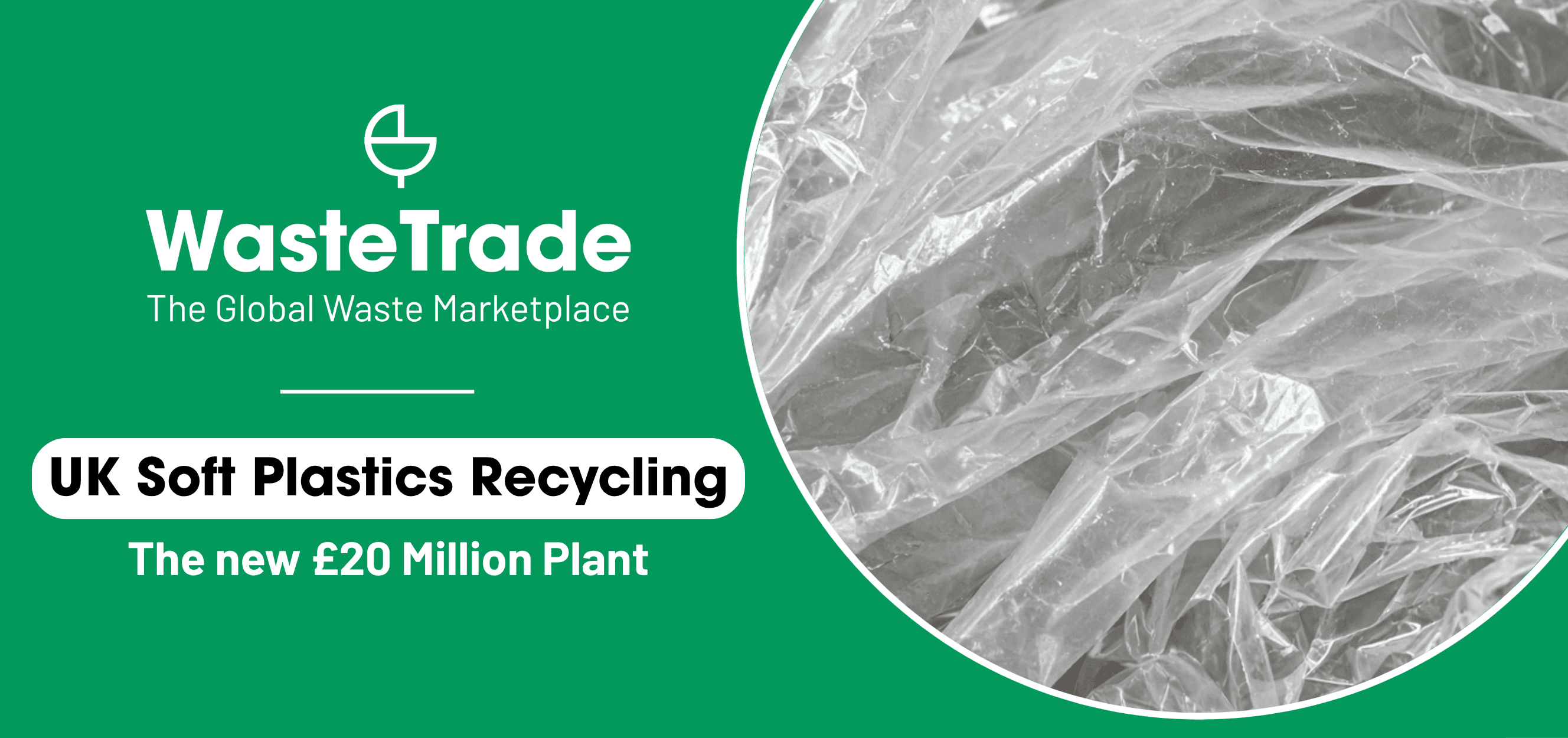
UK soft plastics recycling got a £20m bump, as the new recycling facility in Corby, Northamptonshire, opened in September and is expected to process more than 30,000 tonnes a year. The plant turns sorted material such as film and flexible packaging into pellets for use in new packaging.
For the UK recycling trade, the important question goes beyond how much the plant can process. It is whether domestic capacity can secure suitable feedstock, produce recyclate that manufacturers will buy, and compete with the prices and outlets available in international markets.
UK Soft Plastics Recycling: Key Information
- The Corby facility has three production lines and is reported to process more than 30,000 tonnes of soft plastics annually.
- The £20m site is designed to turn sorted retailer plastic into pellets for new packaging, with material prepared at Eurokey's Kettering facility less than ten miles away.
- UK plastic recycling capacity fell by around 22% between 2023 and 2025, according to a Ceres report commissioned by Viridor.
- Basel Action Network's customs-based data records 675,000 tonnes of UK plastic-waste exports in 2025. That figure covers the wider plastic-waste trade category, not soft packaging alone.
- England's planned mandatory collection of plastic bags and film from households and workplaces has been delayed until 1 April 2030.
Why the Corby Plant Matters
Flexible plastics remain one of the weakest parts of the UK recycling system. The material is lightweight and useful in packaging, but thin films, multi-layer wrappers and contaminated items are harder to collect, sort and process than many rigid plastics.
An industry briefing supported by the Henry Royce Institute found that flexible plastics make up more than a quarter of consumer plastic packaging, yet only around 7% is recycled each year. Much of the remainder is exported, incinerated or landfilled. Defra's provisional figures show that 57.3% of all UK plastic packaging waste was recycled in 2025, but that headline rate does not tell the full story for films and wrappers.
The Corby facility adds a domestic route for a stream that has struggled to find reliable local outlets. Its model links sorting and reprocessing: material is prepared in Kettering, then moved a short distance to Corby to be converted into pellets. That proximity can cut transport requirements between stages and gives retailers a clearer route from discarded packaging to usable secondary raw material.
It is a meaningful addition, but not a national fix. UK plastic-waste exports remained substantial in 2025, and the sector has lost significant processing capacity in recent years. The effect of the Corby plant will depend on how consistently it runs and how much material it can turn into saleable output.
Feedstock Quality Determines Commercial Value
Nameplate capacity does not guarantee that every load of soft plastic has a viable route. A recycler needs the right polymer mix, manageable contamination, a suitable format and enough consistent volume to keep equipment running. The output must also meet a buyer's specification at a price that makes sense against virgin resin and imported recyclate.
That distinction matters to businesses producingretail film, shrink wrap, bags and flexible packaging. A clean, well-sorted load with reliable monthly tonnage can be more useful to a reprocessor than a larger but inconsistent mixed load. Incorrect descriptions, food residue, incompatible polymers or poor packaging can reduce yield, increase handling costs or lead to rejection.
The Corby-Kettering model appears well suited to prepared retailer material, rather than acting as an automatic outlet for every mixed household bag of soft plastics. Sellers should confirm accepted grades, contamination limits, bale or packaging requirements, volumes and delivery terms before pricing a load around the plant's existence.
For traders, the practical lesson is simply that a potential buyer is not the same as a confirmed market. The specification, collection point, transport cost and acceptance conditions all have to line up.
What Changes for Buyers, Sellers and Traders?
For retailers and waste producers, the facility offers another possible domestic outlet for suitable packaging waste. A local route may reduce reliance on export markets and simplify supply-chain reporting, particularly where recurring volumes can be sorted to a consistent standard. Whether it improves net returns will depend on the material, preparation costs and the buyer's terms.
Forrecyclersand pellet buyers, more UK output could support the availability of locally processed recycled polymer and shorter supply chains. But buyers will still judge pellets on consistency, performance, traceability and price. Domestic origin alone will not guarantee a premium, particularly when virgin plastic or imported recycled material is cheaper.
Forbrokers and exporters, additional UK capacity could create more competition for certain grades of flexible plastic. Some material may be redirected from export to domestic processors, but not every grade is interchangeable, and the Corby plant cannot absorb the country's entire film stream. International demand will continue to influence prices, especially for grades that domestic facilities cannot process economically.
Forlogistics providers, short-distance movement between sorting and pelletisation is one advantage of the site. The wider economics still depend on how feedstock reaches the sorter, how output reaches converters, and whether the total delivered cost works for both sides. A lower gate price can be outweighed by transport, rehandling, contamination or rejected loads.
For businesses using a marketplace such asWasteTrade, this is where a wider set of potential counterparties can help. Sellers can test demand across suitable outlets, while buyers can state the grades and volumes they need. That does not replace technical checks or compliance, but it can make it easier to compare realistic routes rather than relying on one historic buyer or a headline price.
Collection Policy Creates a Timing Gap
The government has moved England's mandatory collection date for plastic film and bags from 2027 to April 2030, giving councils and the supply chain more time to prepare. The delay reflects a real infrastructure issue: collecting more material has limited value if sorting and reprocessing capacity cannot accept it at a viable cost.
A Local Government Association report based on Valpak research estimated that councils currently collect around 15,000 tonnes of household film for recycling, with fewer than 5,000 tonnes collected through front-of-store schemes. It also found that existing UK film reprocessing capacity is generally not dedicated to household film and may be used for commercial film or rigid plastics. Commercial film can be cleaner and more uniform, making it more attractive to processors.
This helps explain why the Corby plant's supply model matters. Reliable retail and commercial feedstock can support operations while household collections remain limited. But the industry will still need better collection, sorting, market development and long-term buying commitments before the 2030 changes can translate into consistently higher recycling volumes.
Can UK Soft Plastics Recycling Compete?
Domestic plants operate in a difficult market. The British Plastics Federation has identified cheap imports of virgin and recycled material, volatile PRN and PERN values, delayed legislation and broader operating pressures among the factors behind capacity closures. Ceres has also highlighted insecure recyclate pricing and higher operating costs as reasons UK infrastructure has become unviable.
The answer is not capacity alone. Reprocessors need dependable feedstock contracts and buyers willing to purchase the output. Packaging manufacturers need recycled polymer that performs to specification, arrives consistently and can be evidenced in their reporting. Retailers and waste managers need collection and processing costs that make sense against export or disposal options.
Upcomingrecycled-content requirementsmay support demand for qualifying post-consumer material, but buyers will ask for evidence as well as volume. Clear specifications,records of material origin and documented movementthrough the supply chain can help reduce uncertainty at each stage.
The useful commercial response is to plan both sides of the transaction: where suitable material will come from and who will buy the output. Traders should compare the full delivered economics, verify the receiving facility's requirements and keep more than one viable outlet in view.WasteTrade'srole is to help connect material owners with buyers and coordinate the practical details around trades, including logistics and documentation, rather than treating a listing or an advertised capacity figure as proof that a load will move.
What to Watch Next
The key indicators will be actual throughput at Corby, the consistency and source of its feedstock, the quality of pellets produced, and whether manufacturers take the output under repeat contracts. Announced capacity matters, but the tonnes processed and sold are what count commercially.
The new plant gives the UK another route to keep flexible plastic in productive use. Turning it into a wider industry shift will require more than a single site: steady material supply, competitive operating costs, reliable end markets and policy that lets domestic reprocessors invest with confidence. For buyers and sellers, the opportunity is real, but it will be won load by load, on specification, price and delivery.