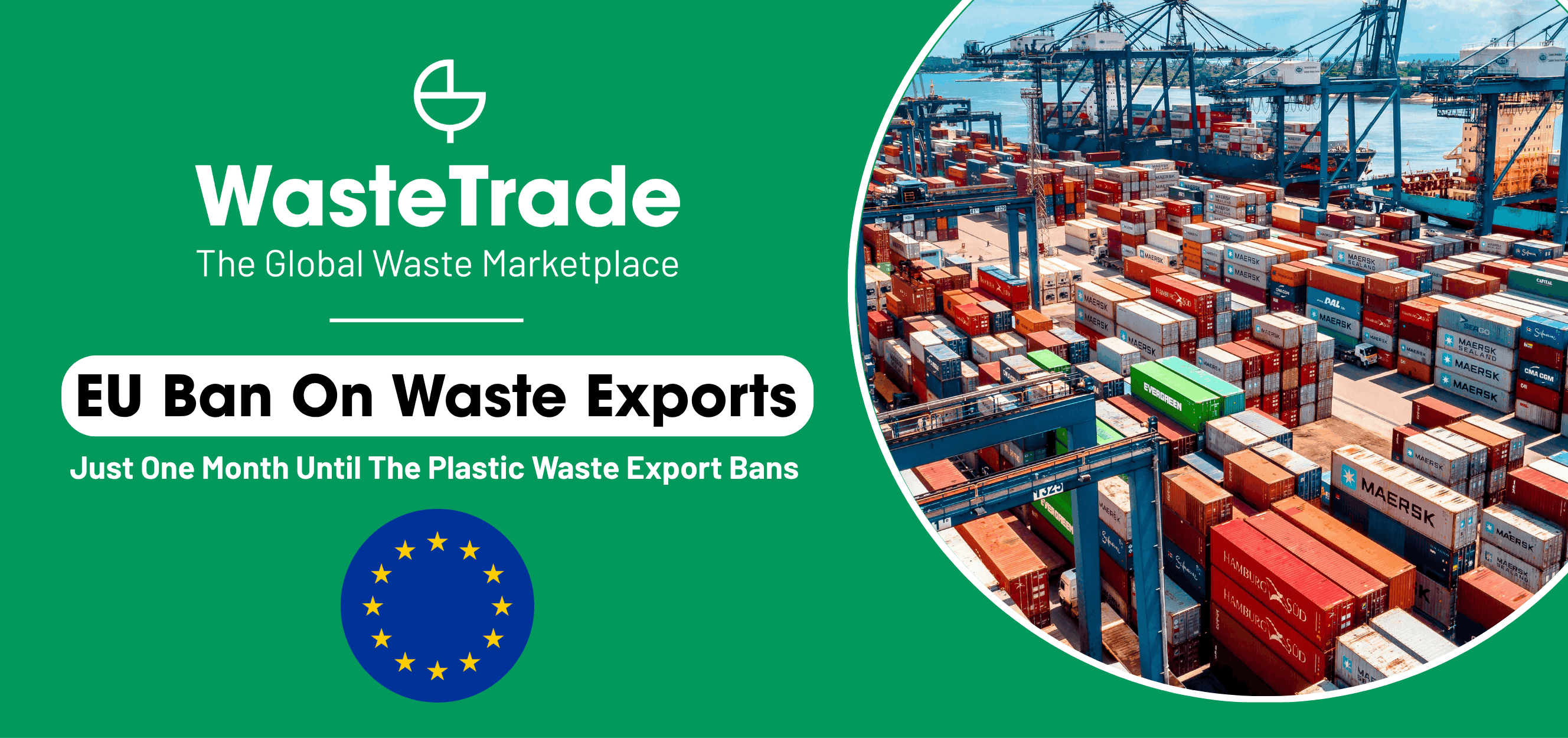
The EU Ban on Plastic Waste Exports takes effect on 21 November 2026, leaving European exporters, recyclers, buyers and logistics providers just one month to prepare for a major change in international plastics trade.
In ourearlier 95-day analysis, we examined how the restrictions could reshape global material flows. With the deadline now approaching, attention must turn to the practical consequences: where existing material supplies will go, which contracts need reviewing, and how businesses can secure commercially viable, compliant routes for their loads.
EU Ban on Plastic Waste Exports: Key Information
- 21 November 2026: The EU will prohibit exports of all plastic waste to non-OECD countries, initially until at least 21 May 2029.
- 21 May 2026: Prior notification and consent requirements began applying to plastic waste exports outside the EU, including clean, non-hazardous plastic waste destined for recycling.
- OECD destinations: Exports remain possible under the applicable controls, but destination countries and receiving facilities remain subject to scrutiny.
- 21 May 2027: Independent audits of receiving facilities in third countries become a further requirement for permitted plastic-waste exports.
- Commercial priority: Businesses need to reassess destinations, transport arrangements, delivery commitments and the total cost of completing each transaction.
What Changes on 21 November?
The crucial distinction is between a shipment that remains possible under tighter controls and one that is no longer permitted.
Since 21 May 2026, plastic waste exports outside the EU have been subject to the prior notification and consent procedure. Notifiable shipments are handled through theDigitalWaste Shipment System, orDIWASS, which supports the electronic exchange of shipment documentation.
From 21 November, the non-OECD export route closes for plastic waste. This is not simply an additional administrative requirement. A shipment cannot proceed merely because a buyer, seller and haulier have agreed the commercial terms.
The prohibition is destination-specific. It does not ban every waste shipment from the EU or automatically prohibit plastic waste exports to OECD countries. However, those remaining international routes are not unrestricted. The Commission can monitor destinations and take action where there are concerns about environmentally sound waste management.
Businesses should not assume that signing a contract, collecting material or booking freight before the deadline creates an exemption. Where a load falls close to the changeover, its legal position and timing should be confirmed with the relevant competent authority or a specialist adviser.
Where Will the Material Go?
The scale of the trade explains why the industry must prepare well before November.
According to the European Commission, the EU exported approximately 1.4 million tonnes of plastic waste in 2025. Around half went to non-OECD countries. Malaysia received 276,000 tonnes, Indonesia 215,000 tonnes and Vietnam 137,000 tonnes. Together, these three markets accounted for 628,000 tonnes of EU plastic waste exports.
Turkey received a further 510,000 tonnes, making it the EU's largest OECD destination in that year.
These figures illustrate the scale of the market adjustment. Established destinations will no longer be available for EU plastic waste exports, while the remaining routes will face greater commercial scrutiny and potentially more competition.
Turkey and other OECD markets will remain important, but additional material cannot simply be redirected without considering processing capacity, import requirements, material specifications, freight costs and buyer demand.
The Commission's assessment ofplastic waste exports to Turkeyis particularly relevant. Turkey remains an available destination under the November rule, but the Commission is examining how imported plastic waste is managed. OECD membership does not remove the need for proper environmental oversight.
European recycling facilitiesmay absorb some of the material displaced by the ban. Yet spare capacity varies by polymer, location and quality. A facility designed for clean, sorted plastic cannot necessarily process mixed or contaminated waste, and additional feedstock does not automatically make another recycling operation profitable.
Energy costs, labour, processing yields, output prices and demand for recyclate all influence whether a domestic route makes commercial sense.
The loss of an export market does not automatically create an equally profitable recycling alternative.
Logistics Will Determine Commercial Viability
For many businesses, the immediate challenge is not simply identifying another buyer. It is ensuring that the material can reach a lawful destination at a cost that preserves the transaction's value.
A sale agreed at an attractive price can become unprofitable if a destination changes, freight becomes more expensive or documentation delays the movement. The resulting costs may include additional storage, container demurrage, waiting time, handling charges and the expense of arranging a replacement journey.
Timing is particularly important. Port cut-offs, vessel schedules, collection dates, delivery windows and receiving-facility availability all need to align. A route that looks viable on a spreadsheet may not work if the necessary approvals cannot be secured in time.
The position is equally important for hauliers and freight forwarders. Accurate information about polymer type, contamination,packaging, weight, collection location and delivery destination helps determine the equipment, price and journey required. If the material description is wrong or the destination cannot accept the load, a transport booking can become an expensive problem rather than a completed job.
Businesses should therefore assess the entire delivered cost, not just the price paid for the material or the freight quotation in isolation.
A cheaper buyer may cease to be the best commercial option if reaching that buyer requires a longer route, additional handling or more complex approval procedures. Conversely, a more expensive local or regional outlet may offer better overall economics through shorter lead times and lower delivery risk.
For a closer examination of how documentation and shipment procedures affect margins, seeWasteTrade's analysis ofEurope's new waste shipment rules.
What Buyers, Sellers and Hauliers Should Do Now
With only one month remaining, businesses should review their material flows and upcoming shipments rather than wait for the deadline to arrive.
Sellers and exporters should identify which grades currently rely on non-OECD destinations and establish whether alternative outlets can genuinely accept them. Material specifications, quantities, receiving-facility requirements and the revised transport costs should be checked before a replacement sale is confirmed.
Buyers and recycling processors should review their supply commitments and production requirements. European facilities may receive additional feedstock, but operators must establish whether it is suitable for their processes and whether the price of the incoming material supports profitable production. Processors outside the EU that rely on European feedstock need to investigate alternative origins and supply arrangements.
Hauliers and logistics providers should review upcoming movements, clarify collection and delivery responsibilities, and ensure that their quotations reflect the actual journey and its requirements. Businesses with loads close to the November deadline should verify the applicable legal requirements rather than assume that an existing booking guarantees completion.
Contract terms also deserve attention. Where a destination becomes unavailable or a shipment is delayed, responsibility for additional costs can become contentious. Parties should establish how revised transport costs, storage, delays and changes to delivery arrangements will be handled.
Accurate classification is another priority. Clean, sorted polymer grades and mixed or contaminated plastic can have very different processing options. WasteTrade's explanation ofY48 plastic wasteexamines why difficult-to-recycle material requires particular attention to classification, treatment capacity and the legitimacy of its destination.
The objective is to establish a workable route for each load, not merely to find a replacement buyer.
November Is Not the End of the Regulatory Changes
The next major date is 21 May 2027, when independent audits of receiving facilities in third countries become a further requirement for permitted plastic-waste exports. Exporters will need to demonstrate that the facilities receiving material manage it in an environmentally sound manner.
The wider EU export regime also changes from May 2027. Exports of non-hazardous waste to non-OECD countries will generally be prohibited unless an applicable authorisation permits them. This is a separate framework from the earlier plastic-specific ban, and the two should not be confused.
Nor should businesses assume that May 2029 will automatically reopen every non-OECD market to European plastic waste. Any future resumption will depend on the requirements established under the Regulation, including the destination country's demonstrated capacity to manage eligible plastic waste appropriately.
WasteTrade's overview offour EU waste regulation datesprovides further context for the changes affecting recycling and international trade across 2026 and 2027.
Building More Reliable Material Supply Chains
The comingrestrictionsreinforce a central commercial reality: a material has value only when a legitimate, technically suitable and economically viable route exists to recover it.
That requires reliable information about the material, access to suitable counterparties, accurate documentation and transport arrangements that work in practice. Fragmented decisions can increase the risk of delays and additional costs, particularly when established routes are changing.
WasteTrade connects buyers and sellers of recyclable commodities with logistics and compliance support within a single trading environment. Businesses can exploreavailable recyclable materials, list material for sale and access theWasteTrade logistics networkfor haulage opportunities linked to marketplace trades.
The point is not simply to find an alternative destination. It is to assess material availability, buyer requirements, transport and the commercial terms together, so that a proposed trade has a credible path from agreement to delivery.
With the deadline one month away, businesses have limited time to review their exposure and make alternative arrangements. Those that understand their material flows, verify their destinations and secure workable logistics in advance will be better placed to manage the change.
The priority is to know where each load can legally go, confirm that the route makes commercial sense, and secure the necessary arrangements before 21 November.