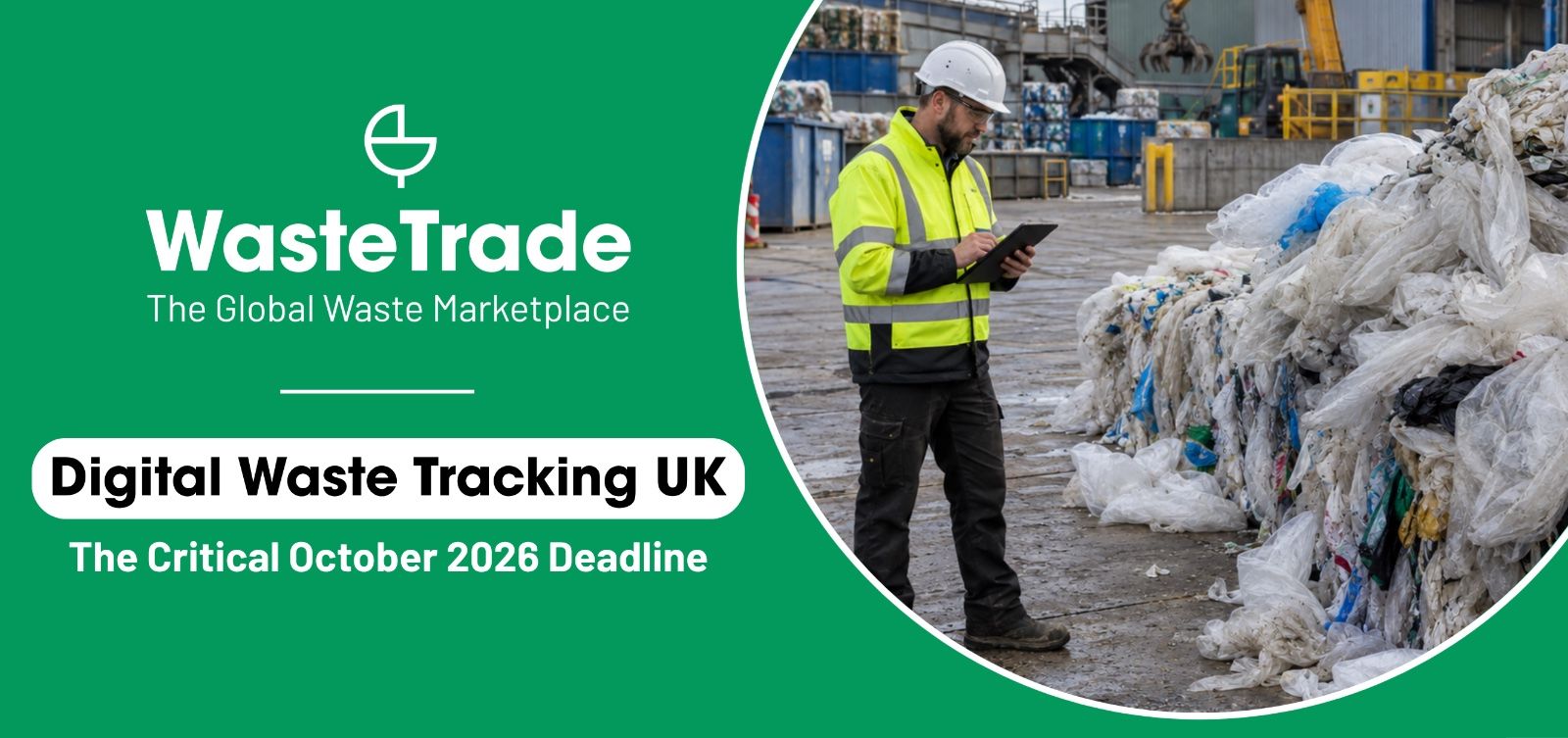
Digital Waste Tracking UK 2026 enters its first mandatory phase on 1 October, changing how licensed and permitted waste receiving sites in England and Wales record what arrives at their gates. In simple terms, these sites must send core details about every load of controlled waste to Defra’s central digital service within two working days. It is the first compulsory step towards a UK-wide system intended to make waste movements easier to trace and harder to manipulate.
Digital Waste Tracking UK 2026: Key Information
- Permitted and licensed waste receiving sites in England and Wales must use Defra’s Report Receipt of Waste service from 1 October 2026.
- Scotland and Northern Ireland follow on 1 January 2027. Northern Ireland was originally expected to join the October phase, but its deadline has since moved.
- Receivers must report every relevant load of controlled waste within two working days, starting from the day after receipt.
- Businesses can submit data through compatible waste software connected to Defra’s API, or by uploading Defra’s prescribed spreadsheet.
- The service costs £26 per organisation each year, covering all receiving sites operated by that organisation.
- Waste transfer notes, hazardous waste consignment notes, Annex VII forms and relevant waste returns continue alongside the new system until further notice.
Carriers, brokers and dealers are scheduled to enter mandatory digital waste tracking from October 2027.
What Changes on 1 October 2026?
The October deadline does not suddenly digitise the entire waste chain. It begins when waste reaches a permitted or licensed receiving site.
From 1 October, qualifying sites in England and Wales must record controlled waste through Defra’s Report Receipt of Waste service. Each submission creates a digital record that regulators can analyse more quickly than fragmented paper records, local databases and periodic returns allow.
This is the practical starting point for Digital Waste Tracking UK 2026, not its finished form. Defra has chosen a phased rollout across a sector that includes roughly 12,000 waste site operators, 150,000 registered exemption holders and 300,000 registered carriers, brokers and dealers.
Who Must Use the Report Receipt of Waste Service?
The first phase applies to organisations licensed or permitted to receive controlled waste, including permitted operations, installations and mobile plants.
In practice, it reaches transfer stations, treatment plants, recycling and reprocessing facilities, materials recovery facilities, landfills and other permitted destinations.
Waste exemptions do not form part of phase one. Nor does every producer, broker or haulier become a phase-one reporter simply because they handle waste.
What Digital Waste Tracking Requirements Must Sites Meet?
A digital receipt is more than a date and tonnage. Defra requires information identifying the movement, carrier and receiver, the relevant waste classification, and the intended recovery or disposal route. Hazardous waste and persistent organic pollutants can require additional data.
Classification therefore becomes operationally important. List of Waste codes, commonly called EWC codes, need to reflect the material actually received.
For commercial recyclable materials, that distinction matters. Aluminium, copper, steel, plastics and paper can carry real market value, but value does not remove the need for accurate classification where the material remains legally classed as waste.
Sites must submit the information within two working days. A Monday load, for example, needs a successful submission and waste tracking reference by 11.59pm on Wednesday, assuming neither day is a bank holiday.
How Can Businesses Submit Digital Waste Tracking Data?
Defra provides two routes. Sites with suitable waste management software can connect through the Report Receipt of Waste API. Defra maintains a list of software providers that have completed its compatibility process.
Businesses without integrated software can use Defra’s spreadsheet route. Operators must use the official template rather than their own format, complete the mandatory fields and upload it through the service.
The spreadsheet offers a lower-technology route into Digital Waste Tracking UK 2026, but it does not remove the underlying data burden. Someone still has to know what the load is, where it came from, who moved it and how it should be classified.
Do Waste Transfer Notes End in October 2026?
No. The new system does not immediately replace existing waste transfer paperwork.
Defra says operators must continue completing waste transfer notes, hazardous waste consignment notes and Annex VII forms where required. Permit waste returns and hazardous waste consignee returns also continue until regulators introduce further transition arrangements.
October therefore adds a new central reporting obligation. It does not erase the existing documentary duties around the movement itself.
Digital Waste Tracking Costs Go Beyond the £26 Fee
The government service charge is £26 per organisation per year, with the first payment due by 31 January 2027. The more substantial cost sits elsewhere.
The Regulatory Policy Committee validated Defra’s estimate of a £40.8 million equivalent annual net direct cost to business. The assessment expects transition and software costs to outweigh administrative time savings for businesses, even while the policy produces wider economic and social benefits.
The principal challenge is unlikely to be the fee. It is the work needed to connect software, retrain staff, improve data quality and make reporting dependable across busy receiving sites.
The Real Compliance Risk Starts Before the Load Arrives
Digital reporting cannot repair inaccurate information by itself. It can only record it more consistently.
A receiving site has two working days to create a defensible record. If a carrier arrives with an unclear waste description, the wrong EWC code, incomplete producer details or a load that differs from what was agreed, the site inherits a data problem as well as an operational one.
This may be one of the most important effects of Digital Waste Tracking UK 2026. Although the first legal reporting duty sits with the receiver, pressure for better information is likely to travel upstream.
Recyclers and treatment facilities have a stronger reason to demand complete information before accepting material. Producers, brokers and carriers may therefore feel the October deadline before phase two makes their own use of the service mandatory.
Why Structured Material Data Matters
Digital waste tracking also intersects with a wider change in secondary-material markets.
On WasteTrade, recyclable materials are traded between verified counterparties with material descriptions, classifications, logistics and transaction records forming part of the commercial process. WasteTrade’s Digital Product Passport work goes further by giving a material batch a persistent digital identity carrying origin, custody, composition and compliance information through the supply chain.
Neither replaces Defra’s statutory reporting service. The connection is upstream: when material information is structured before movement, a receiving site has a stronger basis for reporting what actually arrived.
That principle is especially visible in recyclable metals. Aluminium recycling, copper recycling and other metal recycling markets depend on distinctions of grade, contamination, form and weight. A vague description can affect price, acceptance and processing long before it becomes a regulatory problem.
Digitalising waste records raises the cost of ambiguity.
Will Digital Waste Tracking Reduce Waste Crime?
The government argues that a central digital record will make suspicious movements easier to identify and compliant operators easier to distinguish from illegal ones. The Environment Agency has linked the programme directly to its effort to tackle waste crime.
Data alone will not eliminate illegal activity. Enforcement still depends on inspection, intelligence and regulatory capacity. Digital Waste Tracking UK 2026 instead changes the quality and speed of the evidence available to regulators.
What Comes After the October Deadline?
Scotland and Northern Ireland are due to bring permitted and licensed waste receiving sites into the service from 1 January 2027.
Defra then plans to expand the system to waste collectors. A public beta for carriers, brokers and dealers is scheduled from spring 2027, with mandatory use planned from October 2027. Waste exemptions will also enter a later phase.
Green-list waste imports and exports are being developed for a future phase. UK operators involved in European trade must also distinguish the domestic scheme from the EU’s DIWASS regime for relevant cross-border waste shipments.
A Reporting Deadline With Wider Consequences
Digital Waste Tracking UK 2026 begins with a relatively narrow legal requirement, but its commercial consequences are broader. Once receiving sites must account digitally for every incoming load, poor descriptions, inconsistent classifications and fragmented records become harder to accommodate.
The businesses best prepared for that environment will not simply be those that can upload a spreadsheet on time. They will be those that already know what material they are moving, who is responsible for it, where it is going and whether the information remains consistent from origin to destination.
On 1 October, digital waste tracking starts at the receiving gate. In practice, better traceability has to begin much earlier.