Europe’s New Waste Shipment Rules: Key Information
- The EU's revised Waste Shipment Regulation (EU) 2024/1157 began applying on 21 May 2026, introducing changes to documentation and oversight of cross-border waste movements.
- Different procedures apply depending on the waste classification, destination and intended operation. Certain shipments require prior notification and consent, while qualifying green-listed waste destined for recovery may follow general information requirements.
- The transition to digital documentation creates new administrative requirements for recyclers, exporters, brokers, carriers and receiving facilities.
- Incorrect material classifications, incomplete documentation or problems with receiving-facility authorisation can delay shipments, increase storage and transport costs, and disrupt commercial agreements.
- Accurate material specifications, including polymer type, contamination levels, physical form and quantity, help buyers assess suitability and reduce the risk of disputes.
- Digitalisation is intended to improve traceability and information exchange, but it does not remove businesses' responsibility for correct documentation or guarantee faster shipments.
- Recyclers should review their shipment procedures, operator registrations and documentation processes ahead of the end of the 2026 transitional period for Annex VII documents.
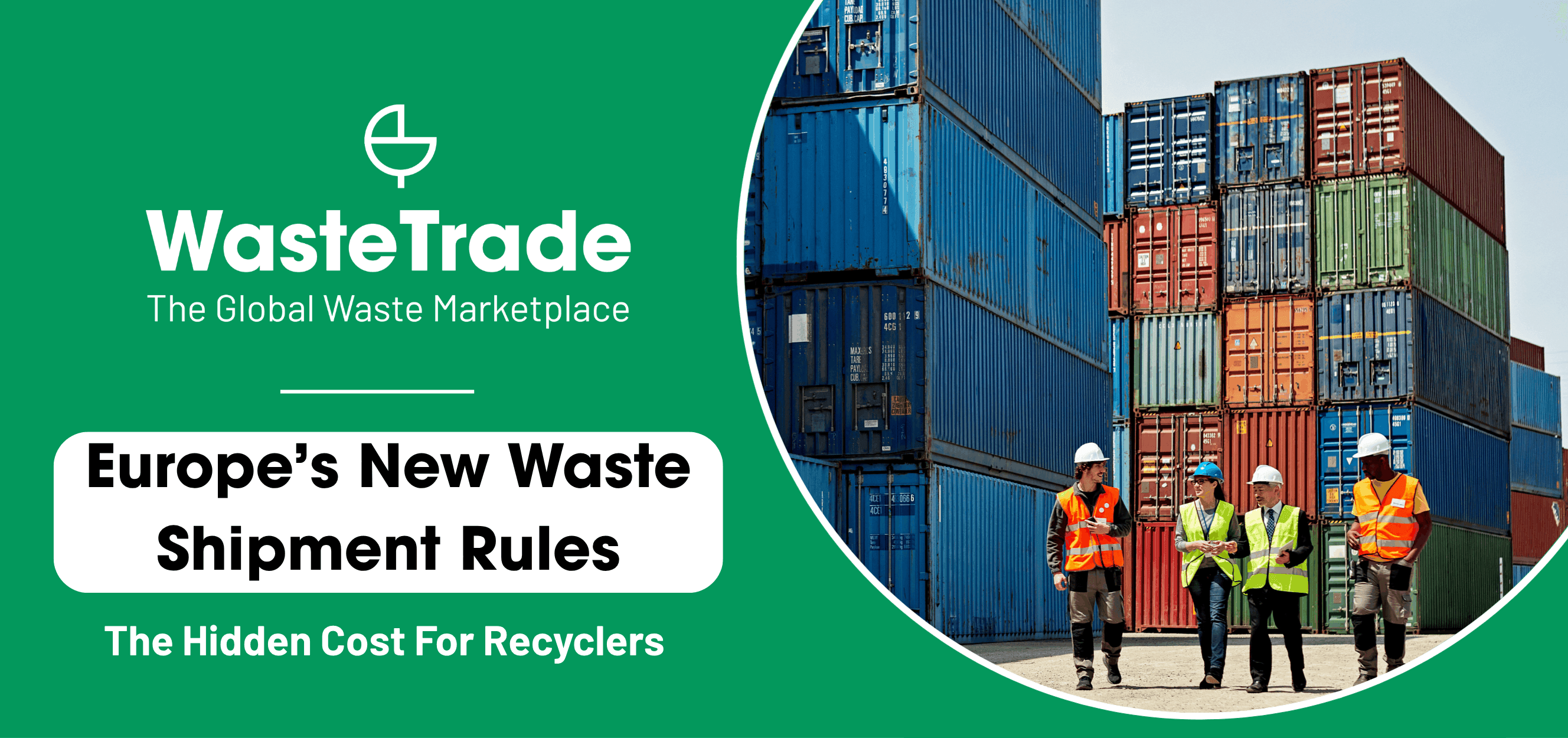
Europe's New Waste Shipment Rules
A recycling company can find a buyer, agree a price and arrange transport, yet still lose money if the material cannot move when expected.
For businesses trading recyclable commodities across European borders, compliance is inseparable from the commercial transaction. Material classification, shipment documentation and the receiving facility's authorisation all influence whether a deal can be completed on time and at the agreed cost.
The EU's revised Waste Shipment Regulation began applying in May 2026, introducing changes to how shipments are documented and monitored. The move towards digital processes is intended to improve traceability and information exchange, but businesses must also adapt their procedures.
For a recycler selling recovered plastic, a processor relying on imported feedstock or a trader arranging deliveries between countries, the consequences are practical. Incomplete information can delay a shipment, increase costs and undermine an otherwise profitable transaction.
When a Profitable Deal Becomes a Costly Problem
Consider a recycling company with 500 tonnes of recovered plastic available for sale. It agrees to sell the material to a buyer in another European country for €250 per tonne.
The transaction is worth €125,000.
However, agreeing a price does not establish that the shipment can proceed. The parties must confirm the material's classification, identify the applicable shipment procedure, provide the required documentation and establish that the receiving facility is authorised to accept it.
If information is incomplete or incorrect, the shipment may be delayed while the problem is resolved. Where prior notification and consent are required, the material cannot move until the necessary approvals have been obtained.
The financial consequences can affect both parties. The seller may incur additional storage costs, rearrange transport or wait longer for payment. The buyer may face a feedstock shortage, disrupt production or have to source replacement material.
The €250 per tonne figure is illustrative, not a current market quotation. It demonstrates how a documentation problem can put a transaction worth six figures at risk.
For businesses operating on tight margins, even a relatively short delay can affect profitability. It can also damage a trading relationship, particularly when a buyer depends on regular deliveries to keep a processing line operating.
Compliance therefore needs to be considered when a transaction is arranged, not left until the material is ready for collection.
What Has Changed Under the EU Waste Shipment Rules?
Regulation (EU) 2024/1157 revised the EU's framework for waste shipments, with its main provisions applying from 21 May 2026. The changes cover shipment procedures, documentation and the exchange of information between operators and competent authorities.
The Digital Waste Shipment System (DIWASS) is a central part of the transition. It provides the digital framework for handling notification documents and movement documents associated with shipments requiring consent.
Not every shipment follows the same procedure, however.
Certain movements require prior notification and consent from the relevant competent authorities. Others, including qualifying green-listed wastes destined for recovery, can move under the general information requirements of Article 18 using an Annex VII document.
The applicable procedure depends on the waste classification, destination, intended operation and other relevant circumstances. Recyclable material is not automatically exempt from shipment controls simply because it has commercial value or is intended for recovery.
The transition to digital documentation has also required practical adjustments. The European Commission confirmed that Annex VII documents can continue to be handled largely as before, primarily on paper, during the transitional period from 21 May to 31 December 2026.
Businesses should use this period to review their procedures and prepare for electronic handling, while checking the latest requirements with the relevant competent authorities.
For a detailed explanation of the system, see WasteTrade's existing guide,What Is DIWASS? The EU's Digital Waste Shipment System Explained.
Material Classification and Specifications Matter
Before recyclable material can move across borders, the parties need to understand exactly what is being traded.
A shipment of clean, sorted plastic intended for recovery may be subject to different controls from a mixed or contaminated load. The correct treatment depends on the material's characteristics and legal classification, not simply on the seller's description or the buyer's intended use.
A description such as "plastic waste" may not provide enough information for a buyer to assess the material's suitability. A useful commercial specification should identify the polymer type, colour, contamination levels, physical form and available quantity. It should also clarify whether the material is baled, shredded, flaked or pelletised.
These details help buyers assess the material against their processing requirements and reduce the risk of disputes when a shipment arrives. They also help the parties maintain consistency between the commercial agreement and shipment documentation.
A commercial specification does not, by itself, determine the legal classification or applicable shipment procedure. Those decisions must reflect the relevant rules and the actual characteristics of the material.
Nor does processing plastic into flakes or pellets automatically remove it from waste legislation. Its legal status must be established in the circumstances of the particular case.
Accurate information benefits both sides. Sellers can present their material more clearly, while buyers can make better-informed purchasing decisions and establish whether the proposed movement is viable.
The Operational Challenges of Cross-Border Trade
Preparing a shipment often involves more than two companies. Sellers, buyers, carriers, brokers and receiving facilities may all need to supply or check information, alongside any relevant competent authorities.
A missing registration, inconsistent material description or uncertainty over the receiving facility's authorisation can create problems that need resolving before the shipment proceeds.
Businesses must therefore establish who prepares and checks the documents, who supplies outstanding information and how the parties will communicate if something goes wrong. Staff responsible for sales, logistics and compliance may also need training, while companies using commercial software should check that their systems support the required processes.
Larger operators may have dedicated compliance teams and established systems. Smaller recyclers and brokers may have fewer resources available for staff training and administrative changes. The extent of the burden will vary, however, and it would be premature to conclude that digitalisation has made trade universally more expensive.
The important point is that compliance work needs to be factored into the transaction.
Contracts should make responsibilities for documentation, delays and additional costs clear. Businesses should also consider their storage capacity and transport flexibility if a shipment cannot proceed as planned.
These measures cannot eliminate every risk, but they can prevent an administrative problem from escalating into a commercial dispute.
Could Better Documentation Improve Recycling Trade?
Digitalisation is intended to make shipment information easier to exchange and improve traceability for businesses and regulatory authorities.
More consistent records could help identify missing information earlier, improve oversight and reduce avoidable administrative errors. Over time, this may support more reliable trading relationships and givebuyers and sellersgreater confidence in the information accompanying a shipment.
However, intended benefits should not be confused with demonstrated results. The transitional arrangements for Annex VII documents reflect the technical challenges involved in connecting central, national and commercial systems. It is too early to assume that digitalisation will eliminate delays or reduce costs for every operator.
Nor can digital records replace the checks needed to establish whether a material is correctly classified, a destination facility is authorised or a shipment is legally permitted.
The potential benefit lies in better information and more consistent processes. How far these improvements translate into faster, cheaper or more reliable trade will depend on implementation and how effectively businesses use the systems available to them.
What Should Recyclers Do Now?
Businesses moving recyclable materials across European borders should review their procedures before the end of 2026, particularly if they currently rely on paper-based Annex VII documentation.
The priorities are practical:
- Check the classification: Establish the correct classification and shipment procedure for each material and destination.
- Verify the receiving facility: Confirm that it has the necessary permit or registration and can accept the material for the intended operation.
- Prepare information early: Check that material descriptions, quantities, parties and supporting documents are consistent before transport is arranged.
- Clarify responsibilities: Agree who prepares documents, supplies information and deals with problems before dispatch.
- Review systems and staff training: Make sure employees understand the applicable procedures and that the business is prepared for the relevant digital requirements.
- Plan for disruption: Consider storage, alternative transport arrangements and responsibility for additional costs if a shipment is delayed.
WasteTrade'sDIWASS compliance guidecovers the preparation requirements in more detail.
Reliable Trading Starts Before the Material Moves
EU waste shipment requirements are changing how businesses document and manage cross-border movements. The transition creates additional demands, but it also reinforces a basic commercial reality: accurate information, suitable material and reliablelogisticsare closely connected.
A buyer needs confidence that material will meet its requirements and arrive when expected. A seller needs a transaction that can be completed without avoidable costs or disputes. Both depend on understanding the material, the destination and the requirements governing its movement.
WasteTradeconnects businesses looking to buy and sell recyclable commodities across international markets. Clear material specifications and transparent trading relationships help businesses identify suitable opportunities and make better-informed decisions before committing to a transaction.
Amarketplacedoes not replace the documentation or authorisations required by law. It can, however, help businesses establish the commercial relationships through which recyclable materials find buyers and reach the next stage of the recovery chain.
In international recycling trade, agreeing the price is only one part of the deal. Making sure the material can be delivered lawfully, reliably and at a viable cost is what turns that agreement into a successful transaction.