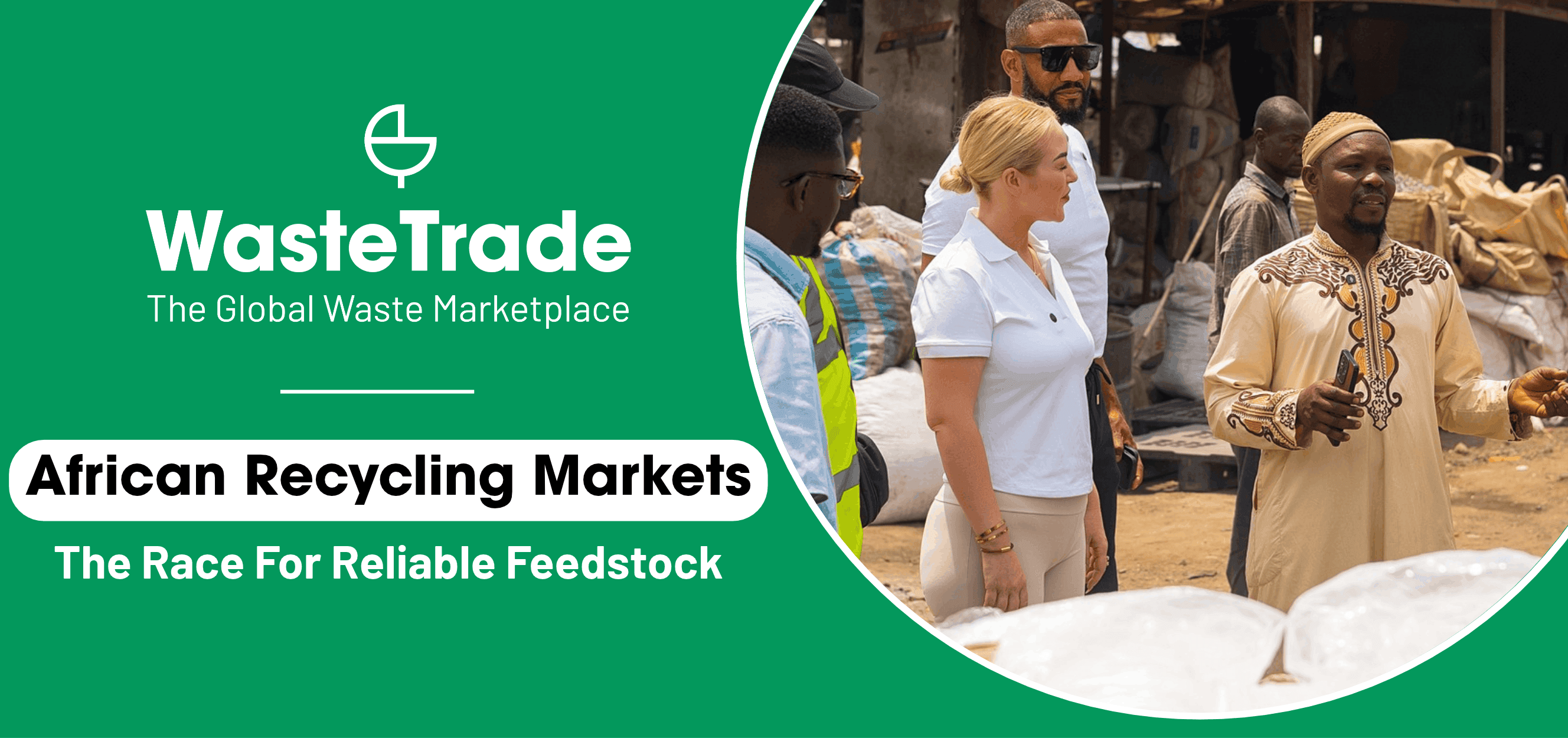
African recycling markets are entering a more demanding phase of international commodity trade. Steel scrap, recovered plastics, paper and industrial rubber do not become valuable raw materials simply because somebody collects them. They become commercially useful when a manufacturer can obtain a defined grade, in dependable quantities, at a price that survives processing and transport. New investment is creating demand, while changing trade rules are testing the supply chains expected to deliver it.
African Recycling Markets: Key Information
- African recycling markets are attracting greater industrial attention, including a dedicated recycled-steel discussion at the Bureau of International Recycling's October 2026 convention. [1]
- From 21 November 2026, the EU will prohibit exports of plastic waste to non-OECD countries. The restriction does not impose a blanket ban on African exports in the opposite direction. [4]
- The IFC announced $37 million in financing in 2025 for planned PET recycling plants in Ghana and Nigeria, each designed to produce 15,000 tonnes of recycled resin annually. [5]
- A $60 million global circular-electronics programme launched in October 2026 covers 16 countries, nine of them African. [3]
- The commercial test is quality, lawful shipment and dependable repeat supply.
Why Recycled Materials Trade in Africa Is Making News
At the Bureau of International Recycling's Malaga convention on 27 October, steel traders and recyclers examined the commercial prospects of emerging African markets, alongside constraints involving transport, finance and regulation. [1]
Days earlier, the UN Economic Commission for Africa had highlighted circular industrial value chains in Eastern and Southern Africa, including plastics, textiles, leather and electronic waste. [2] These developments, alongside a new electronics initiative, put recycling firmly within industrial policy. They are not, however, evidence that buyers have committed to purchasing every recovered tonne.
African Scrap Metal Markets Are Changing
According to BIR, Africa produced 19 million tonnes of steel during the first nine months of 2026, almost 10% more than in the equivalent period a year earlier. [1] Steel output is not scrap demand, but it points to future procurement needs.
Steelmaking is concentrated in markets such as Egypt, Algeria and South Africa. Mill technology, domestic scrap availability, export policies and freight costs vary substantially between them. The opportunity for scrap merchants is therefore specific, not continental: identify the grades individual furnaces need, then establish whether collection and delivery economics support the sale. A general description of recycled steel is no substitute for a purchase specification. [9]
PET Recycling Investment Intensifies Feedstock Competition
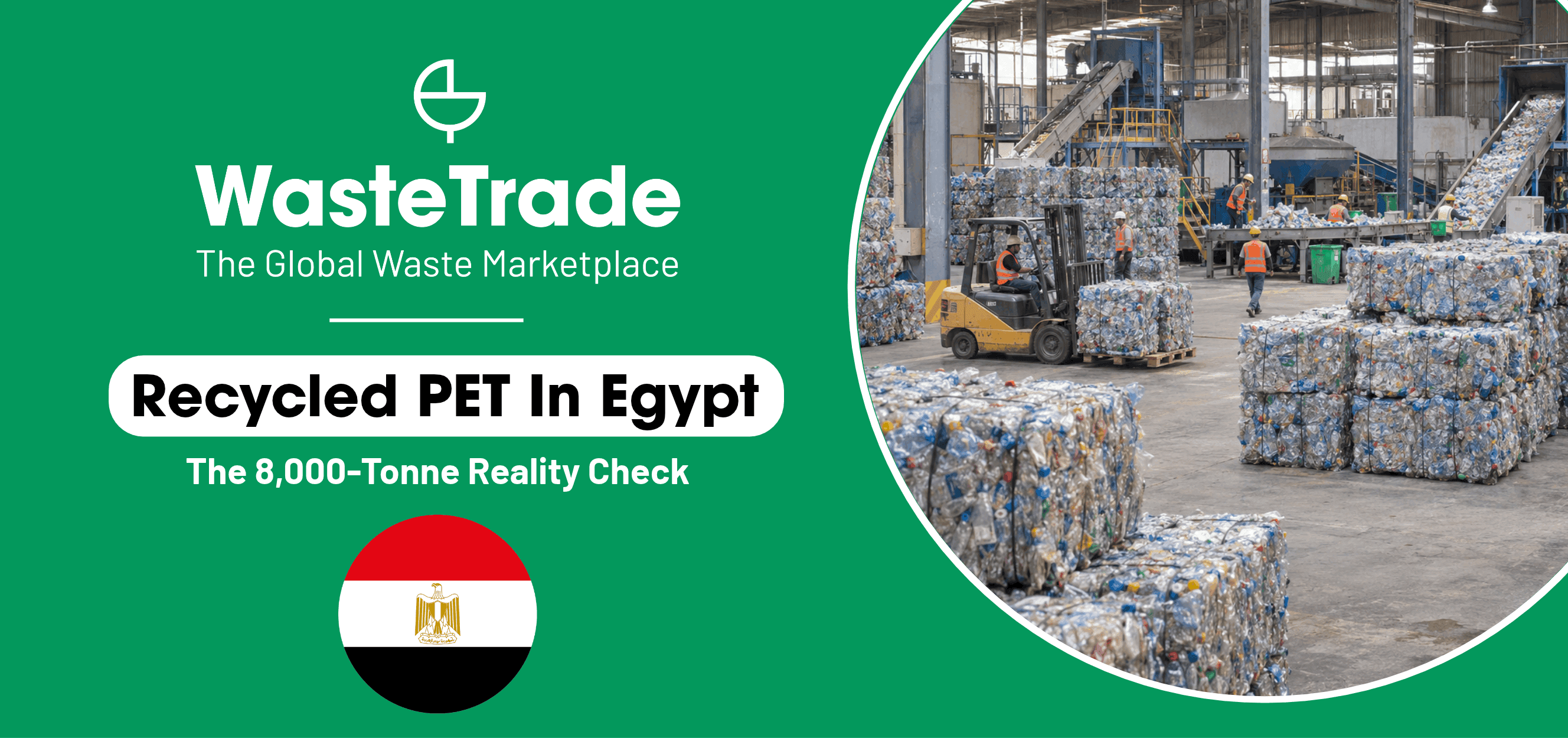
Plastics offer a clearer illustration of what industrial demand can mean for local suppliers. The IFC's financing for Mohinani Group subsidiaries supports proposed facilities in Ghana and Nigeria, each with planned annual output of 15,000 tonnes of recycled PET resin. [5] Separately, plans for a major food-grade PET plant in Lagos have raised questions about reliable bottle collection and processing capacity. [7]
New plants do not automatically create new saleable supply. They may instead intensify competition for clean bottles, washed flake and dependable collection contracts. PET buyers distinguish grades, colours and contamination levels. [8] A plant requires regular intake that meets its specification, not occasional access to large quantities of mixed plastics.
Why Collected Waste Is Not Saleable Feedstock
A collected tonne can shrink considerably before it becomes a tonne of usable polymer. Sorting removes unwanted materials. Washing and preparation introduce further losses and costs. Moisture, mixed grades and inconsistent bale quality affect both acceptance and the price a buyer will offer. [10]
This is a crucial commercial distinction for African recycling markets. Abundance alone does not demonstrate reliable feedstock. Buyers want evidence of composition, contamination, available volumes, packaging, collection frequency and the ability to maintain a standard over successive loads.
The tradeable unit is not waste in the abstract. It is a specified material, available at an identified location, under terms both sides can fulfil.
The True Cost of Recycled Materials Trade
The price quoted at a collection yard rarely tells the whole story. A commercially sound offer must account for sorting losses, local haulage, container loading, port charges, ocean freight, insurance, inspection and any destination-specific compliance costs. Payment and rejection risks matter too.
For exporters, the relevant measure is the net return on material the customer accepts. For manufacturers, it is the delivered cost per usable tonne. Both figures can favour a nearer processor over an apparently higher-paying overseas buyer. Freight can be especially unforgiving for bulky cardboard and mixed rubber streams. In some cases, further processing before shipment creates more value than exporting lower-grade material.
EU Plastic Waste Export Rules Change the Calculation
On 21 November 2026, the EU's new waste-shipment regime will ban exports of plastic waste to countries outside the OECD, initially until at least May 2029. [4] The restriction concerns EU exports; other movements remain subject to classification and destination rules.
For African businesses that have relied on European plastic waste as feedstock, the change increases the importance of domestic recovery and alternative lawful sourcing routes. For African suppliers, it underscores a different opportunity: upgrading locally generated material to standards that manufacturers, at home or abroad, can use. Cheap imported waste is no longer a dependable assumption.
Circular Economy Investment Must Create Local Value
The UN Economic Commission for Africa's October discussions stressed industrial value addition within regional supply chains. [2] The new global electronics programme, involving nine African countries, also aims to support repair, reuse, collection and environmentally sound recycling. [3]
For batteries and electronic waste, environmental controls are integral to the business model, not an administrative afterthought. Investment announcements are not export orders. A credible end market, safe treatment capability and enforceable documentation must precede any proposed shipment.
Ghana and the Case for a West African Trading Hub
WasteTrade reported launching its Ghana operation in November 2025 after obtaining an environmental export permit that September. Its public account describes a base in Accra and coordination through Tema Port, with a focus on compliant movement of recyclable plastics and rubber. [6]
Ghana illustrates how aggregation, testing, customs and buyer access must work together. Yet Ghana cannot stand in for Nigeria's industrial scale, North Africa's steel sector or the different recovery systems emerging elsewhere on the continent. African recycling markets need country-specific routes to market rather than a single export formula.
Recycling Logistics and Traceability Determine Buyer Confidence
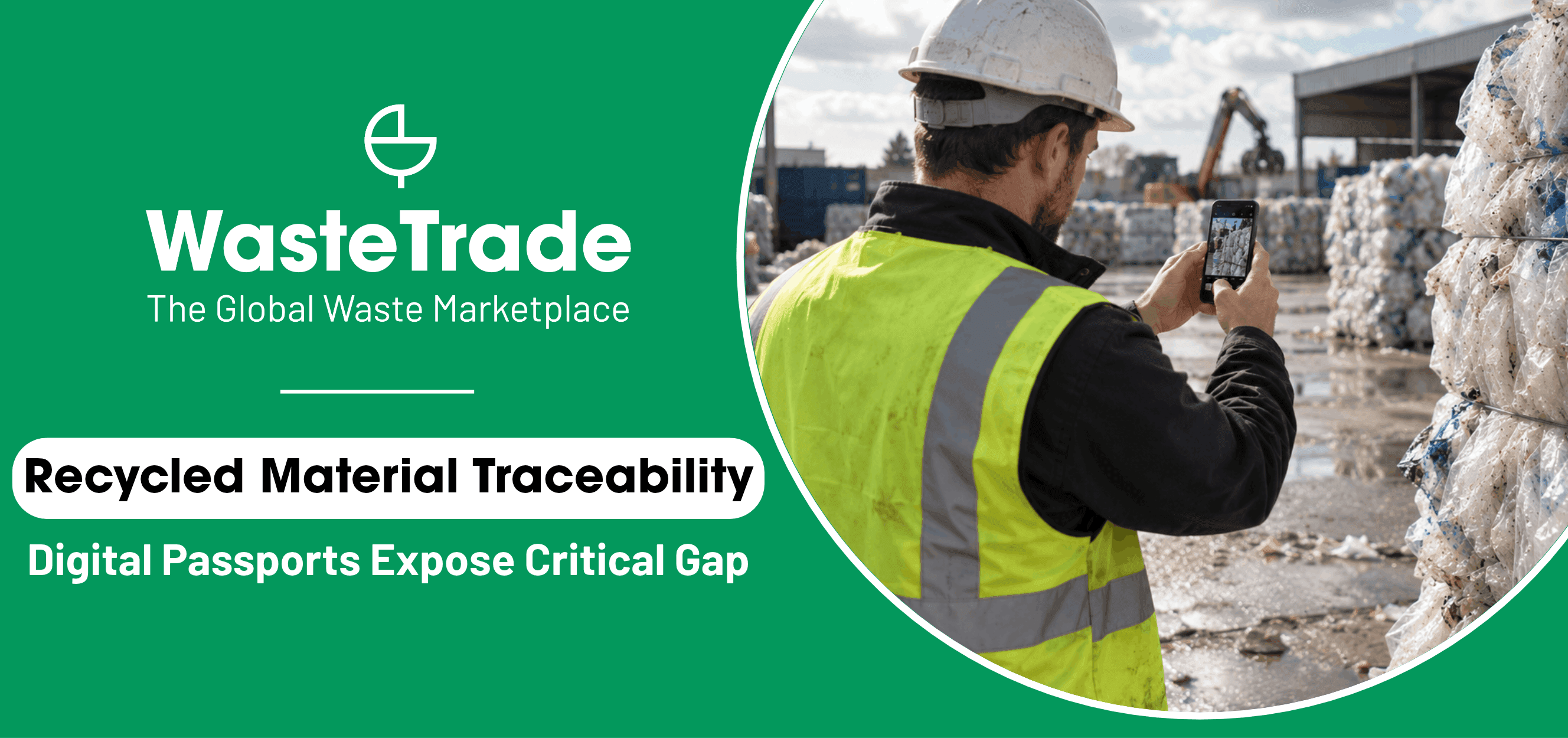
An attractively priced shipment can still fail because its grade changes, documents are incomplete or it misses a sailing. These risks become sharper when materials move through several collection and aggregation businesses.
WasteTrade's model brings verified counterparties,物流协调and material documentation into the trading process.Batch-level traceabilitycan strengthen confidence in origin and quality, although a digital record does not replace physical inspection or legal approvals.A global recycling marketplacecreates lasting value through repeatable, properly documented trades, not merely enquiries.
What Recyclers, Manufacturers and Traders Should Watch
Waste generators can improve their negotiating position by separating grades before contamination becomes expensive to remove. Recyclers need to measure actual usable yield and secure recurring outlets. Manufacturers shouldcompare available materialagainst quality tolerances and delivery requirements. Traders must calculate landed costs, verify counterparties and establish the rules for each material and route.
Investors face a related question: will a new plant have enough contractable feedstock, at a cost compatible with the value of its finished product? Processing capacity without secure intake risks becoming an expensive bottleneck.
African Recycling Markets Face an Execution Test
African recycling markets will not be decided by waste estimates or investment announcements. Their future will depend on suppliers producing recognisable grades, recyclers maintaining consistency and buyers securing material at sustainable delivered prices.
WasteTrade's growing regional focus sits within that broader transition, connecting commercial interests that do not always meet through existing networks. The winners may not have the most waste. They will prove material quality, deliver it repeatedly and make the economics work.
References
[1] Bureau of International Recycling, Ferrous Division, 28 October 2026
[3] African Development Bank, Global Electronics Management Programme, 16 October 2026
[4] European Commission, Plastic Waste Shipments
[5] International Finance Corporation, Mohinani Group Recycling Investment, 12 February 2025
[6] WasteTrade Ghana, Circular Trade Gateway for West Africa, 19 November 2025
[7] WasteTrade, Africa's Largest PET Recycling Facility, 19 March 2026
[8] WasteTrade Materials, PET Recycling