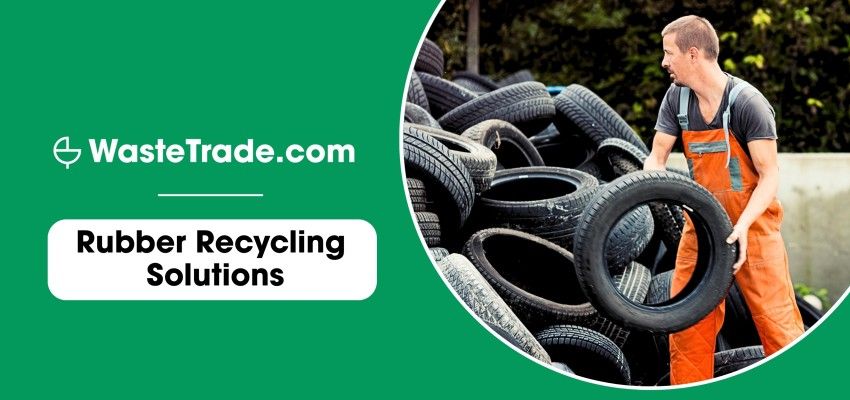
Rubber recycling solutions sit at the operational core of the rubber recycling industry. While rubber recycling is often discussed in terms of environmental outcomes or end products, it is the infrastructure behind the scenes that determines whether rubber waste can be processed safely, consistently, and at scale. Because rubber is a durable, cross-linked material, recycling it requires specialist equipment, controlled processes, and well-designed material flows. Effective rubber recycling solutions combine collection, processing, separation, and downstream integration to ensure rubber waste can be converted into usable materials rather than becoming a long-term liability. Rubber recycling solutions extend beyond individual pieces of equipment. They encompass the entire system required to manage rubber waste from collection through to material reuse. At the front end, solutions must account for how rubber waste is generated and collected. Tyres, industrial rubber products, and manufacturing offcuts all enter the system in different forms and quantities. Effective recycling solutions include logistics planning, storage controls, and compliance with waste regulations. Within processing facilities, solutions focus on optimising material flow. This includes selecting the right combination of shredding, grinding, and separation technologies to balance efficiency with material quality. In some cases, additional treatment such as devulcanisation is incorporated to improve the performance of recycled rubber in specific applications. At the back end, rubber recycling solutions must connect recycled material to viable end markets. Without reliable demand for recycled rubber , even technically sound recycling operations struggle to remain sustainable. This is where coordination between recyclers, manufacturers, and traders becomes critical. WasteTrade fits into this landscape by supporting connections across the recycling chain. By improving visibility between rubber waste suppliers, recycling facilities, and downstream users, WasteTrade helps rubber recycling solutions function as integrated systems rather than isolated operations.
Practicality of Rubber Recycling
Rubber recycling infrastructure and solutions determine whether rubber recycling works in practice. Machines, processes, and material flows must align with real-world waste streams and real-world demand. When designed and operated effectively, rubber recycling solutions allow rubber to remain a useful resource long after its original product life has ended, supporting both responsible waste management and material reuse at scale.
Rubber Recycling Machine
A rubber recycling machine is any piece of equipment designed to process rubber waste into a form suitable for reuse. In practice, rubber recycling relies on systems of machines rather than a single unit, each performing a specific function within the recycling line. The most common rubber recycling machines include primary shredders, which reduce large rubber items into manageable pieces, and granulators, which further process rubber into consistent particle sizes. Grinding mills may then be used to produce finer crumb or powder, depending on the requirements of the end application. Separation equipment is equally important. Magnetic separators remove steel reinforcement, particularly from tyre -derived rubber, while air classification systems help reduce textile fibre contamination. Screening systems are used to control particle size and ensure material consistency. The choice of rubber recycling machine has a direct impact on output quality. Different grinding methods produce different particle shapes and surface characteristics, which influence how recycled rubber behaves when used in flooring, moulded products, or landscaping materials. As a result, machine configuration is often tailored to specific markets rather than designed for maximum throughput alone.


