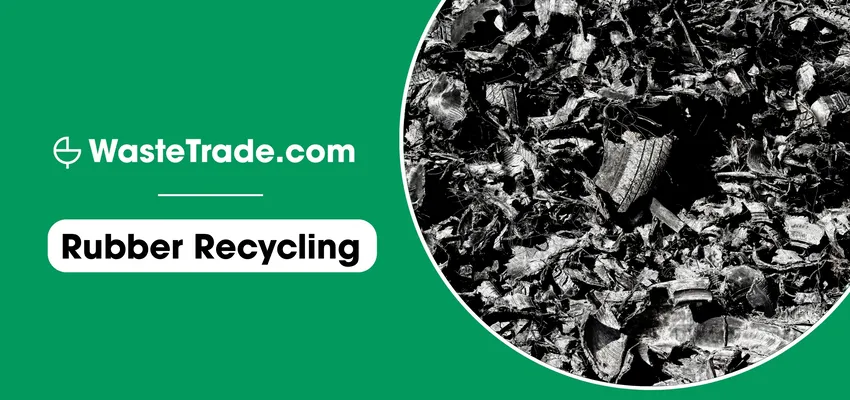
Rubber recycling sits at the intersection of materials science, waste regulation, and industrial reuse. Rubber is designed to be tough, flexible, and resistant to wear, which makes it valuable in products ranging from tyres and flooring to seals, hoses, and industrial components. That same durability, however, makes rubber challenging to deal with once it reaches the end of its useful life. Recycling rubber is about recovering value from waste rubber materials while preventing long-term environmental harm. Unlike many plastics, rubber cannot simply be melted down and reshaped, so rubber recycling relies on a combination of mechanical processing and specialist treatment methods. Understanding how this works is essential for anyone handling rubber as a waste material or sourcing recycled rubber for reuse.
Can Rubber Be Recycled?
When people ask can rubber be recycled, they are often really asking how far rubber can be recycled. In most cases, rubber can be recycled into new products, but not always back into the same type of product it originally came from. The most common recycling route is mechanical recycling , where rubber waste is processed into smaller particles such as granules, crumb, or powder. This recycled rubber is then used as a raw material in a wide range of products. There are also more advanced approaches, such as rubber reclaiming and devulcanisation, which aim to partially break the chemical cross-links in rubber. These processes can improve the compatibility of recycled rubber with virgin rubber compounds, allowing it to be blended into new rubber products in controlled proportions. While promising, these methods are more complex and are not suitable for every rubber waste stream. The recyclability of rubber is therefore not binary. Rubber can almost always be recycled in some form, but the quality, cost, and end use of the recycled material depend on how the rubber is processed and what it is ultimately used for.
How to Recycle Rubber
Understanding how to recycle rubber means looking at how rubber moves through the recycling system in practice. The process usually begins with collection and sorting. Rubber waste can come from many sources, including tyres , industrial offcuts, worn flooring, conveyor belts, and manufactured rubber components. Sorting helps separate rubber from non-rubber materials and improves the quality of the recycled output. Next comes size reduction. Rubber products are cut, shredded, or ground into smaller pieces. Depending on the application, this may involve coarse shredding or more precise grinding to produce granules or fine powders. During this stage, steel and textile reinforcements are often removed using magnetic and air separation systems. The resulting recycled rubber is then graded and prepared for reuse. Particle size, cleanliness, and consistency are critical factors, as they determine where the material can be used. Some recycled rubber is supplied directly to manufacturers, while other streams may undergo further processing, such as devulcanisation, to improve performance in specific applications. From there, recycled rubber enters secondary markets. It is used in products such as flooring, mats, surfacing, moulded goods, landscaping materials, and other applications that benefit from rubber’s durability and flexibility. For businesses handling rubber waste, recycling is not just a technical process but a compliance obligation. Rubber waste must be managed by licensed carriers and processors, with appropriate documentation and traceability. Platforms like WasteTrade exist to help connect rubber waste with compliant recycling routes and downstream users who can make effective use of recycled rubber materials.
Using Rubber Sustainably
Rubber recycling is ultimately about matching material properties to appropriate uses. While rubber cannot be recycled endlessly in the same way as some plastics, it remains a highly recoverable material when handled correctly. By understanding whether rubber is recyclable, how rubber can be recycled, and how to recycle rubber responsibly, WasteTrade can help businesses and waste handlers can reduce environmental impact while keeping valuable materials in circulation.
Is Rubber Recyclable?
A common question is whether rubber is recyclable at all. In short, yes, rubber is recyclable, but not in the same way as thermoplastics such as polyethylene or polypropylene. Most rubber products are vulcanised, meaning their polymer chains are chemically cross-linked, usually with sulphur. This cross-linking gives rubber its elasticity and strength, but it also prevents the material from being melted and remoulded repeatedly. Once vulcanised, rubber behaves as a thermoset material rather than a melt-processable plastic. Because of this, rubber recycling does not typically return rubber to its original raw state. Instead, rubber is recycled into secondary materials that retain useful properties such as resilience, impact absorption, and durability. These recycled materials are then used in applications where those characteristics are desirable. Whether rubber is recyclable in practice depends on factors such as the type of rubber, the presence of fillers and additives, and the level of contamination. Clean, well-defined rubber streams are far easier to recycle than mixed or heavily contaminated ones.


