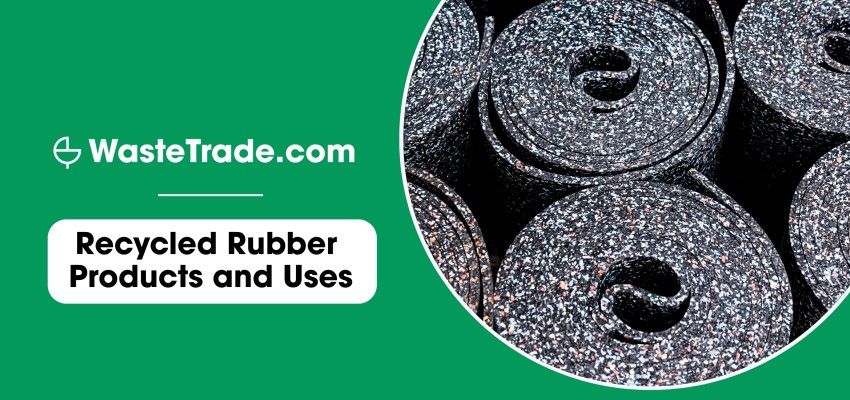
Recycled rubber products are where rubber recycling becomes visible in everyday environments. Once waste rubber has been processed into granules, crumb, or other usable forms, it can be shaped and reformulated into durable products used across construction, landscaping, commercial interiors, and public spaces. Rubber’s inherent properties - flexibility, impact absorption, weather resistance, and longevity—make it well suited to applications where performance matters more than cosmetic perfection. As a result, recycled rubber products tend to focus on function and lifespan rather than aesthetics alone.
Recyclable Rubber Flooring for Businesses
Recyclable rubber flooring for businesses addresses both practical and operational concerns. Commercial and industrial spaces often require flooring solutions that can withstand heavy use, equipment movement, and repeated cleaning without degrading quickly. Using recyclable rubber flooring allows businesses to benefit from recycled content while also choosing products that can be recovered or reused at the end of their service life. This is particularly relevant in sectors such as logistics, manufacturing, leisure, and education, where flooring replacement cycles are frequent. From a supply perspective, businesses rely on steady, well-specified streams of recycled rubber to ensure product consistency. Platforms such as WasteTrade help connect recycled rubber suppliers with manufacturers and installers who require reliable material inputs for commercial flooring systems.
Recycled Rubber Garden Edging
Recycled rubber garden edging is a common landscaping product made from moulded or formed recycled rubber. It is used to define borders, paths, and planting areas in residential, commercial, and public spaces. Garden edging made from recycled rubber offers several practical advantages. It does not rot, splinter, or crack in the same way as timber, and it can tolerate temperature changes and moisture exposure over long periods. These characteristics make it a popular choice where long-term durability is required with minimal maintenance. The production of recycled rubber garden edging typically relies on clean rubber granulate with predictable physical properties. Variations in input material can affect flexibility and finish, which is why consistent recycled rubber supply is important for manufacturers in this segment.
Garden Edging Recycled Rubber
The phrase garden edging recycled rubber reflects growing interest in recycled materials within landscaping and outdoor design. For specifiers and buyers, the appeal lies not only in durability but also in the reuse of materials that would otherwise become waste. In this context, recycled rubber edging represents a practical reuse pathway rather than a cosmetic one. Its value comes from performance, ease of installation, and resistance to environmental wear, rather than from visual refinement alone. This category demonstrates how recycled rubber can be used effectively in simple, high-volume products that help absorb material from the recycling system and stabilise demand for recycled rubber feedstocks.
Recycled Rubber Flooring
Recycled rubber flooring is one of the most established uses of recycled rubber. It is commonly found in gyms, sports facilities, workshops, industrial spaces, and high-traffic commercial environments. This type of flooring is valued for its durability, slip resistance, and ability to absorb impact and noise. Recycled rubber flooring is typically manufactured from granulated or crumb rubber that is bonded into tiles, rolls, or mats. Performance depends heavily on the quality of the recycled rubber feedstock. Consistent particle size, low contamination, and stable material properties are essential to ensure flooring products perform as expected over time. For this reason, manufacturers sourcing recycled rubber flooring materials pay close attention to how rubber is processed and supplied.
Recycled Rubber Stepping Stones
Recycled rubber stepping stones are another example of moulded rubber products designed for outdoor use. They are typically used in gardens, parks, and walkways where a flexible, impact-resistant surface is beneficial. Unlike rigid paving materials, rubber stepping stones can absorb movement and resist cracking, making them suitable for uneven ground or areas subject to ground movement. Their use also reduces the risk of injury in play or pedestrian areas. From a recycling perspective, stepping stones demonstrate how recycled rubber can be converted into durable, long-life products that extend the material’s usefulness well beyond its original application.
Buy Recycled Rubber Mulch
When people search to buy recycled rubber mulch, they are usually looking for a long-lasting alternative to organic mulch. Rubber mulch is produced by shredding and processing rubber—most often from tyres —into small, uniform pieces used in landscaping and play areas. Recycled rubber mulch does not decompose in the same way as wood-based products, which means it retains its form over time and requires less frequent replacement. It is commonly used in playgrounds, pathways, and commercial landscaping projects. Material quality is particularly important for rubber mulch. Effective removal of metal and fibre contaminants during the recycling process , consistent particle sizing, and dust control all influence how the product performs and how it is perceived by end users. These factors shape how rubber mulch is specified, sourced, and traded.
Rubber Tyre Recycling
Rubber tyre recycling underpins many recycled rubber products and uses. Tyres are the largest single source of waste rubber globally, and much of the recycled rubber used in flooring, edging, and mulch originates from end-of-life tyres. Through rubber tyre recycling, tyres are processed into reusable rubber fractions while steel and other components are removed. This tyre-derived rubber retains many of the properties that make rubber valuable, including resilience and resistance to wear. Understanding rubber tyre recycling is essential for understanding the recycled rubber market as a whole. It explains why certain grades of recycled rubber are more widely available than others and why quality control at the recycling stage has a direct impact on downstream products.
Sustainable Rubber Use
Recycled rubber products and uses demonstrate the practical value of rubber recycling. While recycled rubber does not replace virgin material in every application, it performs reliably in many environments where strength, flexibility, and longevity are required. By understanding how recycled rubber flooring, landscaping products, and tyre-derived materials are used, businesses can utilise the WasteTrade marketplace make informed decisions about sourcing , reuse, and participation in recycled rubber supply chains.


