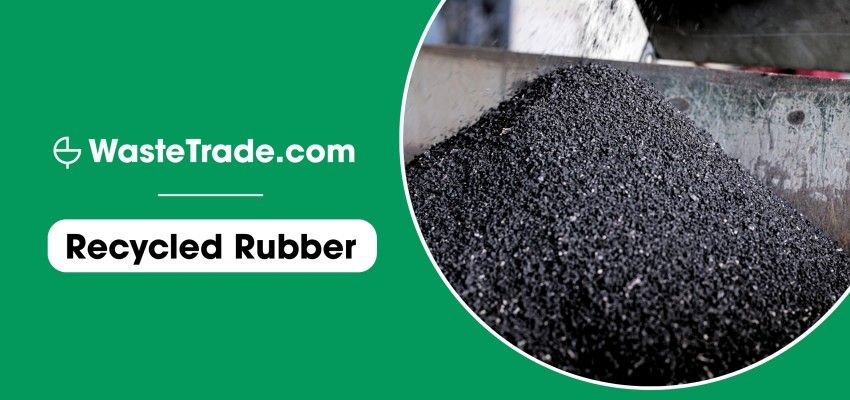
Recycled rubber is one of the most established secondary materials within the wider recycling industry. It is produced by processing waste rubber products - most commonly tyres - into usable raw materials that retain many of rubber’s original properties, such as flexibility, durability, and resistance to wear. Because rubber cannot be remelted in the same way as many plastics , recycled rubber is typically supplied as a physical material rather than a reformed polymer. Its value lies in how it performs in real-world applications, rather than in chemical purity. As a result, recycled rubber plays an important role in sectors where toughness and longevity matter more than appearance or precision.
Recycled Rubber Products
Recycled rubber products are the tangible outcome of rubber recycling. Once rubber has been processed into granules, crumb, or powder, it can be incorporated into a wide range of finished goods. Common recycled rubber products include flooring systems, mats, tiles, underlay, garden and landscaping items, shock-absorbing surfaces, and moulded components. These products take advantage of rubber’s natural ability to absorb impact, reduce noise, and withstand repeated stress. The suitability o f recycled rubber f or a given product depends heavily on material quality. Particle size, cleanliness, and consistency all influence how recycled rubber performs during manufacturing and in use. For example, flooring and moulded products typically require tighter tolerances and lower contamination than bulk landscaping applications. Recycled rubber products also play an important role in extending the life of rubber materials . While rubber cannot be recycled indefinitely into identical products, converting waste rubber into durable goods keeps material in circulation for many additional years. This reduces demand for virgin resources and helps stabilise markets for recycled materials. From a trading and sourcing perspective, understanding recycled rubber products helps clarify demand. Manufacturers are not simply buying “rubber waste”; they are sourcing specific grades of recycled rubber suited to particular products. Platforms such as WasteTrade exist to support this process by improving visibility between suppliers of recycled rubber and the businesses that rely on it as an input material.
Rubber Waste Management
Recycled rubber sits at a practical midpoint between waste management and manufacturing, and WasteTrade is perfectly situated to bridge the gap between the two. It is not a perfect substitute for virgin material, but it is a proven, widely used resource that delivers real value when matched to the right applications. By understanding recycled rubber, recycled rubber tyre material, and the products made from it, businesses can engage more effectively with rubber recycling markets and make informed decisions about reuse and supply.
Recycled Rubber Tyre
The term recycled rubber tire reflects the reality that tyres are the dominant source of recycled rubber worldwide. Passenger car tyres, truck tyres, and industrial tyres make up the largest and most consistent rubber waste stream, and much of today’s recycled rubber originates from these products. When tyres reach the end of their usable life, they are collected and processed through specialist recycling facilities . During processing, tyres are typically shredded and ground into smaller fractions, while steel reinforcement and textile fibres are removed. What remains is tyre-derived rubber, supplied in various forms depending on the intended end use. Recycled rubber from tyres is valued for its resilience and impact resistance. These characteristics make it well suited to applications where mechanical strength and durability are more important than fine surface finish. For this reason, recycled rubber tire material is widely used across construction, surfacing, and landscaping markets. From a waste-management perspective, tyre-derived recycled rubber also addresses a critical environmental issue. Tyres are bulky, persistent, and hazardous if stockpiled or disposed of incorrectly. Recycling tyres into rubber material reduces fire risk, prevents illegal dumping, and keeps a problematic waste stream under control. Within the recycling supply chain, tyre-derived rubber is often traded in large volumes. Consistency of grading, low contamination, and reliable supply are key factors that determine whether recycled rubber tire material can move efficiently between processors, manufacturers, and end users.


