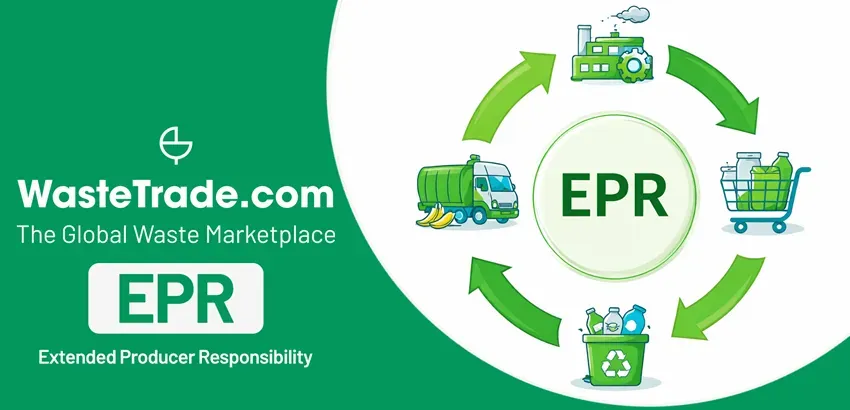
Extended Producer Responsibility, commonly known as EPR, is a regulatory approach that makes producers responsible for what happens to their products and packaging when they become waste. In practical terms, it shifts the financial and sometimes organisational burden of collection, sorting and recycling away from local authorities and taxpayers and on to the companies that place goods on the market. EPR now sits at the centre of modern waste and recycling policy. It affects packaging, electrical and electronic equipment, batteries and other product streams across Europe and beyond. For producers, it reshapes cost structures, reporting duties and design decisions. For recyclers and traders, it increases the importance of documentation, traceability and verified end markets. For platforms such as WasteTrade , it forms part of the wider infrastructure that connects compliant producers with established recycling markets in a structured and transparent way.
What Is Extended Producer Responsibility?
Extended Producer Responsibility is not a single global statute. It is a policy framework implemented through national and regional regulations . Its foundations lie in the polluter pays principle and the waste hierarchy, which prioritises prevention, reuse and recycling over disposal. Under most EPR systems, producers must fulfil two core obligations. First, they must measure and report what they place on the market. This typically involves detailed breakdowns of packaging types, materials and weights, or specific product categories in the case of electronics and other regulated streams. Accurate data is central to the system. Fees, targets and compliance assessments depend on it. Second, they must contribute financially to the system that collects and treats those materials at end of life. In some jurisdictions, producers carry only financial responsibility. In others, they also hold organisational responsibility, either directly or through a Producer Responsibility Organisation that manages compliance collectively on behalf of members. Modern EPR schemes increasingly incorporate modulated fees, sometimes referred to as eco modulation. Charges vary depending on how recyclable a product or packaging format is. Hard to recycle materials attract higher fees. Simpler and more widely recyclable formats attract lower fees. The objective is to embed environmental performance within the economic structure of the market.
Extended Producer Responsibility Regulations Explained
EPR operates through legislation. While the detail differs by jurisdiction, most regulatory frameworks define the same essential components. They set out who qualifies as a producer and which entities are obligated. They specify what products or packaging are in scope. They prescribe reporting requirements, often with strict deadlines and evidential standards. They establish how fees are calculated and how those funds are distributed. They also provide for enforcement, including audits, civil penalties and, in some cases, criminal sanctions for non-compliance. At European level, EPR is embedded within the broader waste policy framework established by the Waste Framework Directive. The Directive introduces minimum requirements for EPR schemes, emphasising transparency, accountability and clear allocation of responsibilities. Member States transpose these principles into national law, creating detailed operational schemes. In the United Kingdom, packaging EPR is governed by specific regulations that require certain producers to register, report packaging data and pay annual fees. A central scheme administrator, PackUK, oversees the system on behalf of the four UK nations. The intention is to ensure that producers contribute to the net costs of managing household packaging waste, including collection, sorting, treatment and public information campaigns. Regulations also address practical matters such as threshold levels for obligation, frequency of reporting, record keeping requirements and evidence standards. Producers may need to retain documentation for inspection and demonstrate how figures have been calculated. Failure to comply can result in enforcement action, financial penalties or reputational damage. For businesses operating across borders, the regulatory landscape can be complex. Definitions of producer, thresholds for obligation and reporting formats vary. Some countries apply EPR only to household packaging. Others extend it to commercial and industrial streams. Compliance therefore requires careful analysis of each jurisdiction in which goods are placed on the market. Within this environment, reliable downstream recycling routes become critical. Where fees are linked to actual performance and recyclability, documented evidence of proper treatment matters. WasteTrade operates within this framework, providing a structured digital marketplace that supports transparent, verified and compliant trading of recyclable materials.
How Does Extended Producer Responsibility Work?
Although the details vary, most EPR systems follow a recognisable structure. A producer places products or packaged goods on the market. The producer must then collect data on the materials and quantities involved. This data is submitted to the relevant authority or scheme administrator in accordance with prescribed formats and deadlines. Fees are calculated, often on a per tonne basis and sometimes adjusted according to recyclability or other environmental criteria. Under modulated systems, materials that are difficult to sort or recycle may incur higher charges, reflecting their greater impact on the waste management system. Producers pay these fees into a system that funds collection, sorting, treatment and recycling infrastructure. In packaging schemes, funds are frequently used to cover the net costs borne by local authorities. In product specific schemes, funds may support dedicated collection networks, treatment facilities and public awareness initiatives. Authorities or scheme administrators monitor performance against recycling or recovery targets. Data is reviewed and, where necessary, audited. Non compliance can lead to financial penalties or other enforcement measures. Eco modulation adds an additional layer of complexity. By increasing fees for problematic materials and reducing them for more recyclable formats, regulators aim to influence product and packaging design. Over time, this can alter material choices, reduce composite formats and encourage alignment with existing recycling infrastructure. As financial responsibility increases, so does the importance of efficient recycling markets. Producers seeking to manage costs have a clear incentive to ensure that materials are genuinely recycled and properly documented. Transparent trading platforms help facilitate compliant transactions between waste generators and verified recyclers, strengthening accountability within the wider EPR ecosystem.
What Is EPR?
EPR stands for Extended Producer Responsibility. It is a system of legally binding rules that requires producers to take responsibility for the end of life management of their products and packaging. The word extended reflects the idea that responsibility does not end at the point of sale. It extends to the post consumer stage. The term producer is defined by regulation and often includes the brand owner, importer or first entity placing goods on a market. Responsibility means more than general corporate environmental commitments. It involves mandatory data reporting, payment of fees and compliance with recycling or recovery obligations set out in law. In simple terms, EPR ensures that those who introduce materials into the economy contribute directly to the costs of managing them once they become waste. The intention is to improve recycling performance, reduce disposal and encourage better design decisions at source.
Financial Mechanics and Cost Allocation
Understanding how fees are structured is central to understanding EPR. Most schemes operate on a cost recovery basis. Producers collectively fund the net costs associated with managing in scope waste. This often includes collection, sorting, treatment, communication campaigns and scheme administration. In some systems, costs are broken down by material type to reflect differences in recycling economics. Base fees are commonly calculated per tonne of material placed on the market. Modulated fees introduce additional differentiation based on recyclability criteria. Some systems consider factors such as ease of separation, compatibility with sorting technology and availability of end markets. The financial implications extend beyond the fee itself. Many producers pass some or all of the cost through the supply chain, influencing pricing strategies and procurement decisions. This can affect packaging specifications, supplier relationships and overall product economics. From a market perspective, EPR strengthens the link between regulatory compliance and material value. Where recyclability lowers fees, demand for compliant material streams increases. Structured marketplaces that provide access to verified recycling outlets, such as WasteTrade, become part of the broader economic response to EPR driven cost signals.
Why Does EPR Exist?
EPR developed in response to rising waste volumes and increasing complexity in products and packaging. Municipal waste systems faced mounting financial pressure, while environmental concerns around landfill and incineration intensified. By shifting responsibility upstream, EPR seeks to address both financial and environmental objectives. It reduces the burden on local authorities and embeds environmental costs within the product supply chain. It also creates incentives for producers to design products that are easier to reuse, repair or recycle. The policy aligns with the polluter pays principle, which holds that those responsible for generating environmental impacts should bear the costs of managing them. In practice, this means internalising waste management costs within the price structure of goods. EPR also improves data transparency. Mandatory reporting generates detailed information about material flows, enabling more informed policymaking and investment decisions. This data can highlight inefficiencies, reveal problematic formats and guide infrastructure development. As EPR systems mature, they influence the entire value chain. Designers, procurement teams, compliance officers and recyclers are all affected. Secondary material markets gain importance as the economic signals created by fee structures alter demand patterns. Efficient digital platforms that connect waste generators with responsible buyers contribute to the functioning of this evolving system.
Where Does EPR Regulation Apply?
EPR regulation applies across numerous jurisdictions and product categories. Within the European Union, EPR forms part of the broader waste policy architecture. Member States operate schemes covering packaging, waste electrical and electronic equipment, batteries and other materials. While the underlying principles are shared, operational details differ from country to country. In the United Kingdom, packaging EPR has undergone substantial reform. Producers meeting defined thresholds must register, report packaging data and pay fees to support the management of household packaging waste. The system is overseen by a national scheme administrator and supported by detailed guidance. Beyond Europe, many countries have adopted their own EPR models, reflecting local waste management structures and environmental priorities. For businesses trading internationally, this means navigating multiple regimes and ensuring that compliance processes are adapted accordingly. Cross border trade in secondary materials adds further complexity. Documentation requirements, shipment rules and proof of treatment standards may vary. Transparent and verifiable trading environments play a role in supporting lawful and responsible movement of recyclable materials. WasteTrade provides a marketplace structure that facilitates these transactions while maintaining clarity around counterparties and material specifications.
Frequently Asked Questions About EPR
What does EPR stand for?
EPR stands for Extended Producer Responsibility. It refers to regulatory systems that require producers to take responsibility for the end of life management of their products and packaging.
Who is responsible under EPR?
The definition of producer is set out in the relevant regulations. It commonly includes brand owners, importers or the first entity placing goods on a market. The precise definition varies by jurisdiction and product stream.
Is EPR a tax?
EPR is generally structured as a regulatory obligation rather than a general tax. Producers pay fees that are earmarked for waste management, recycling infrastructure, public information and scheme administration. The funds are typically ring fenced for these purposes rather than absorbed into general government revenue.
What products are covered by EPR?
Common product streams include packaging, electrical and electronic equipment and batteries. The scope of coverage is defined by national legislation and may differ between jurisdictions.
Are small businesses exempt from EPR?
Many EPR systems include threshold criteria based on turnover or the volume of products placed on the market. Businesses below those thresholds may be exempt or subject to simplified obligations. The exact rules depend on the jurisdiction and product stream.
How often must producers report under EPR?
Reporting frequency varies. Some systems require annual submissions, while others require quarterly or biannual reporting. Regulations specify the format, deadlines and supporting evidence required.
Can EPR obligations be outsourced?
In many jurisdictions, producers can meet their obligations collectively through a Producer Responsibility Organisation. However, legal responsibility ultimately remains with the obligated producer as defined in law.
What happens if a producer does not comply?
Non compliance can result in financial penalties, enforcement action, reputational damage and, in serious cases, prosecution. Accurate data management and reliable downstream arrangements are therefore essential.
How do EPR fees affect packaging design?
Modulated fee structures create financial incentives for recyclable and easily sorted formats. Over time, this encourages simplification of materials, reduction of unnecessary composites and closer alignment with existing recycling systems.
How can businesses manage EPR risk effectively?
Effective management involves clear understanding of regulatory obligations, accurate data collection and robust documentation of material flows. Transparent and verified trading arrangements contribute to demonstrating responsible management of recyclable materials within the wider EPR framework. Extended Producer Responsibility continues to shape the economics and governance of waste and recycling. As regulatory systems expand and mature, clarity, transparency and reliable market connections become increasingly important. Within this evolving landscape, structured digital marketplaces such as WasteTrade support compliant and efficient movement of recyclable materials, reinforcing the practical foundations on which modern EPR systems depend.


