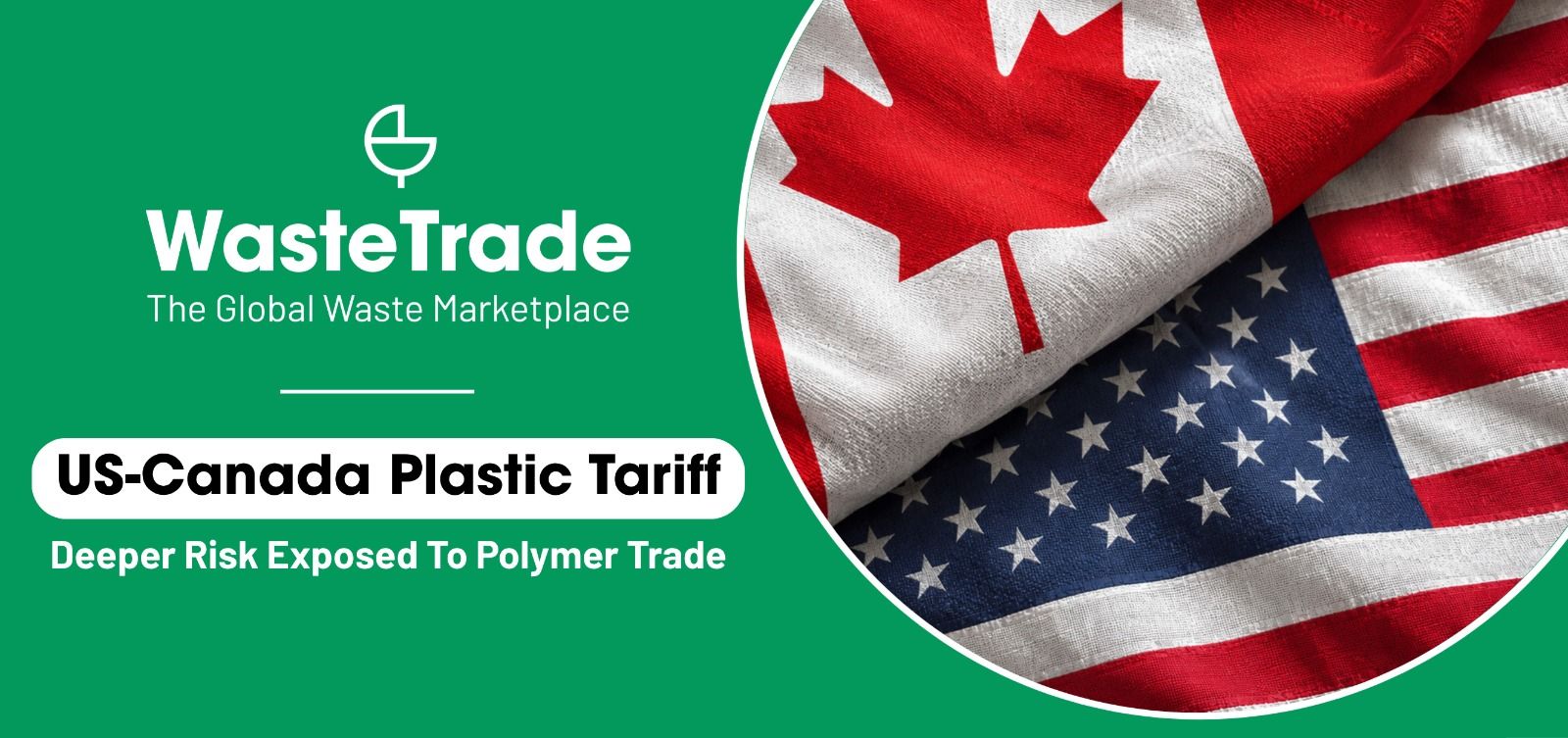
US-Canada plastic tariffs have moved from a theoretical risk to a live commercial issue. Canada’s latest retaliation now includes 50% duties on selected plastic products, while Washington has widened its use of Section 338, an old US trade law that allows the president to respond to what the government considers discriminatory treatment of American commerce.
For plastics, the immediate impact remains limited. Primary polyethylene (PE), polypropylene (PP) and plastic waste are not on Canada’s current retaliatory list. Yet North American polymer markets depend heavily on two-way trade across the border, and an expansion into commodity resins could alter prices, sourcing and the economics of recycled material.
The question is no longer whether plastics can become part of the dispute. Some already have. The question is how far upstream the tariffs will travel.
US-Canada Plastic Tariffs Have Reached Finished Products
Canada’s countermeasures took effect on 8 September, matching US tariffs on C$27.6 billion of goods with duties of 15%, 25% and 50%.
Plastic products sit explicitly within the measures. Certain PVC floor and wall coverings, plastic self-adhesive materials, sacks and bags made from polymers of ethylene, and plastic household and kitchen articles now face a 50% Canadian tariff when they originate in the US.
The current list does not extend those new counter-tariffs to the main primary resin headings for PE and PP, nor to plastic waste and scrap. The first direct shock has landed further down the value chain. A finished polyethylene bag may face a new tariff even where the polymer from which it is made does not.
PE and PP Trade Is Deeply Integrated
Any extension of US-Canada plastic tariffs into primary polymers would reach a much larger and more interdependent market.
US International Trade Commission data for the first half of 2026 shows Canada as the largest source of US imports of polymers of ethylene under HS 3901 and polymers of propylene or other olefins under HS 3902. Canada also ranked as the fourth-largest US export market for ethylene polymers and the second-largest for propylene and other olefin polymers.
This is not a simple contest between domestic producers and foreign imports. US processors buy Canadian material and Canadian converters buy US material. A tariff imposed in one direction can therefore return through the supply chain as a higher input cost in the other.
Tariffs Could Change Where Plastics Are Converted
The distinction between resin and finished products creates another risk.
If a Canadian manufacturer can import US polyethylene without the new 50% counter-tariff, but a comparable finished US polyethylene product attracts the duty, the tariff changes the economics of where conversion takes place.
Labour, energy, capacity and freight still matter, so production will not simply move because one tariff appears. But trade policy can influence where a company buys material and where it turns that material into a product. A measure aimed at a finished article may therefore redirect resin flows upstream.
Could Polyethylene and Polypropylene Be Next?
The risk is credible because Canada has already considered broader plastics retaliation.
When trade tensions intensified in 2025, an earlier Canadian list of potential countermeasures included major commodity plastics such as PE, PP and PVC. Those products do not appear on the present September 2026 list, but policymakers have already identified them as possible targets.
That creates uncertainty before any duty arrives. Polymer contracts and freight bookings often extend beyond the date on which a government can announce a new measure.
US-Canada plastic tariffs therefore matter even to companies whose tariff codes remain untouched. Buyers must consider whether today’s landed price could change before a shipment clears customs.
Recycled Plastic Carries a Hidden Classification Risk
For recyclers, the tariff question is more complicated still.
“Recycled plastic” is a commercial description, not a single customs classification. Plastic waste and scrap generally falls under HS 3915. Material processed far enough to qualify as a polymer in primary form can instead fall within headings such as 3901 for polyethylene or 3902 for polypropylene. Finished articles move into other Chapter 39 headings.
Canada’s tariff schedule makes the distinction unusually clear. It separately identifies polyethylene and polypropylene “of recycled materials” within the primary-form resin structure.
The same underlying polymer can therefore have different tariff exposure depending on the stage at which it crosses the border. In a trade dispute, where material is recycled, compounded or converted can become almost as important as where it originated.
Why HS Codes Matter More During a Trade Dispute
This is not merely a customs technicality. It changes commercial risk.
WasteTrade maps cross-border material listings against HS classifications, Basel classifications and destination-country import requirements. The commercial description alone does not determine how customs authorities will treat a shipment.
Tariff escalation adds another layer. Two consignments may both be described as recycled PE, yet customs can treat them differently if one remains waste or scrap and the other qualifies as a primary-form recycled polymer.
The current US-Canada plastic tariffs demonstrate the point from the other end of the chain. Canada has tariffed selected finished plastic products while leaving the principal PE, PP and waste headings outside the latest countermeasures.
The border taxes the classification under which a shipment enters, not the shorthand used to sell it.
USMCA Does Not Eliminate Section 338 Risk
The US-Mexico-Canada Agreement still governs much of North American trade and remains in force, despite the US decision in July not to agree an extension at the 2026 joint review. Canada says the agreement remains fully in force until 2036, while the US has confirmed that it continues to operate during further negotiations.
But USMCA status does not provide a blanket shield against the current Section 338 measures. Rules of origin may secure preferential treatment under the agreement, yet Section 338 introduces a different political risk.
Washington escalated again on 8 September, changing the scope of existing Section 338 tariffs and announcing import bans on certain Canadian products from 29 September.
Those bans do not currently target commodity polymers. They do show how quickly the available trade measures can become more severe.
Section 338 Remains an Unsettled Instrument
Section 338 dates from the Tariff Act of 1930 and has rarely played a central role in modern US trade policy. Questions remain over how it interacts with later legislation and what procedural role the US International Trade Commission should play.
That uncertainty became more visible in September when the USITC sought public comments on how it should meet its statutory responsibilities under Section 338.
For industry, the point is practical rather than academic. Companies must make purchasing, pricing and logistics decisions while parts of the legal and institutional framework behind the tariffs remain unsettled.
Recycled Supply Could Become a Strategic Hedge
Trade friction does not automatically benefit recycled polymers. Recycled material must still meet specification, consistency and regulatory requirements, and many applications cannot switch feedstock quickly.
But tariffs can change the relative value of supply options.
WasteTrade has already examined how shocks to virgin polymer supply can push buyers towards recycled alternatives. A tariff shock can create a similar calculation. The cheapest quoted resin is not necessarily the cheapest delivered material once duty, freight, lead time and border risk enter the equation.
For buyers, wider supplier networks become more valuable. For recyclers, location and market access can become stronger commercial advantages when cross-border virgin resin no longer moves at a predictable cost.
What Plastics Buyers Should Watch Next
The immediate focus should remain on tariff classifications rather than political rhetoric.
Any future addition of headings 3901 or 3902 would bring primary PE or PP directly into the dispute. Changes around HS 3915 would matter to waste and scrap traders. Further measures against Chapter 39 finished goods could shift conversion economics without touching resin itself.
US changes due to take effect on 15 September, followed by scheduled import bans on certain Canadian products from 29 September, provide the next obvious points to watch.
Companies should also watch sourcing behaviour. If Canadian and US buyers begin widening their supplier base before new tariffs appear, trade data may record the change only after commercial decisions have moved.
US-Canada Plastic Tariffs Are Now a Supply-Chain Question
The present measures have not severed the most important North American polymer flows. PE, PP and plastic waste remain largely outside the latest direct retaliation.
That should not encourage complacency.
US-Canada plastic tariffs have already crossed into finished plastics, while both governments have shown a willingness to escalate. The integrated nature of the market means that a future move into primary polymers would affect producers, recyclers, converters and buyers on both sides of the border.
For recycling, the deeper lesson is simple. Tariffs can change the value of a material without changing the material itself. The point at which plastic crosses a border, as waste, recycled feedstock, resin or finished product, can alter its commercial exposure.
The next phase may therefore turn not only on what gets tariffed, but on where companies choose to source, process and move their material.