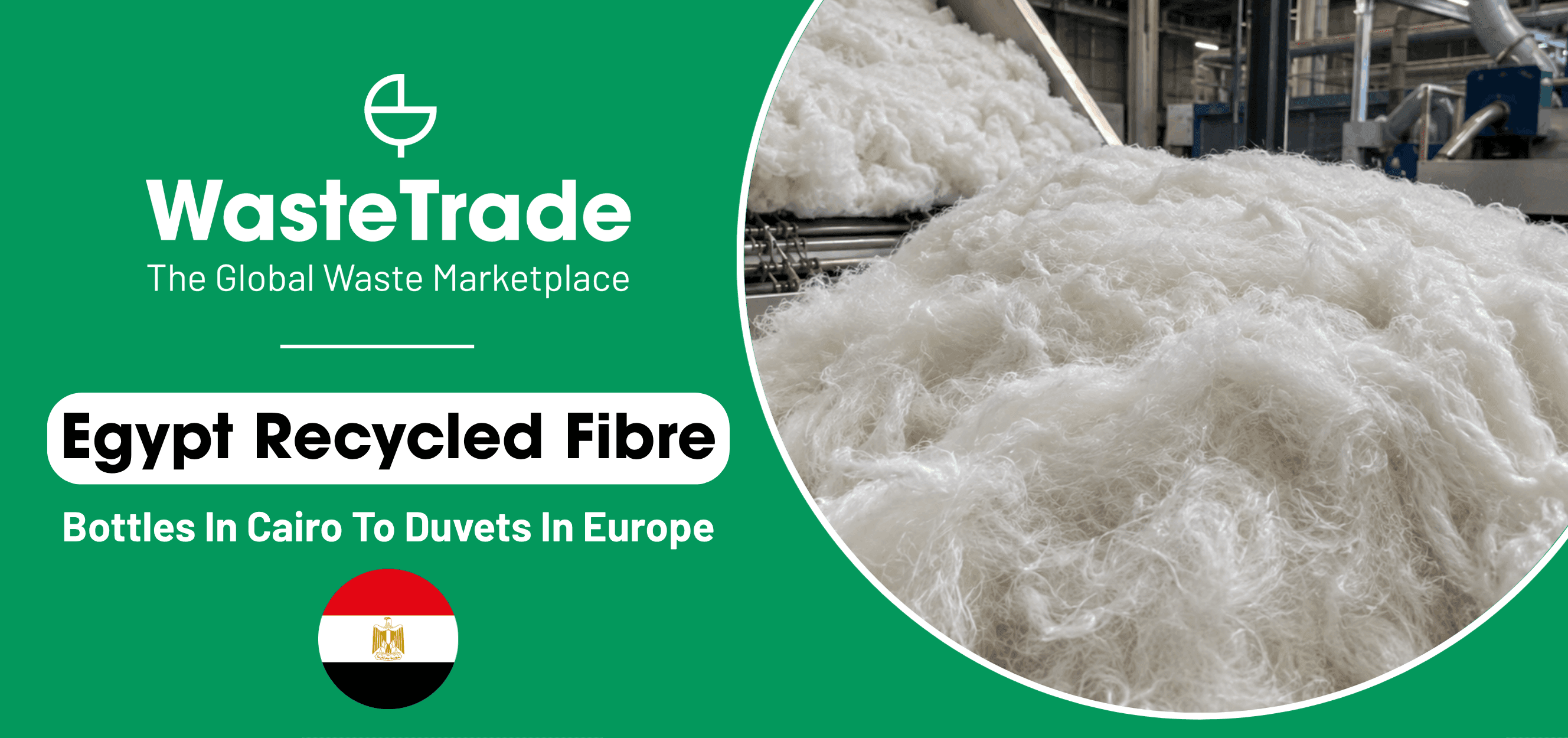
Recycled polyester fibre in Egypt begins with used PET bottles. Processors clean and shred the bottles into flake, then melt and spin that material into new fibre for pillows, duvets, furniture, nonwovens, automotive products and textile spinning. It is a practical form of circular manufacturing, but its real importance extends beyond recycling alone.
Egypt has something few markets can combine at the same scale: recoverable material, established conversion capacity and immediate access to several major trading regions. Europe lies across the Mediterranean. The Gulf is close. African markets connect to the south and west, while Asian routes pass through the Suez corridor.
The opportunity is not theoretical. Collectors already recover the material, manufacturers already produce the fibre and international buyers already understand the product. What remains less developed is the commercial system capable of connecting those parts consistently.
Why Recycled Polyester Fibre in Egypt Matters Now
Global manufacturers want recycled inputs, but they also want supply chains that are shorter, more resilient and easier to verify.
For European and regional buyers, Egypt offers a useful geographical alternative to long-distance sourcing. Shorter routes can reduce lead times, limit the amount of working capital tied up at sea and give manufacturers greater flexibility when demand changes.
That advantage has limits. Proximity cannot compensate for inconsistent quality, incomplete documentation or unreliable delivery. It becomes valuable only when producers can supply the same grade, in the same condition, with the same evidence, load after load.
Cairo Already Recovers the Material
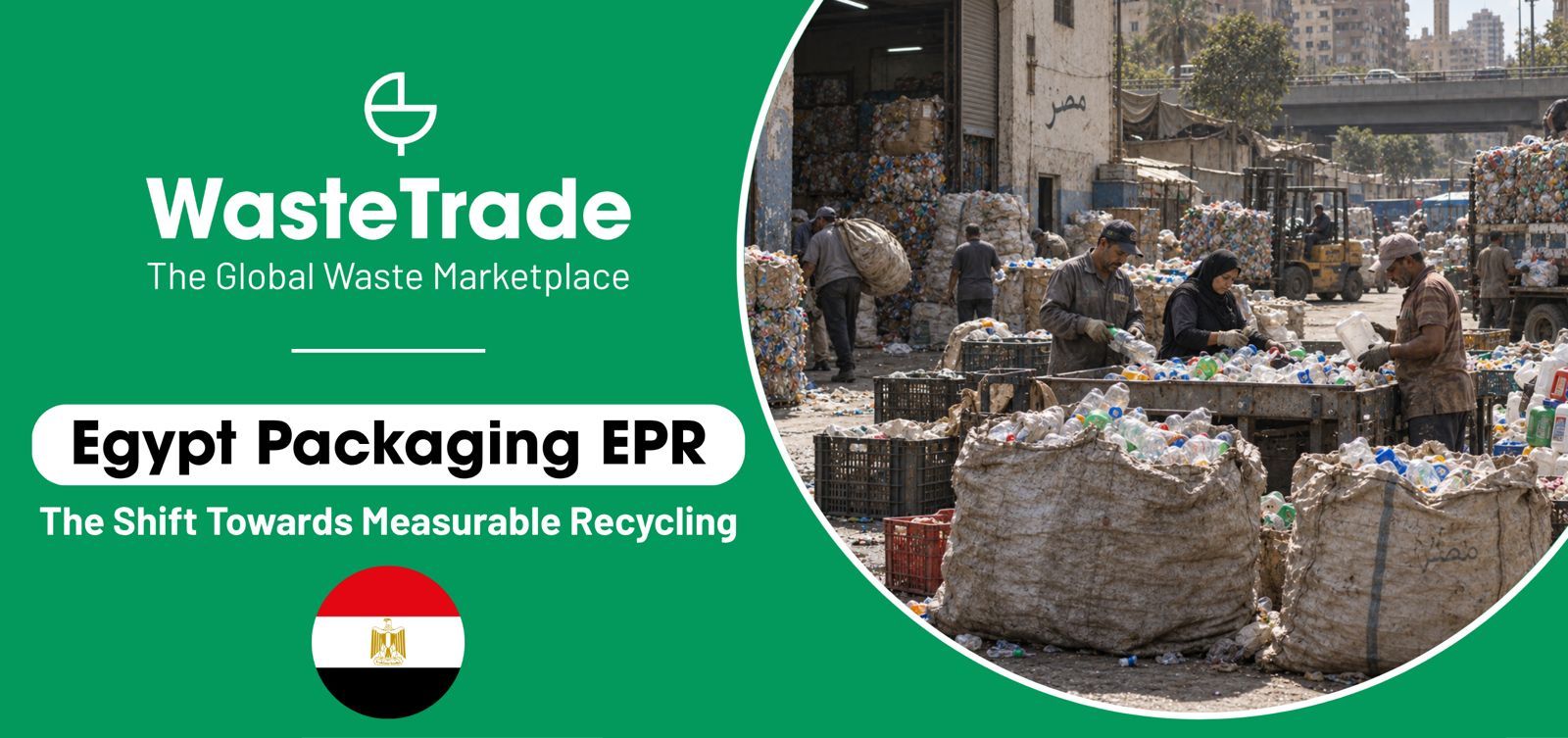
Cairo’s informal waste collectors, widely known as the Zabbaleen, have built one of the world’s most distinctive urban recovery systems. Estimates commonly place their share of the city’s waste collection at around half or more.
Their work challenges a familiar assumption. Egypt does not simply have a waste problem and an undeveloped recycling culture. Large volumes of useful material already move through collection, sorting, aggregation and processing networks every day.
The difficulty is visibility. A bottle may be recovered efficiently, separated correctly and sold into a functioning market, yet still arrive without a recorded origin, reliable batch identity or auditable chain of custody.
That distinction separates material that exists from material that a large international buyer can purchase confidently.
Informal Recovery Needs Formal Recognition
Formalisation should not mean dismantling the networks that already recover value.
The Zabbaleen hold detailed knowledge of neighbourhood collection, material quality and resale markets. Any attempt to replace that expertise with a rigid central system risks losing efficiency while damaging livelihoods.
The better route is integration. Weighing, registration, safer working conditions, clearer contracts and traceable transfers can strengthen the existing system without pretending it has no value until a formal operator arrives.
The objective should be to preserve local capability while giving the recovered material a commercial identity that survives each transfer.
From PET Bottles to Fibre
A bottle does not become duvet filling in a single step.
Processors must first sort post-consumer PET by polymer and colour. They remove labels, caps, metals and unsuitable contaminants before washing and shredding the bottles into flake. They then prepare that flake to a standard suitable for fibre production.
The flake enters a spinning process, where manufacturers melt, extrude and cut it into polyester staple fibre with defined characteristics.
Solid fibre can serve spinning, nonwovens, carpets and industrial applications. Hollow or hollow conjugated siliconised fibre offers softness, loft and resilience, making it suitable for pillows, cushions, quilts, furniture and bedding.
Egyptian manufacturers already produce these materials. Recycled polyester fibre in Egypt is therefore an existing industrial proposition, not a factory concept waiting for an investor presentation.
Specifications Decide Whether Buyers Return
A buyer does not order “recycled plastic”. The buyer orders a precise material for a precise production line.
For polyester staple fibre, that may mean a specified denier, cut length, colour, crimp, finish, moisture level and packing format. A bedding manufacturer may need hollow siliconised fibre with consistent recovery. A nonwoven producer may require solid fibre that performs predictably at speed.
A first shipment can succeed through effort and negotiation. Repeat business requires discipline.
The material must remain within specification. The loading must match the documents. The producer must communicate changes before the buyer discovers them in production. This is where commercial reputation forms, and where a low initial price quickly loses its appeal if inconsistency causes waste or downtime.
The Paper Trail Has Commercial Value
Technical quality represents only half the purchase.
International buyers may also require evidence of recycled origin, supplier declarations, chain-of-custody records, batch documentation, inspection reports or recognised certification. The precise requirement depends on the buyer, the end use and the destination market.
Legal classification matters too. Collected bottles, washed flake and finished fibre may not all move under the same rules. Documentation depends on whether the material remains legally classified as waste, has achieved end-of-waste status or trades as a finished product.
This is where WasteTrade has a practical role. It does not replace collectors, processors, manufacturers or certification bodies. It provides the transaction structure around them through verified counterparties, defined listings, classification support, documentation, logistics and secure payment.
The value is not a digital introduction. It is a trade that can withstand scrutiny and be repeated.
Egypt’s Regulatory Direction Is Clearer
Egypt’s Waste Management Law No. 202 of 2020 created a broader framework for licensing, oversight and producer responsibility. Executive regulations followed, and extended producer responsibility has begun moving from principle towards implementation in selected product categories.
That does not mean Egypt now has a mature, comprehensive system covering every PET bottle, processor and fibre shipment.
It does mean the direction is increasingly clear. More operators will need to become identifiable. More material movements will need records. Producers and importers will face clearer responsibilities for what happens after products enter the market.
For recycled polyester fibre in Egypt, this gradual formalisation can improve access to buyers, finance and long-term contracts, provided regulation works with existing recovery networks rather than around them.
China Changed the Global PET Map
China once absorbed enormous volumes of post-consumer PET and converted much of it into recycled fibre. Restrictions on imported plastic waste disrupted that chain and forced exporters, processors and buyers to reconsider where material should be recovered and converted.
Egypt did not simply inherit China’s market, nor should it expect to.
The change created space for several regional manufacturing centres. Countries with feedstock, industrial capacity and efficient access to buyers gained strategic relevance. Egypt belongs in that group, but only if it can convert geographical advantage into dependable commercial performance.
Regional Processing Can Capture More Value
Exporting recovered bottles may create revenue, but converting them domestically can retain more value.
Washing, flake production and fibre manufacturing create industrial employment, deepen technical capability and broaden the range of buyers available to Egyptian suppliers. They also give the country a stronger position than that of a low-cost source of unprocessed material.
There is a regional logic as well. Gulf processors may need additional feedstock, while European, Turkish and Middle Eastern manufacturers need finished fibre. WasteTrade can help suitable Egyptian and North African material reach verified processors, while allowing qualified fibre producers to present defined grades to buyers with specific monthly requirements.
The key is to match material with the most productive use, not simply the nearest available transaction.
Recycled Polyester Fibre in Egypt Needs Repeat Trade
The future of recycled polyester fibre in Egypt will not be decided by one-off export deals.
It will depend on whether producers can build repeat relationships with buyers that value consistency, documentation and responsive delivery. That requires more than finding a contact. It requires reliable specifications, clear contracts, appropriate logistics and confidence that payment and material will move as agreed.
For international buyers, the attraction is a potentially shorter and more diversified supply chain. For Egyptian producers, the prize is steadier demand, stronger utilisation and a route into higher-value markets.
For collectors and aggregators, better documentation can make recovered material more visible without stripping away the local knowledge that made recovery possible.
Egypt’s Recycled Fibre Opportunity Is Already Here
Egypt does not need to discover how to collect valuable material. It does not need to invent a polyester fibre industry from nothing. It needs stronger connections between recovered PET, documented processing and repeat international demand.
Recycled polyester fibre in Egypt can become more important to regional and international buyers if the industry protects quality at every stage and carries reliable information with the material.
WasteTrade sits naturally within that development, connecting verified supply with credible demand and supporting the commercial framework around the movement.
The opportunity is straightforward: make more Egyptian material visible, consistent and trusted, then trade it on terms that allow the relationship to continue.